
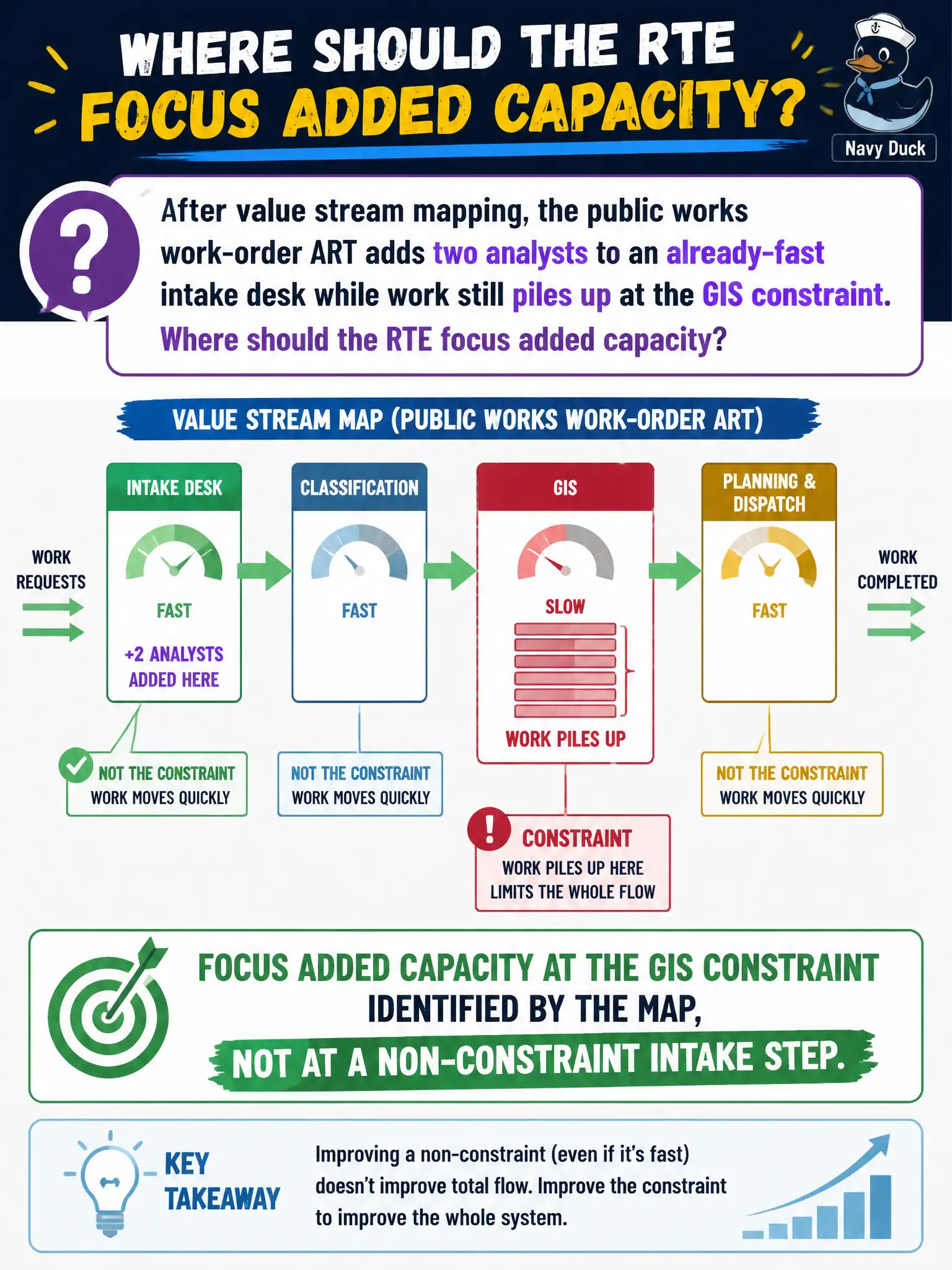
After value stream mapping, the public works work-order ART adds two analysts to an already-fast intake desk while work still piles up at the GIS constraint. Where should the RTE focus added capacity?
Select an answer to reveal the explanation.
Short Explanation
Adding greeters at the door while the only GIS station is slammed just makes a longer line at GIS. Throughput is set by the constraint. Put the new capacity where work actually stacks up.
Full Explanation
Focus added capacity at the GIS constraint identified by the public works work-order map, not at an already-fast intake desk. Theory of Constraints and systems thinking agree that capacity at a non-constraint does not raise end-to-end throughput; it lengthens the line at GIS. Staffing every step equally so no function feels understaffed wastes the hire. Preferring the leftmost step by habit ignores the measured bottleneck. Creating a new PMO reporting cell outside the mapped stream adds overhead without moving work orders. Exam caveat: intake may need quality fixes even if fast; throughput still rises only when the constraint improves. Operational check: assign new analysts or tooling to GIS wait reduction, re-measure work-order lead time, and stop celebrating intake speed that only feeds the civic street-work jam. In municipal and civic service contexts, record the rationale in the ART working agreements or improvement backlog so future PIs preserve the control, and re-validate after the next Inspect and Adapt against resident-facing outcomes rather than activity theater. Confirm owners, success measures, and a re-check date so the practice remains inspectable. In municipal and civic service contexts, record the rationale in the ART working agreements or improvement backlog so future PIs preserve the control, and re-validate after the next Inspect and Adapt against resident-facing outcomes rather than activity theater. Confirm owners, success measures, and a re-check date so the practice remains inspectable.