
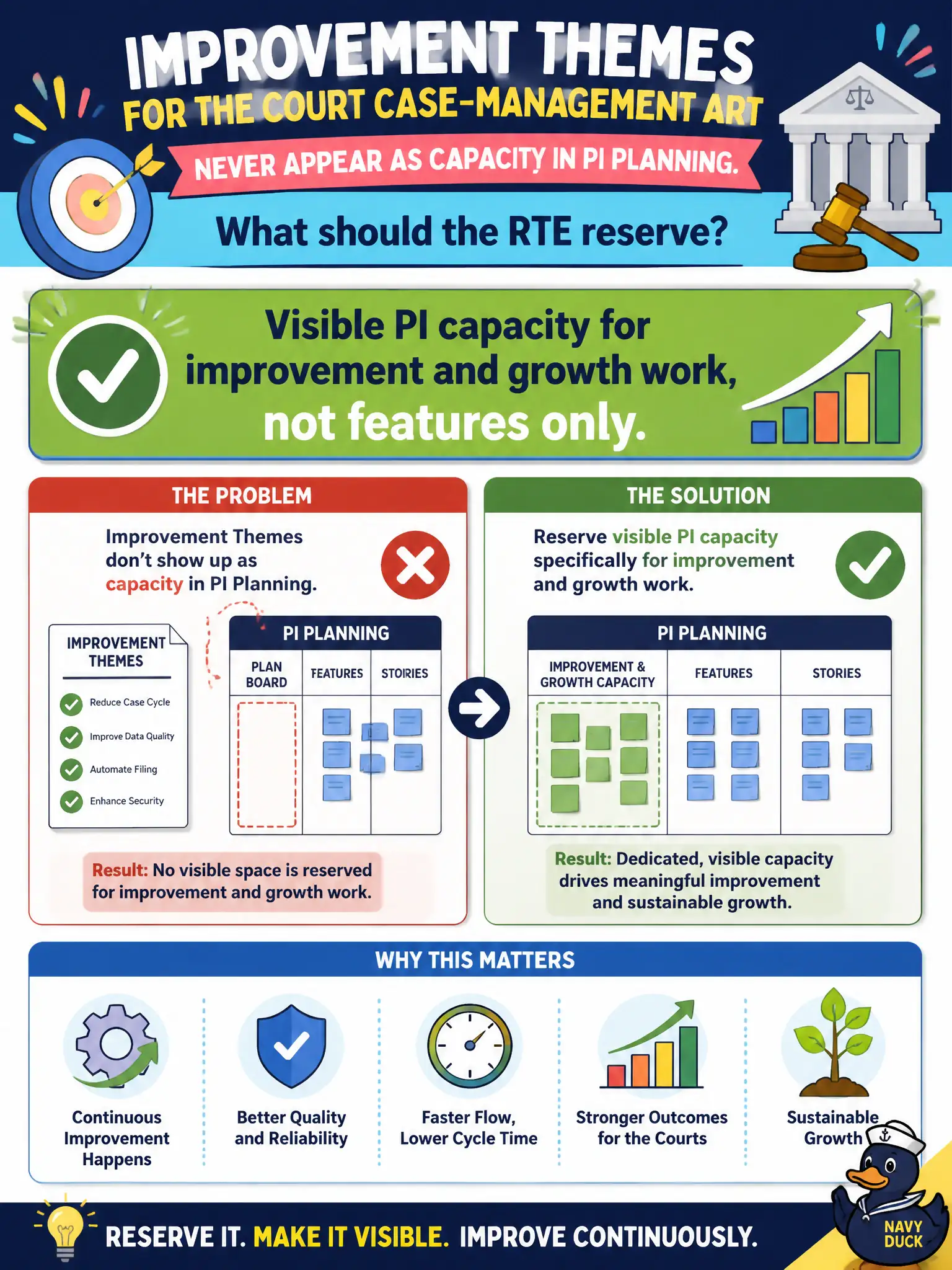
Improvement themes for the court case-management ART never appear as capacity in PI Planning. What should the RTE reserve?
Select an answer to reveal the explanation.
Short Explanation
If improvement is not on the plan, it is a hobby. PI Planning is where the case-management ART admits that growth work takes seats just like docket features. Reserve that capacity in the open or Inspect and Adapt keeps writing stories nobody ever pulls.
Full Explanation
Reserve visible PI capacity for improvement and growth work on the court case-management ART, not features only. Relentless improvement requires dedicated seats in PI Planning so I&A and measure-and-grow actions are honest commitments. All-feature capacity that treats improvement as after-hours volunteer work guarantees loss. A hidden RTE buffer teams must not see on the program board destroys transparency. A shadow backlog planned only if every feature finishes early never runs. Exam caveat: improvement capacity can be a percentage guideline rather than a fixed story count, but it must be visible and defended with Business Owners. Operational check: during PI Planning, allocate explicit capacity to improvement stories, show them on the program board, and report completion at the next I&A so docket service quality compounds for the court and the public. In municipal and civic service contexts, record the rationale in the ART working agreements or improvement backlog so future PIs preserve the control, and re-validate after the next Inspect and Adapt against resident-facing outcomes rather than activity theater. Confirm owners, success measures, and a re-check date so the practice remains inspectable.