
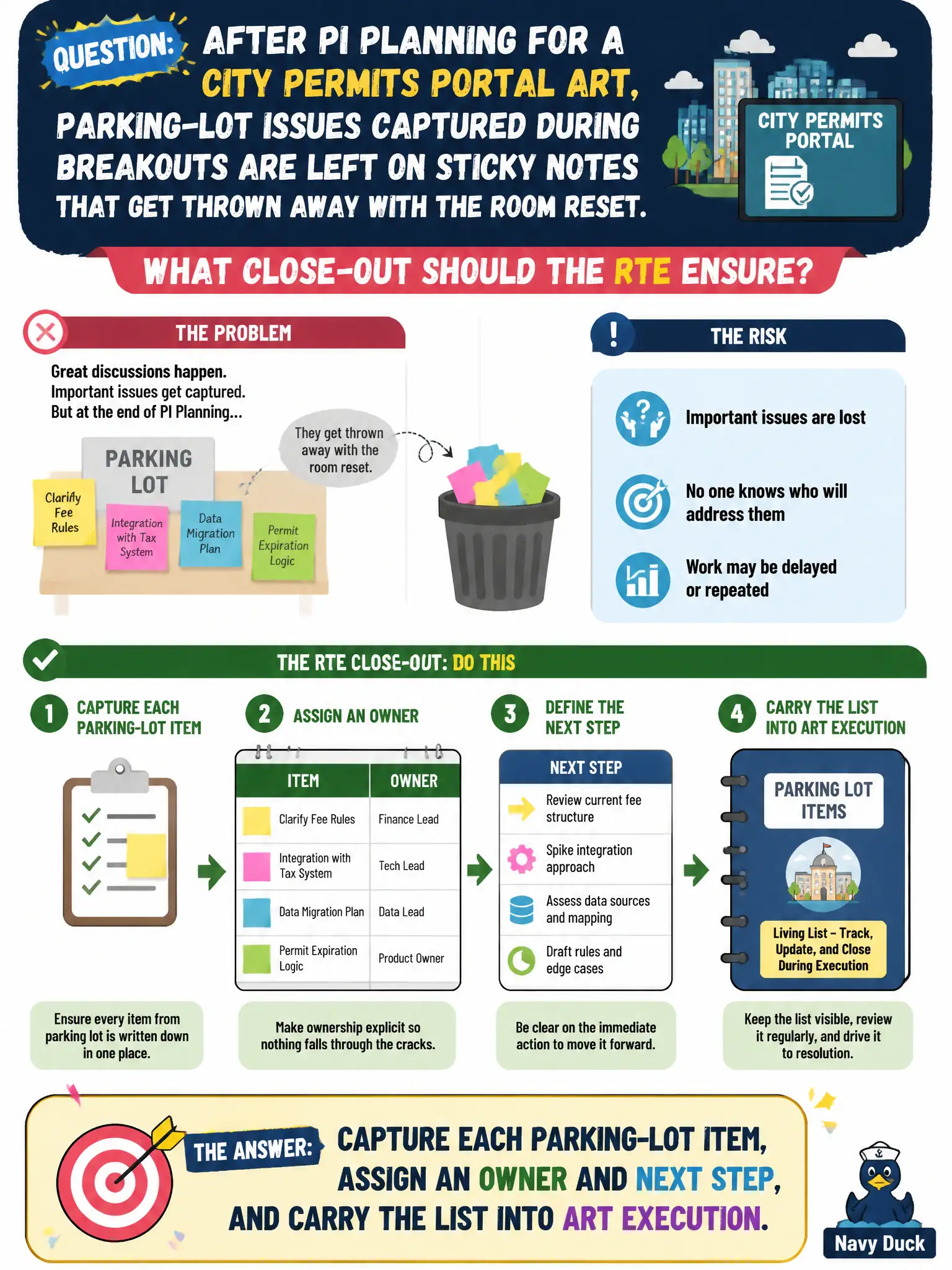
After PI Planning for a city permits portal ART, parking-lot issues captured during breakouts are left on sticky notes that get thrown away with the room reset. What close-out should the RTE ensure?
Select an answer to reveal the explanation.
Short Explanation
A parking lot is a holding pattern, not a trash can. If nobody owns the follow-up, those permit-portal issues vanish with the sticky notes. Close the event by naming owners and next steps.
Full Explanation
Parking-lot items captured during PI Planning are open questions and follow-ups that must survive the room reset. After a city permits portal ART event, the RTE should ensure each parking-lot item is captured with an owner and next step and carried into ART execution. Archiving sticky notes in a photo album without action preserves nostalgia, not follow-through. Asking teams to rediscover the same issues in the first iteration retrospective wastes capacity and treats known gaps as surprises. Forwarding the entire parking lot to the city CIO as an unprioritized complaint list escalates noise without ownership. Permit applicants and city reviewers depend on follow-through after planning theater ends; lost parking-lot items become invisible blockers on the permits portal ART. Exam caveat: not every parking-lot item becomes a PI Objective; some become risks, dependencies, or backlog refinement inputs—but each still needs a next step. Operational check: before facilities reset the room, transcribe the parking lot into the ART follow-up list with owners and due points for the first ART Sync. Bring the owner-assigned parking-lot list to the first ART Sync and close or re-date each item in the open.