
The RTE for a social-services eligibility ART opens PI Planning with a two-hour recap of last PI's burn-downs, ticket counts, and missed stories, and draft plans for the next increment never start. What should the RTE do?
Select an answer to reveal the explanation.
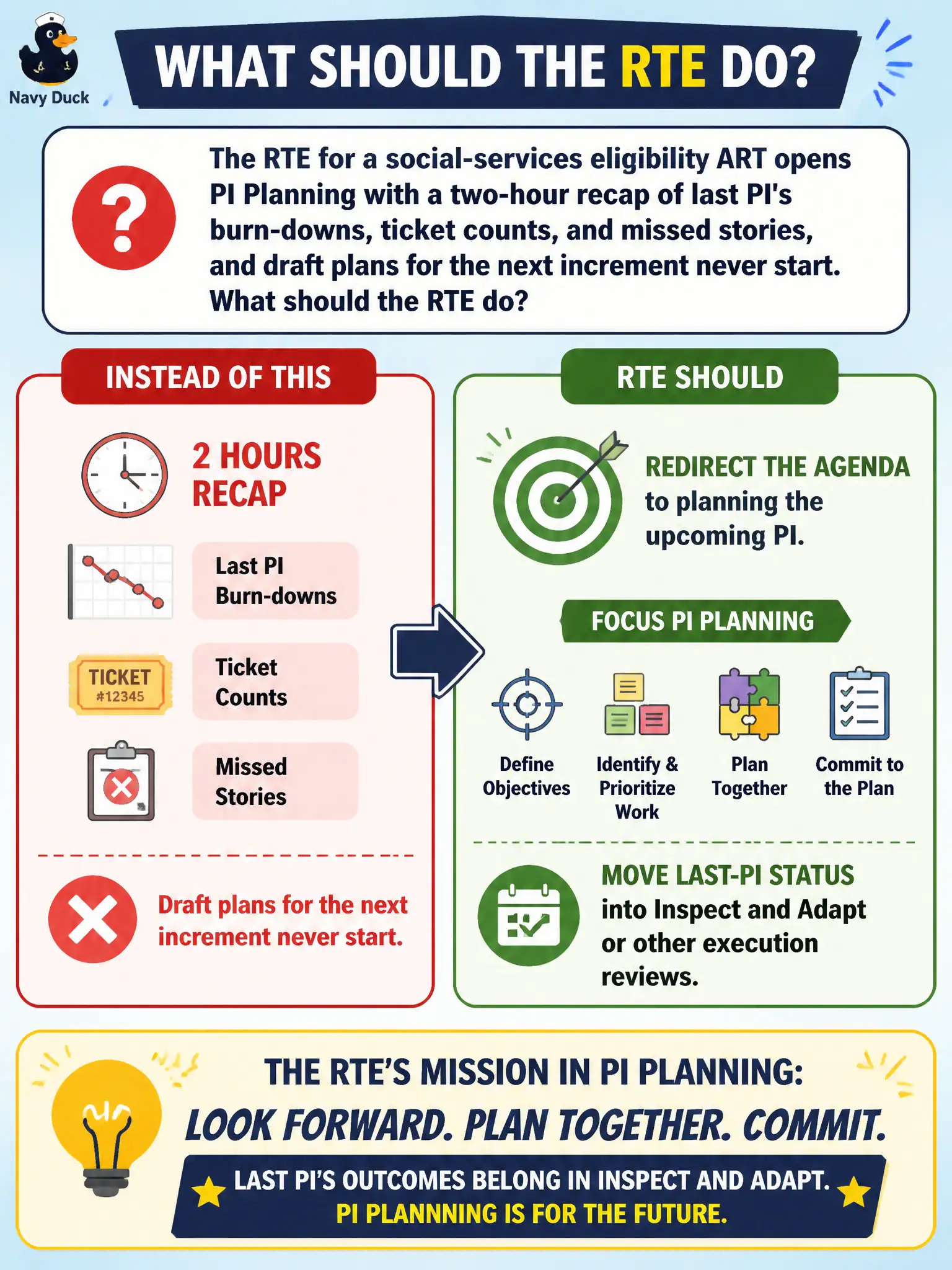
Short Explanation
PI Planning is a map session for the next stretch of road, not a recap of last month's mileage. Last PI already had its reviews. Get the eligibility teams pointing at the next increment.
Full Explanation
PI Planning timeboxes exist to plan the upcoming Program Increment, not to become the ART's only status forum. When a social-services eligibility RTE opens with a two-hour recap of burn-downs, ticket counts, and missed stories so draft plans never start, the facilitation fix is to redirect the agenda to planning the next PI and move last-PI status into Inspect and Adapt or other execution reviews. Keeping PI Planning as the sole status forum guarantees the next plan never gets room. Canceling PI Planning for a weekly status standup until every last-PI eligibility defect is closed abandons cadence and freezes modernization behind perfect closure. Handing the session to Product Owners to demo completed tickets one by one turns planning into a show-and-tell. For a social-services eligibility ART, that discipline protects residents waiting on benefits modernization: status theater does not enroll anyone, while a facilitated plan creates the next increment of civic value. Exam caveat: a brief look-back can set context, but it must not consume the planning timebox. Operational check: if status discussion exceeds its agenda slot, park remaining metrics to I&A and start draft planning on schedule for the eligibility ART. Confirm the revised agenda is published to Business Owners before Day 1 so eligibility sponsors arrive ready to plan, not to litigate last PI.