
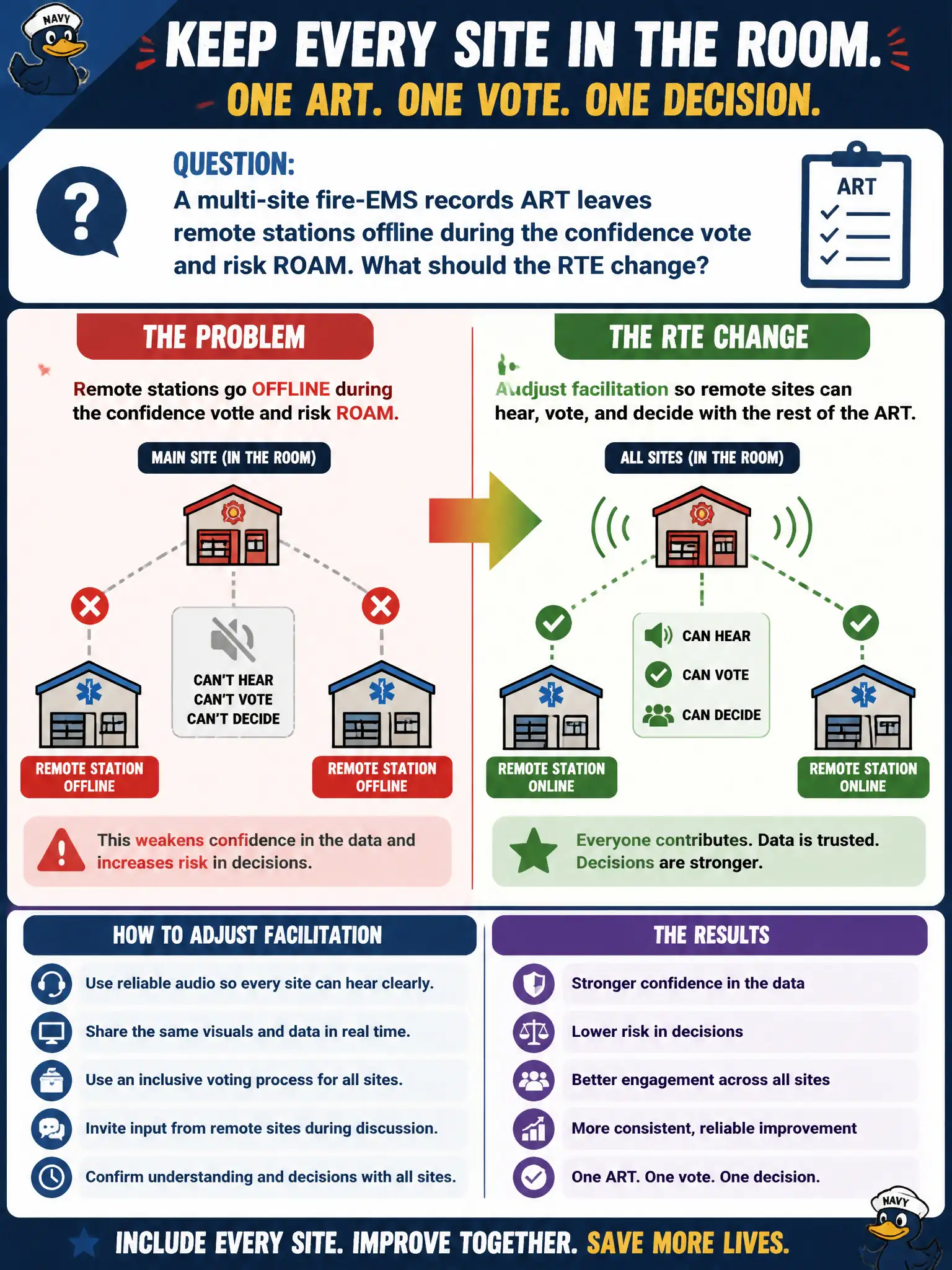
A multi-site fire-EMS records ART leaves remote stations offline during the confidence vote and risk ROAM. What should the RTE change?
Select an answer to reveal the explanation.
Short Explanation
If the outlying stations cannot hear the vote, they are not on the train for that decision. Multi-site fire-EMS planning has to include remote people in ROAM and confidence, even if that means shifting timeboxes. A main-room-only vote is a fake commitment.
Full Explanation
Multi-location PI Planning succeeds only when every site can participate in key decisions, including ROAM and the confidence vote. When a multi-site fire-EMS records ART leaves remote stations offline during those moments, the RTE must adjust facilitation for connectivity, time zones, and inclusion rather than counting only collocated votes. Counting only the main records room as the ART decision excludes stations that must live with the plan. Recording the vote and emailing it later without discussion denies remote crews the chance to raise risks that would change ROAM outcomes. Rescheduling remote teams to plan alone the following week fragments the ART into sequential mini-events and breaks dependency negotiation. Adjusting facilitation so remote sites can hear, vote, and decide with the rest of the ART is correct. Exam caveat: asynchronous make-ups are a poor substitute for live participation in confidence and ROAM; use them only as emergency fallback. Operational check: before the vote, ping each remote station for audio/video confirmation and pause until those sites can participate or a named delegate is empowered live. Keeping the civic ART's planning artifacts visible to Business Owners and teams after the event preserves continuity from preparation into execution.