
Teams on the airport operations digital ART write PI Objectives that are vague task lists. What should the RTE coach during facilitation?
Select an answer to reveal the explanation.
Short Explanation
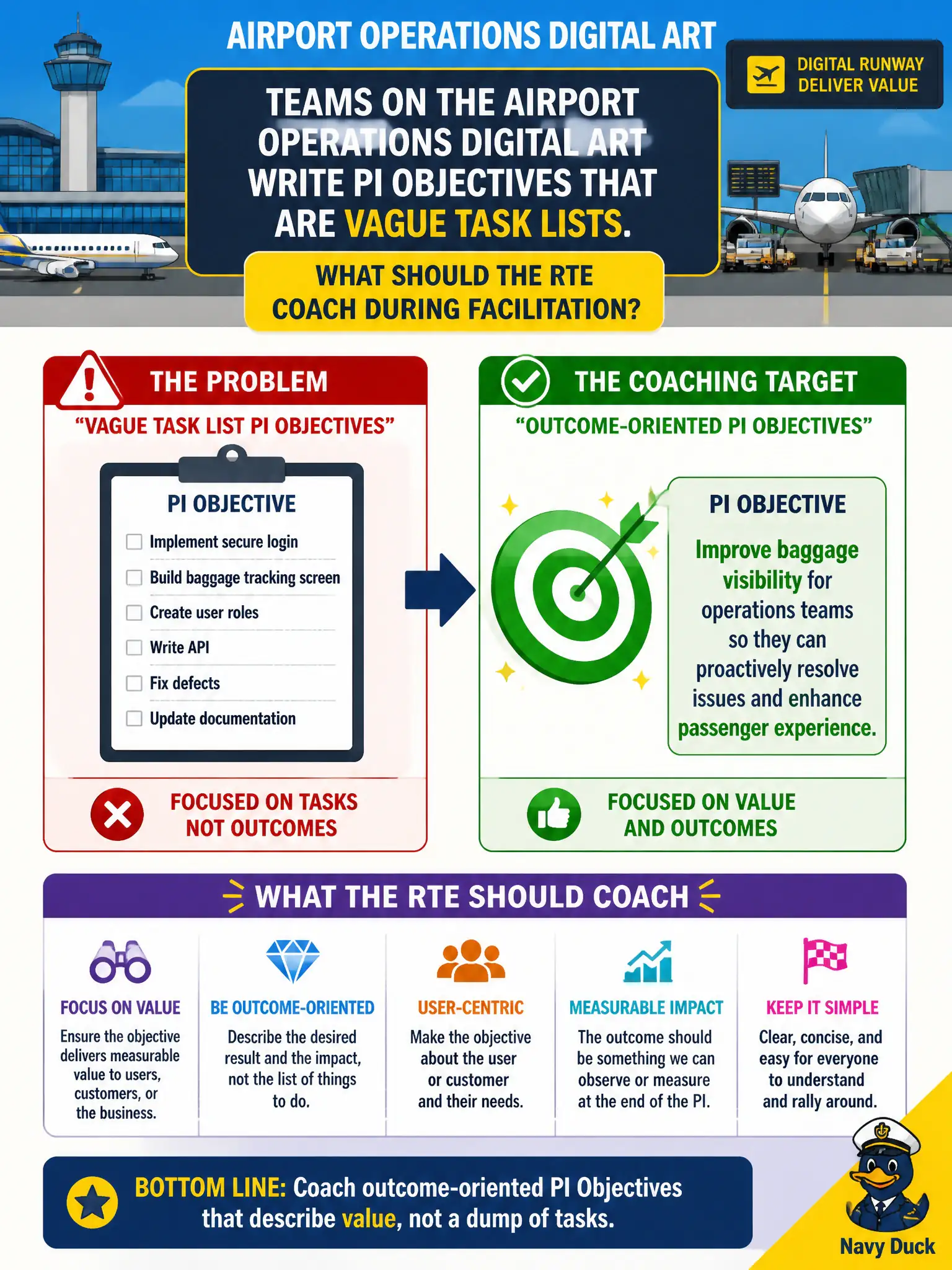
A PI Objective is a promise of value, not a grocery list of tasks. 'Stand up a shared turnaround view for gate ops' beats 'meet, configure, test, repeat.' Coach the airport teams toward outcomes while they are still in the room.
Full Explanation
Quality PI Objectives describe outcomes the ART intends to deliver, not an unprioritized task dump. During facilitation on an airport operations digital ART, the RTE coaches outcome-oriented objectives so Business Owners can assign value and teams can commit with clarity. Accepting vague task lists because they are easier to check off at the airport desk optimizes for activity tracking over resident and ops outcomes. Converting every objective into a Gantt milestone date owned by the operations director reintroduces project-schedule theater and removes team ownership. Having the RTE rewrite all objectives in private after Day 2 and publish Monday destroys co-creation and often misstates capacity. Coaching outcome-oriented PI Objectives is correct. Exam caveat: objectives can mention key capabilities, but they should still express value delivered, not a meeting-and-configure checklist. Operational check: during draft review, ask each airport team whether a Business Owner could explain the objective's value in one sentence without reading the task list. Keeping the civic ART's planning artifacts visible to Business Owners and teams after the event preserves continuity from preparation into execution.