
One loud stakeholder dominates Q&A during public works work-order ART PI Planning. How should the RTE facilitate?
Select an answer to reveal the explanation.
Short Explanation
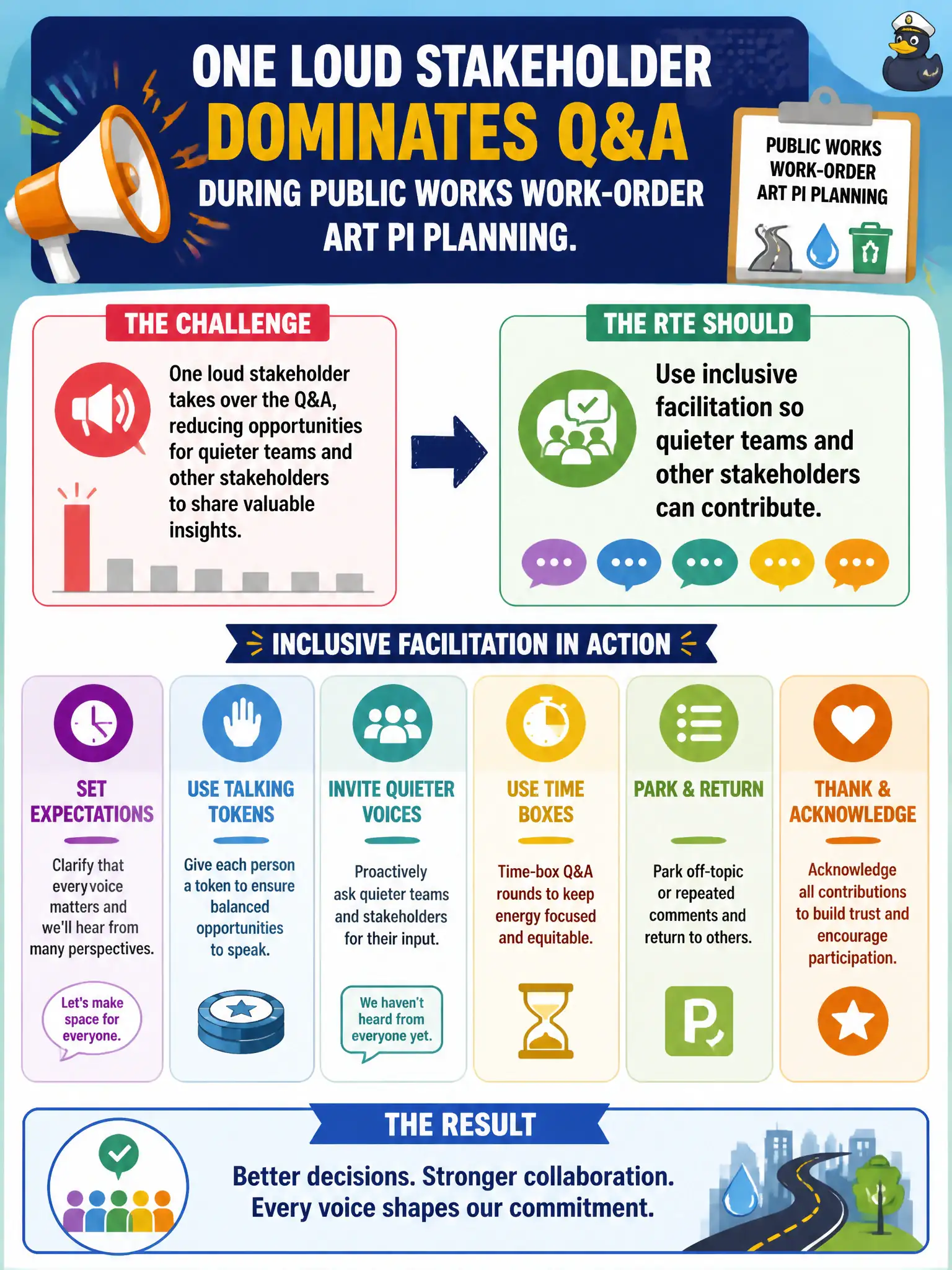
One loud voice in a public-works planning room will steamroll the people who actually close work orders. Inclusive facilitation means timeboxes, round-robins, and parking lots so others get in. The RTE protects the whole ART, not the loudest mic.
Full Explanation
Group facilitation during PI Planning includes preventing single-stakeholder domination. On a public works work-order ART, the RTE should use inclusive techniques—timeboxes, round-robins, parking lots—so quieter teams and field crews can contribute. Giving remaining agenda time to the loud stakeholder rewards domination and starves other perspectives. Ending Q&A immediately and skipping remaining questions from field crews silences the people closest to work-order reality. Moving the discussion to a private hallway so the main room stays polite hides conflict instead of facilitating it. Inclusive facilitation is the correct stance. Exam caveat: inclusion does not mean endless open mic; the RTE still protects timeboxes and may park topics that belong in a breakout. Operational check: if one voice exceeds a fair share, intervene with a structured turn-taking method and explicitly invite at least two quieter work-order teams before closing Q&A. Keeping the civic ART's planning artifacts visible to Business Owners and teams after the event preserves continuity from preparation into execution. Keeping the civic ART's planning artifacts visible to Business Owners and teams after the event preserves continuity from preparation into execution.