
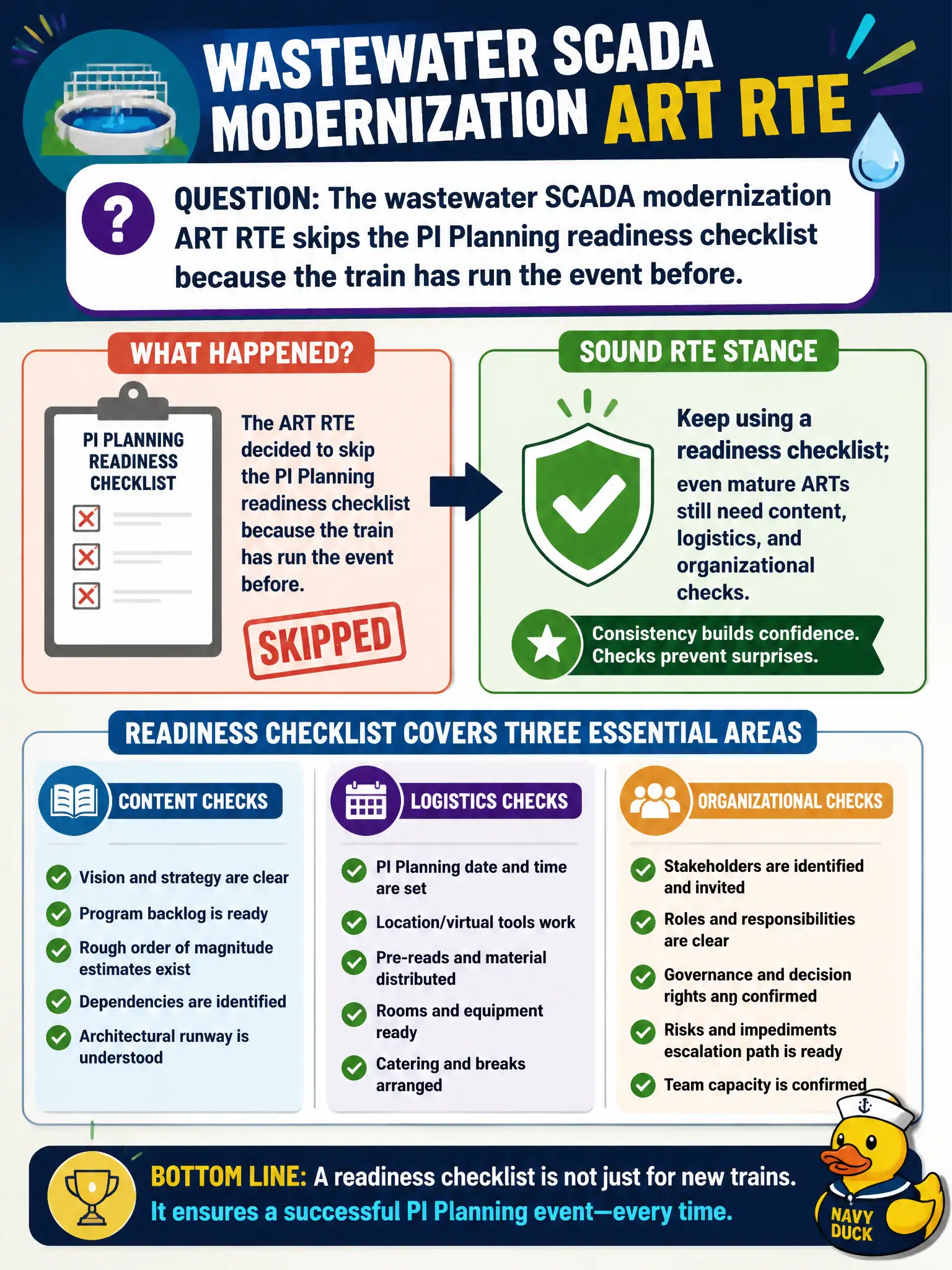
The wastewater SCADA modernization ART RTE skips the PI Planning readiness checklist because the train has run the event before. What is the sound RTE stance?
Select an answer to reveal the explanation.
Short Explanation
Veterans still use a pre-start checklist before they open a plant. A mature wastewater ART is no different: content, rooms, people, and tools still fail in new ways. The checklist is professional prep, not bureaucracy for rookies.
Full Explanation
SAFe PI Planning readiness covers organizational, content, and logistics checks every PI. Maturity does not retire those categories; it only changes how fast a trained ART can close gaps. When the wastewater SCADA modernization ART RTE skips the readiness checklist because the train has run the event before, the sound stance is to keep using the checklist—even mature ARTs still need content, logistics, and organizational checks. Treating checklists as only for the first PI of a brand-new ART ignores staffing changes, tool changes, and new regulatory constraints common on operational technology trains. Claiming experience replaces logistics so only the vision slide matters leaves breakouts, shared services, and remote sites unvalidated. Asserting checklists belong to PMO auditors, not to the RTE, misplaces facilitation ownership—the RTE is accountable for event readiness. Exam caveat: the checklist can be lean and tailored, but skipping it entirely is not tailoring. Operational check: walk the readiness checklist in the final prep meeting, mark red/yellow/green for SCADA content, logistics, and org items, and assign owners for any yellow or red before Day 1. Keeping the civic ART's planning artifacts visible to Business Owners and teams after the event preserves continuity from preparation into execution.