
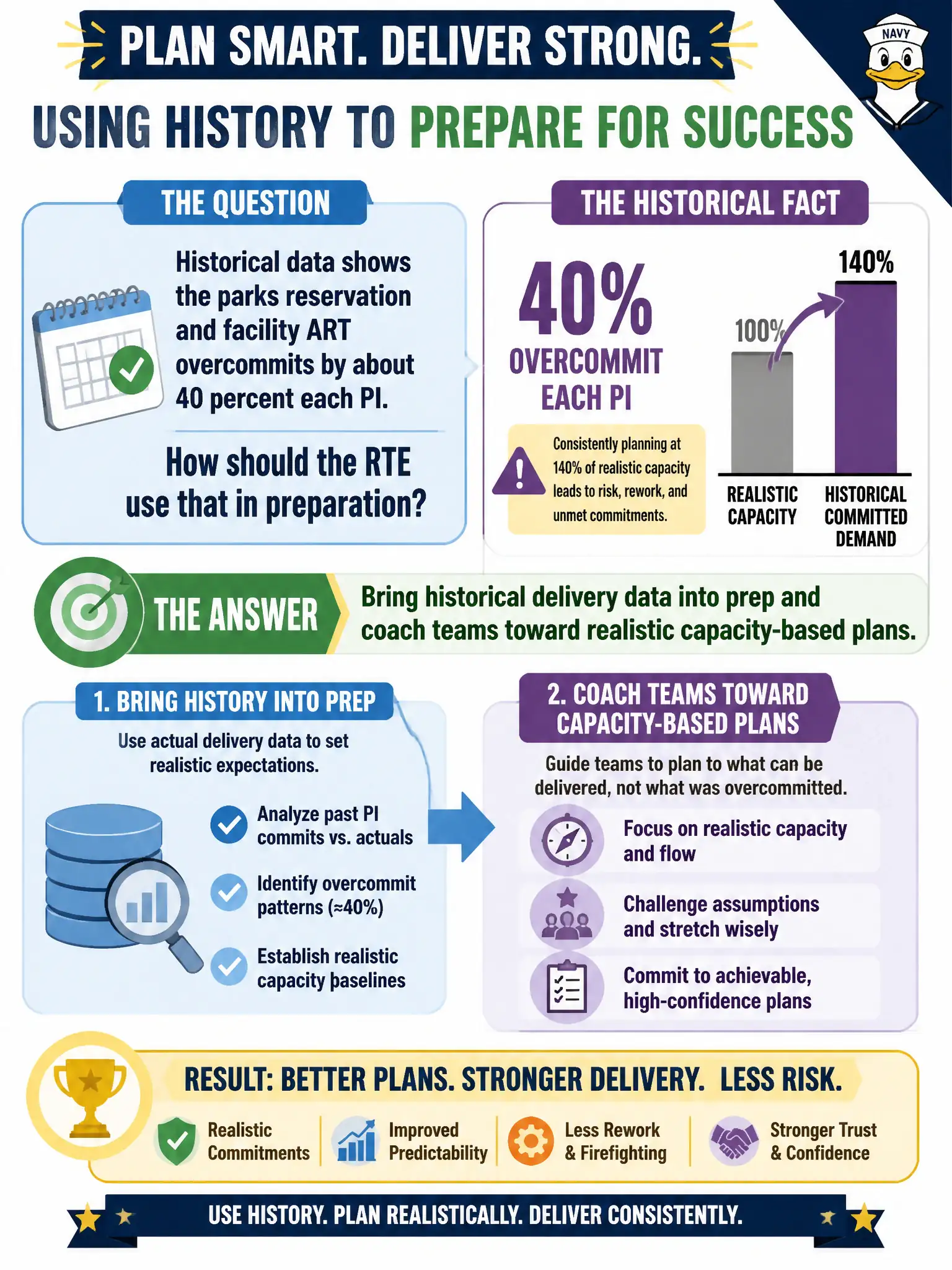
Historical data shows the parks reservation and facility ART overcommits by about 40 percent each PI. How should the RTE use that in preparation?
Select an answer to reveal the explanation.
Short Explanation
If the parks train promises a 100-site rollout and usually lands 60, that history is a coaching gift. Bring the data into prep and help teams plan to real capacity. Raising the target to 'catch up' just writes a bigger broken promise.
Full Explanation
Preparation should include historical delivery and capacity data so the RTE can coach realistic planning. Chronic roughly 40 percent overcommitment on a parks reservation and facility ART is a forecasting problem the next PI must confront with facts, not optimism. Hiding the data so park teams do not lose motivation removes the only evidence needed to correct load. Bringing historical delivery data into prep and coaching teams toward realistic capacity-based plans is the sound stance. Raising the next PI's target by another 40 percent to catch up on reservation features amplifies overcommitment and guarantees more missed objectives. Replacing team planning with a top-down hours spreadsheet from the parks director abandons team ownership of capacity and SAFe planning mechanics. Exam caveat: historical averages inform capacity; they do not freeze innovation or forbid stretch objectives when explicitly marked uncommitted. Operational check: show last several PIs' planned-versus-delivered objectives and load charts in the readiness packet, and ask each parks team to explain how its draft plan differs from the overcommit pattern. Keeping the civic ART's planning artifacts visible to Business Owners and teams after the event preserves continuity from preparation into execution.