
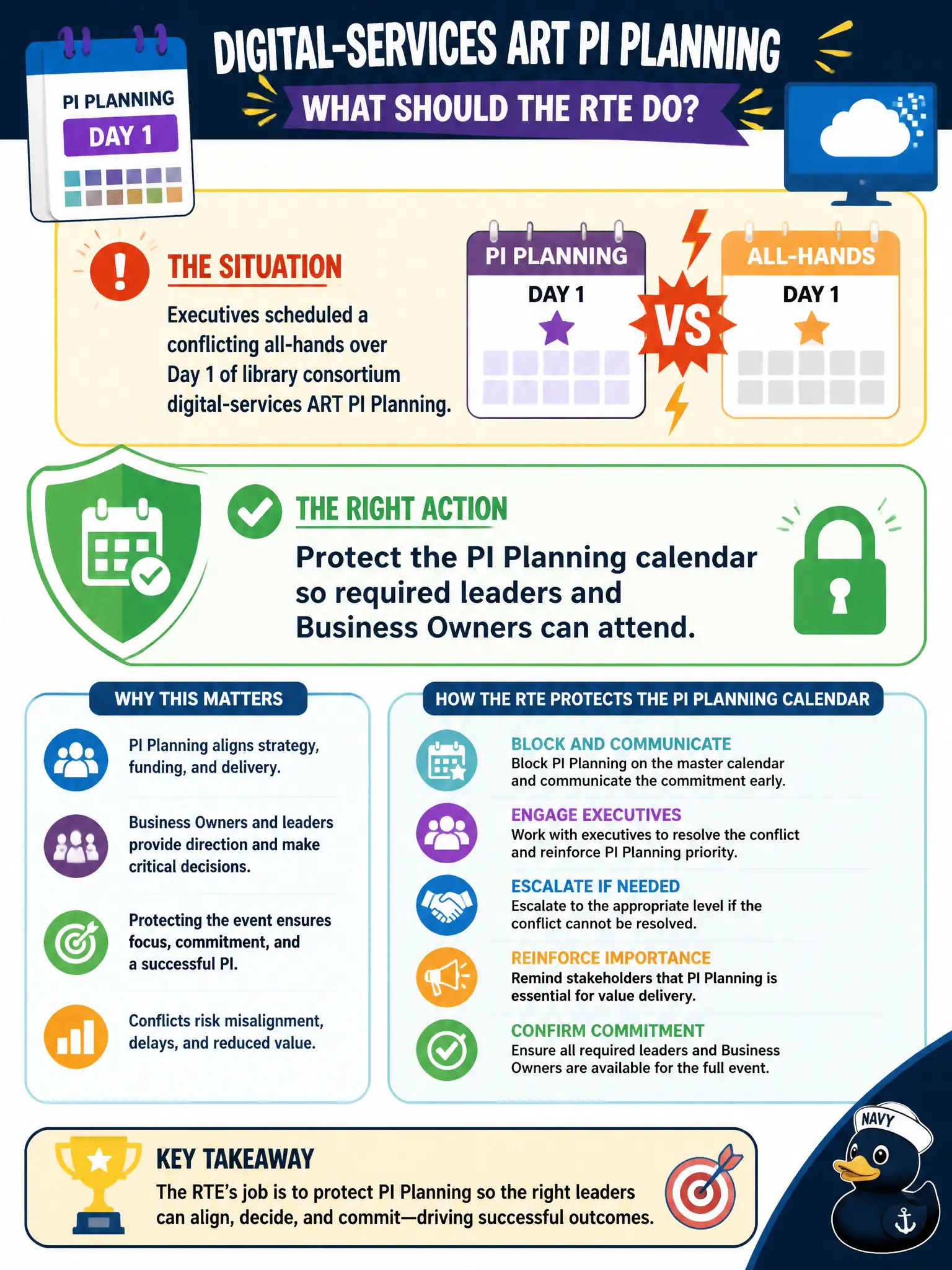
Executives scheduled a conflicting all-hands over Day 1 of library consortium digital-services ART PI Planning. What preparation action should the RTE take?
Select an answer to reveal the explanation.
Short Explanation
PI Planning is the library consortium's alignment day, not a meeting you squeeze around an all-hands. Protect the calendar so Business Owners and required leaders actually show up. If they are in another room, the train plans without the people who must assign value.
Full Explanation
Organizational readiness includes protecting the PI Planning calendar for the ART, Business Owners, and other required leaders. A conflicting executive all-hands on Day 1 of library consortium digital-services ART PI Planning removes decision-makers the event needs. The RTE should protect the PI Planning calendar so required leaders and Business Owners can attend rather than surrendering the two days. Moving PI Planning to an email thread so executives can skip abandons collaborative planning and dependency negotiation. Running Day 1 without Business Owners and assigning business value later in private breaks the value-assignment checkpoint and hides trade-offs from the train. Asking teams to plan after hours so the all-hands keeps the main room treats PI Planning as optional overtime instead of the ART's primary planning cadence. Exam caveat: rare emergencies may force partial remote participation, but routine all-hands should yield to PI Planning, not the reverse. Operational check: publish PI Planning dates early, conflict-scan executive calendars, and escalate calendar collisions during readiness reviews before the library consortium event. Keeping the civic ART's planning artifacts visible to Business Owners and teams after the event preserves continuity from preparation into execution.