
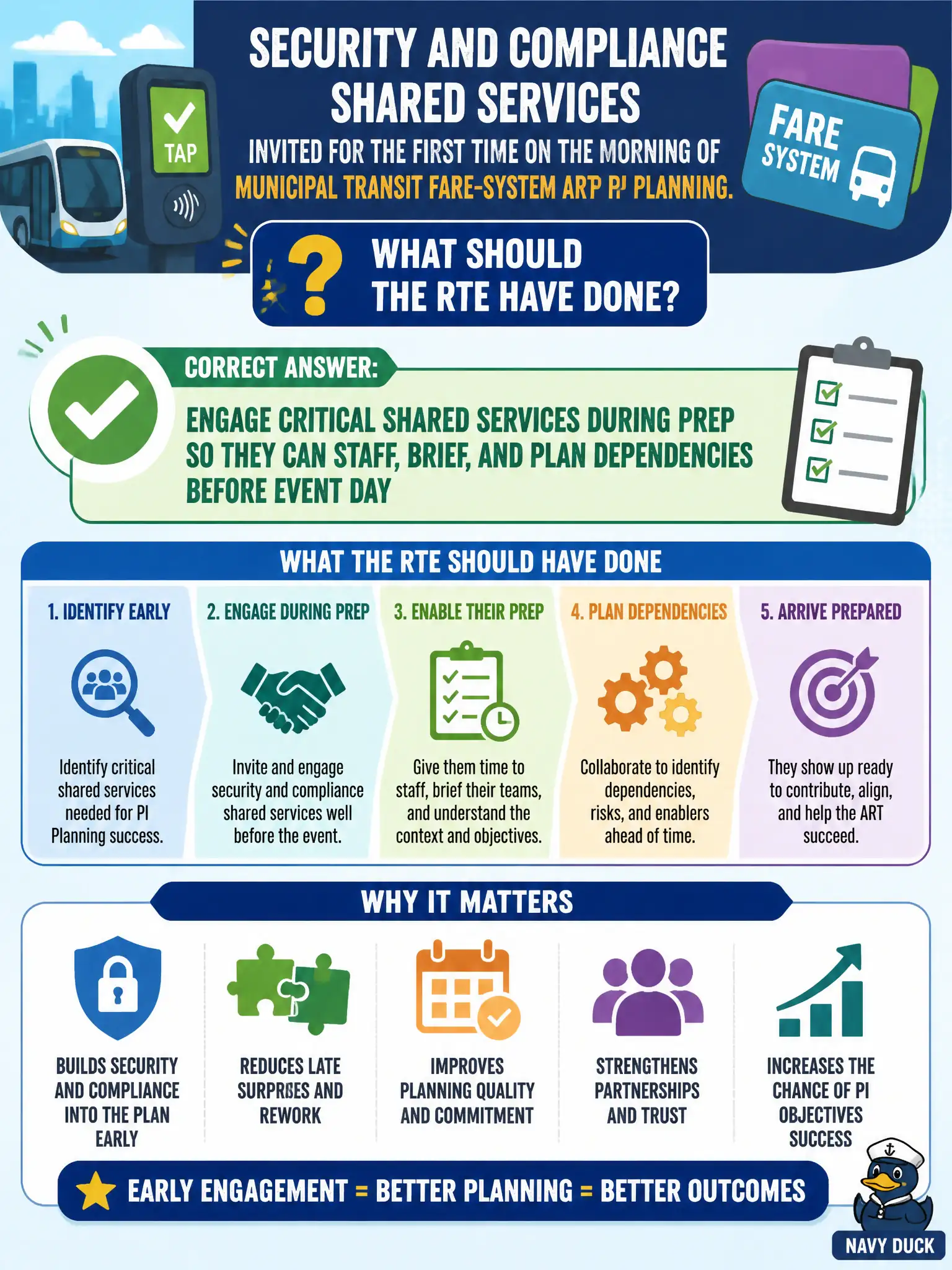
Security and compliance shared services are invited for the first time on the morning of municipal transit fare-system ART PI Planning. What should the RTE have done?
Select an answer to reveal the explanation.
Short Explanation
Fare systems live and die on security and compliance. Inviting those shared services on the morning of PI Planning is like calling the signal shop after the trains already left. Bring them in during prep so they can actually plan the handoffs.
Full Explanation
Critical shared services are part of ART planning when features depend on them. The RTE should engage security and compliance before event day so people, constraints, and dependencies can be staffed and briefed for a municipal transit fare-system ART. Inviting those specialists for the first time on the morning of PI Planning leaves no time to align capacity, review fare-compliance constraints, or place dependencies on the program board. Keeping shared services out of PI Planning so fare teams stay faster creates speed theater that breaks when compliance blocks a release. Inviting them only to the confidence vote after plans are locked arrives too late for meaningful dependency negotiation. Having teams guess fare-compliance constraints without specialists in the room invents risk. Exam caveat: not every shared service attends every minute, but critical ones need prep engagement and clear touchpoints during the event. Operational check: identify security and compliance contacts in the readiness checklist, confirm attendance or delegates, and pre-brief known fare regulatory constraints before Day 1. Keeping the civic ART's planning artifacts visible to Business Owners and teams after the event preserves continuity from preparation into execution.