
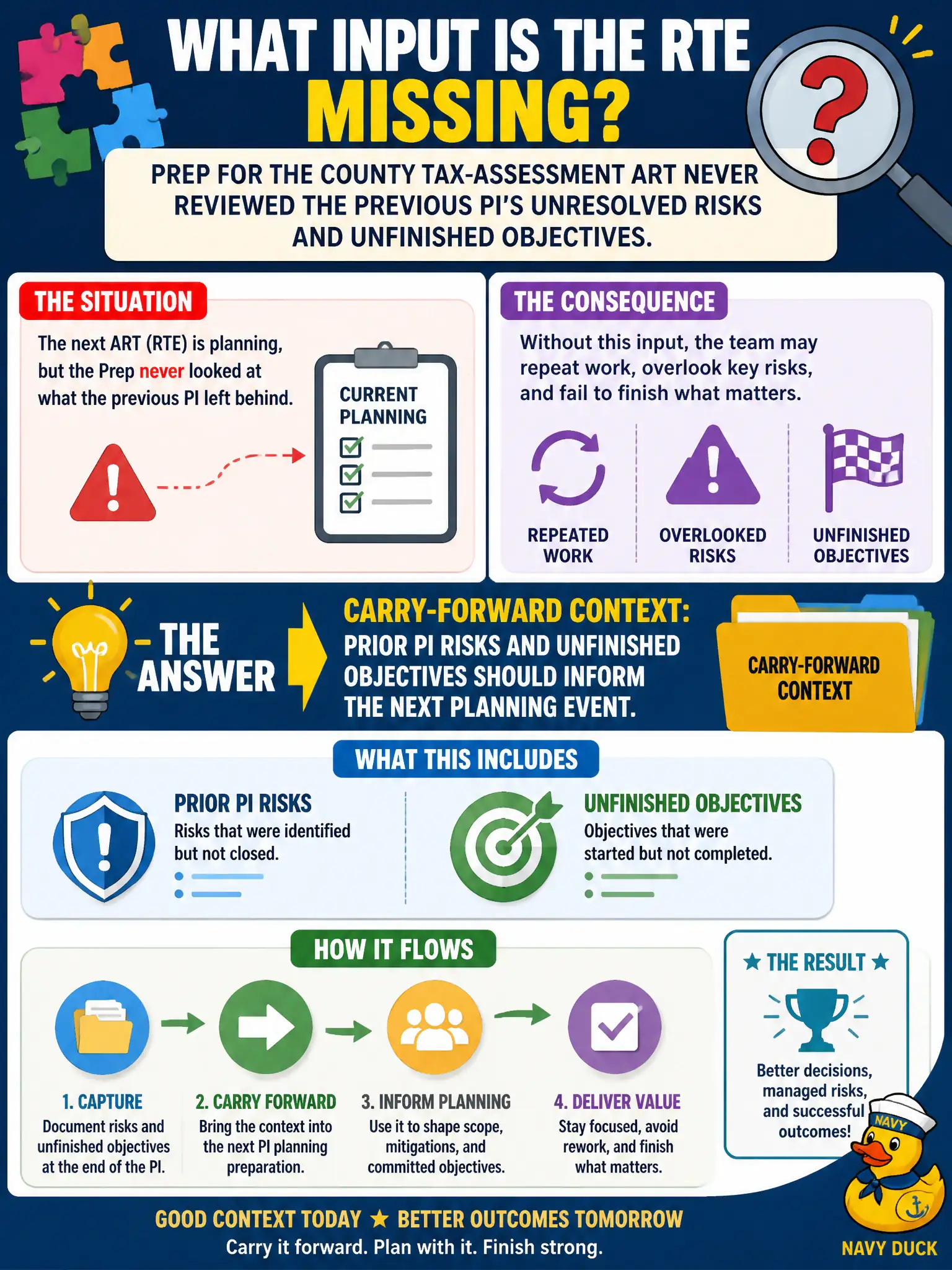
Prep for the county tax-assessment ART never reviewed the previous PI's unresolved risks and unfinished objectives. What input is the RTE missing?
Select an answer to reveal the explanation.
Short Explanation
Last PI's leftover tax-assessment risks do not evaporate when the calendar flips. Bring unfinished objectives and open risks into prep so the next plan is honest. Starting from a blank wall is how the same fires come back.
Full Explanation
PI Planning preparation should include reviewing prior-PI outcomes: unfinished objectives, lingering risks, and known constraints. That carry-forward context keeps the county tax-assessment ART from pretending the next increment starts with a blank slate when assessment work and risks remain. Archiving last PI's risks and starting every planning event with a blank risk list discards institutional memory and invites the same failures. Converting unfinished objectives into a capital-project charter outside the ART cadence removes work from flow-based planning and often stalls modernization. Waiting until a mid-PI System Demo to mention leftover assessment work delays visibility until capacity is already committed elsewhere. Exam caveat: carry-forward items still compete for capacity—they are inputs to prioritization, not automatic top commitments without Business Owner judgment. Operational check: before Day 1, publish a short carry-forward brief listing unfinished objectives, open ROAM items, and constraints Product Management and teams must consider while drafting plans. Keeping the civic ART's planning artifacts visible to Business Owners and teams after the event preserves continuity from preparation into execution.