
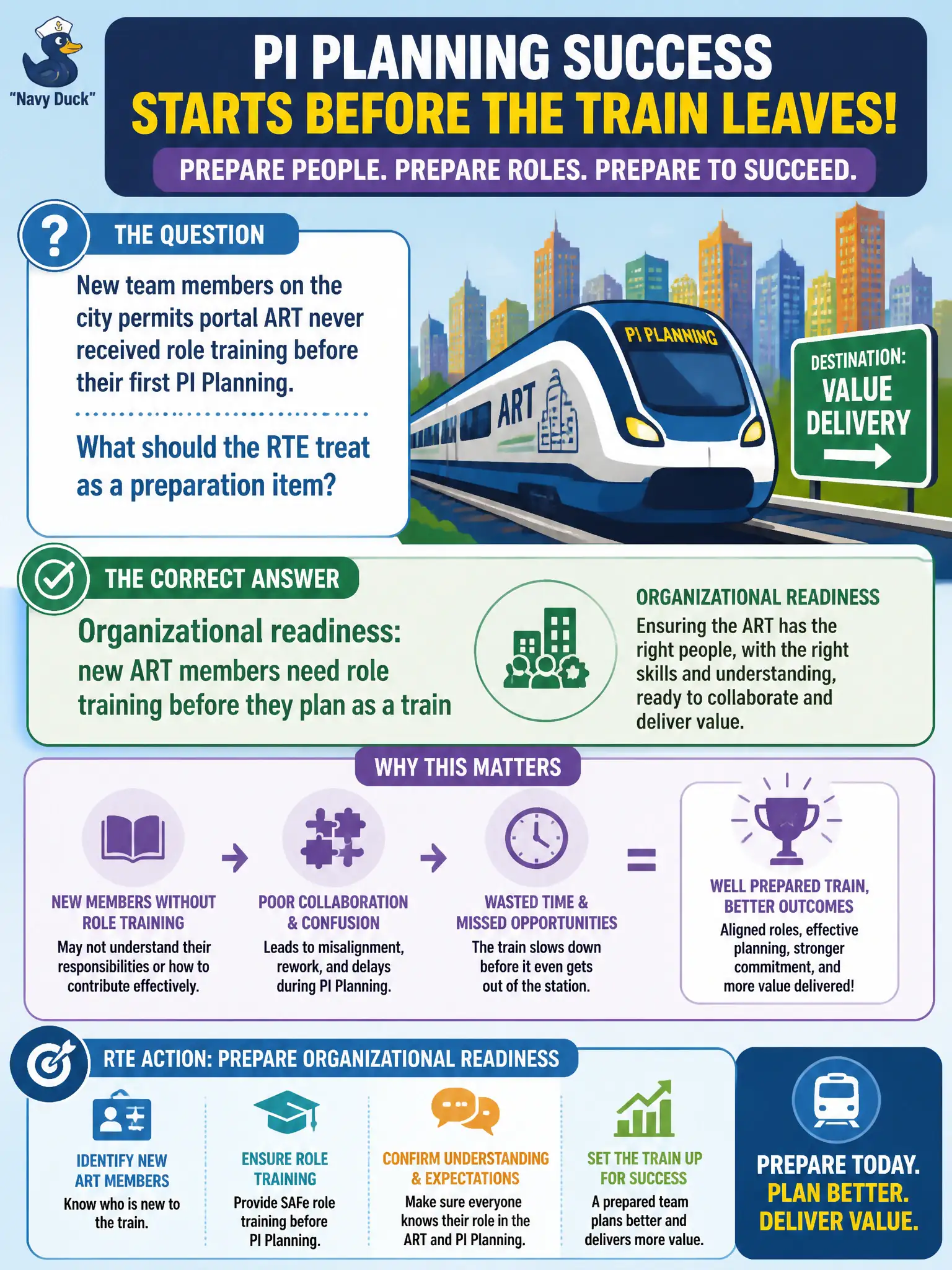
New team members on the city permits portal ART never received role training before their first PI Planning. What should the RTE treat as a preparation item?
Select an answer to reveal the explanation.
Short Explanation
Dropping untrained people into PI Planning is like handing a new permits clerk the counter on day one with no playbook. Role training is part of getting the ART ready, not a nice-to-have after the vote. Teach the roles first, then let them plan.
Full Explanation
Organizational readiness for PI Planning includes trained teams and clarity on ART roles so new members can plan as part of the train rather than as confused observers. For a city permits portal ART, new team members who never received role training before their first PI Planning create a preparation gap the RTE should treat as organizational readiness. Seating new members as silent observers and excluding them from team plans wastes capacity and delays learning that should happen with coaching support. Having them write PI Objectives for teams they have never met produces hollow commitments without context on capacity, dependencies, or permit-applicant outcomes. Skipping onboarding because PI Planning is supposedly self-explanatory once the doors open ignores that SAFe roles, program boards, ROAM, and confidence votes are practiced skills. Exam caveat: just-in-time micro-training can supplement formal courses, but some role clarity must exist before the event—not after Day 2. Operational check: confirm every new permits-portal member has role orientation and a buddy Scrum Master or Product Owner before draft planning begins. Keeping the civic ART's planning artifacts visible to Business Owners and teams after the event preserves continuity from preparation into execution.