
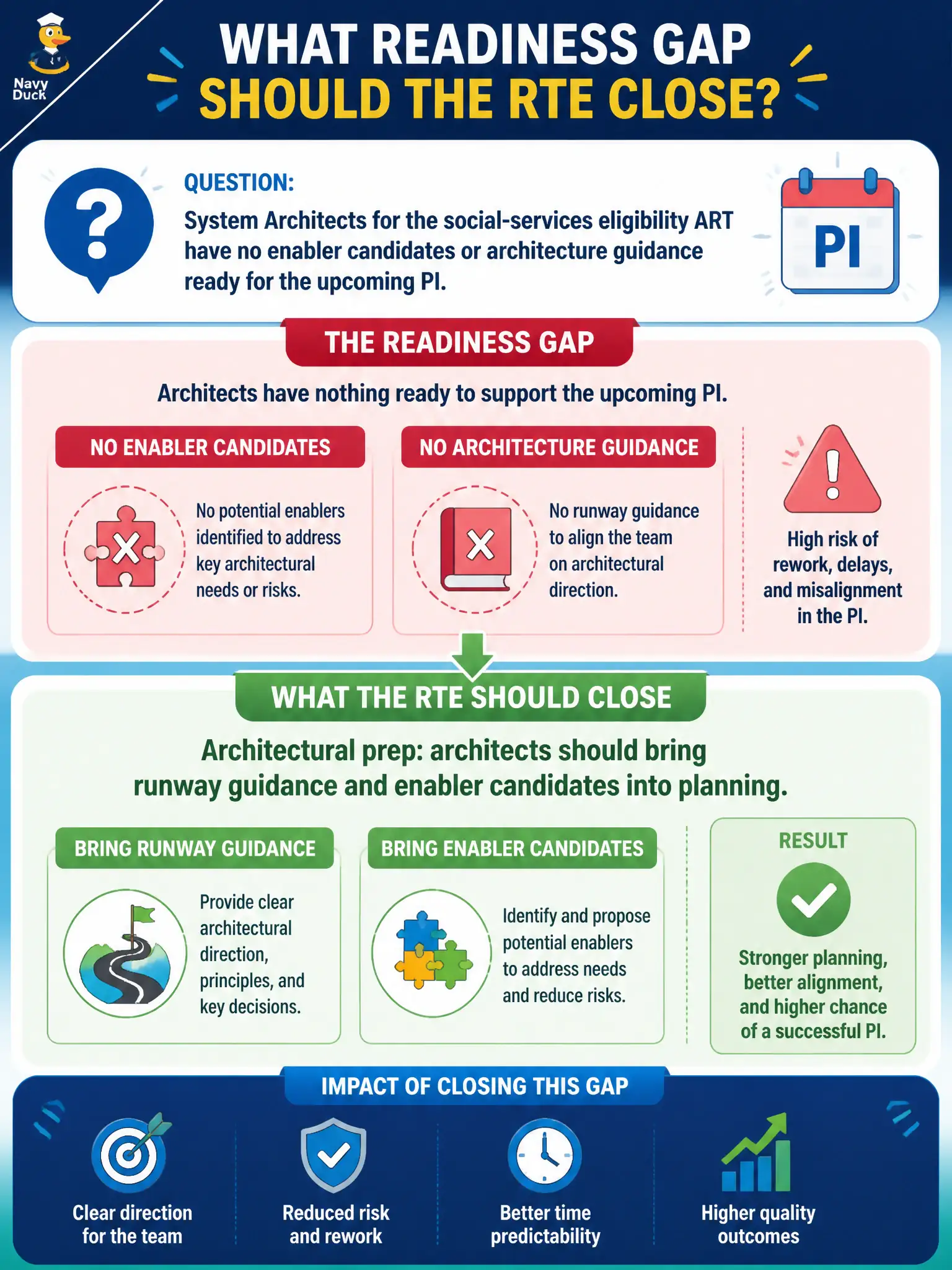
System Architects for the social-services eligibility ART have no enabler candidates or architecture guidance ready for the upcoming PI. What readiness gap should the RTE close?
Select an answer to reveal the explanation.
Short Explanation
Eligibility systems sit on rules engines, data, and integrations. If architects show up empty-handed, teams plan the front door and forget the foundation. Architecture guidance and enabler candidates are part of PI Planning readiness, not a speech the RTE writes on stage.
Full Explanation
Content readiness includes architecture and Lean UX guidance so teams can plan enablers alongside features. System Architects for a social-services eligibility ART should bring runway guidance and enabler candidates into planning; showing up empty-handed leaves teams planning resident-facing work without the rules-engine, data, and integration foundation those features need. Having Product Management hide technical work until after features are committed creates a false plan that collapses when enablers surface mid-PI and displace citizen outcomes. Telling teams to skip architecture and write only resident-facing stories this PI trades short-term feature count for growing debt, brittle integrations, and blocked delivery later. Having the RTE author the system design during Day 1 opening remarks violates role boundaries and compresses architecture into a speech instead of collaborative runway planning with the people who build. Exam caveat: architects prepare candidates and guidance; teams still own estimating and committing enabler work—prep is not a mandate to accept every proposed enabler without capacity trade-offs. Operational check: before PI Planning, confirm architects have a short runway brief and a visible list of candidate enablers aligned to the eligibility Program Backlog.