
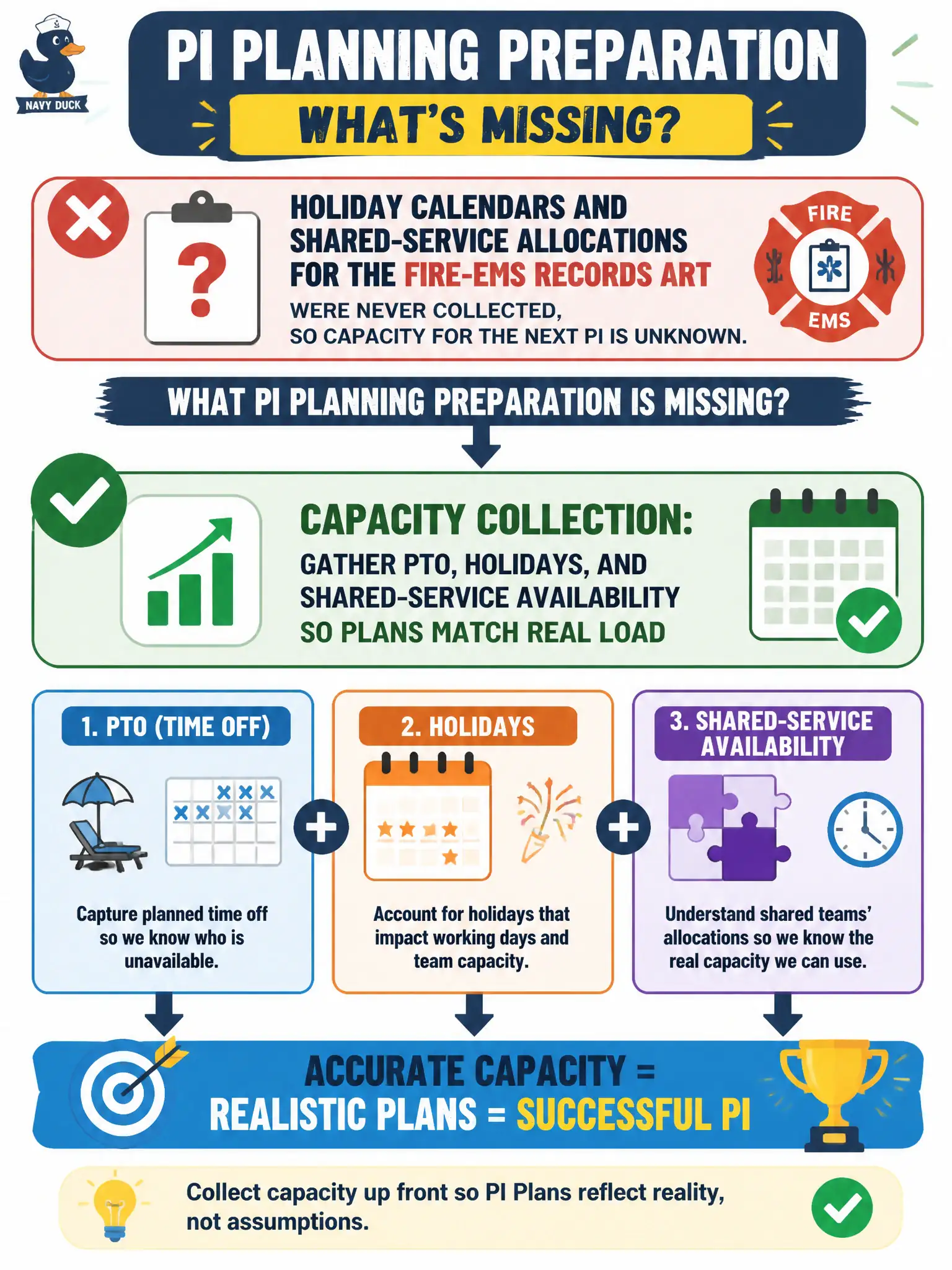
Holiday calendars and shared-service allocations for the fire-EMS records ART were never collected, so capacity for the next PI is unknown. What PI Planning preparation is missing?
Select an answer to reveal the explanation.
Short Explanation
You cannot staff a firehouse for the next season if nobody counted who is on vacation or borrowed by another desk. PI Planning has the same rule: collect holidays, PTO, and shared-service time before teams promise work. Unknown capacity is how trains overcommit.
Full Explanation
Matching demand to capacity is a core PI Planning outcome, so preparation must collect real availability: holidays, PTO, and shared-service allocations. For a fire-EMS records ART where calendars and shared-service time were never gathered, capacity collection is the missing preparation because plans would otherwise assume people who are unavailable or only partly on the train. Assuming every crew has full availability and planning stretch work only after the first incident surge ignores known constraints and overcommits early when records work already competes with operational surges. Delaying capacity math until Inspect and Adapt after the PI is underway means the plan was never feasible against real load and merely documents failure after the fact. Letting Product Management invent velocity targets without team or shared-service input substitutes hope for measured capacity and weakens team ownership of commitments. Exam caveat: capacity collection informs planning; it does not authorize the RTE to assign people or override civil-service and union constraints—those remain organizational realities the plan must respect. Operational check: publish a capacity sheet per team listing known PTO, holidays, and shared-service percentages, and have Scrum Masters confirm totals before draft plans are finalized.