
Product Management on the public-health immunization registry ART wants teams to code the full registry before any feedback loop exists. What should the RTE apply?
Select an answer to reveal the explanation.
Short Explanation
If you code the whole immunization registry before anyone clicks a shot record, you're building a clinic with the lights off. You need fast feedback so the ART finds out the intake form doesn't match the nurse's day.
Full Explanation
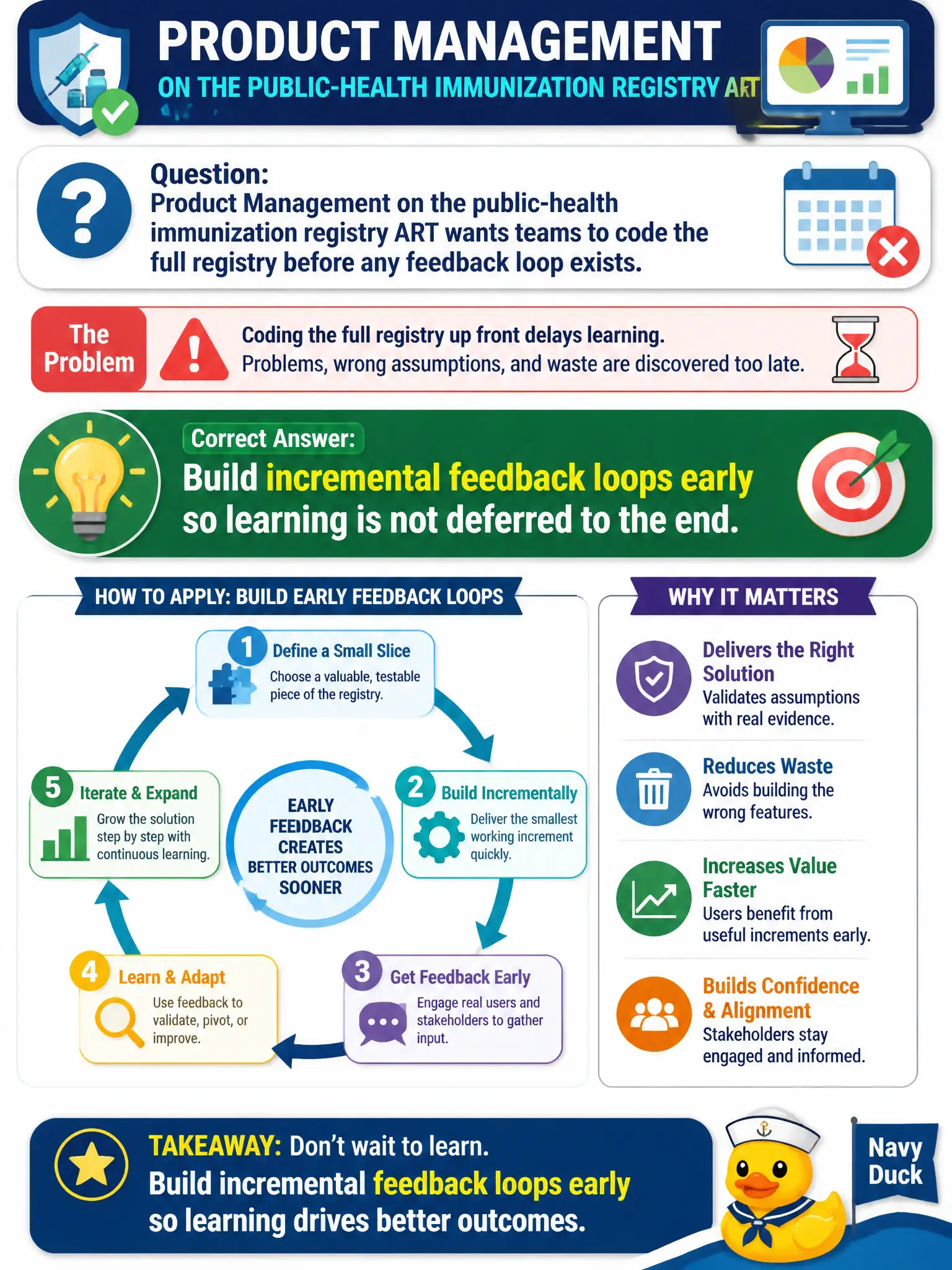
Build incremental feedback loops early so learning is not deferred to the end. When Product Management on a public-health immunization registry ART wants teams to code the full registry before any feedback loop exists, the RTE should apply that principle and insist on early demos and thin slices for clinicians and public-health staff. Gating clinician access until the completed registry passes final acceptance testing protects a big-bang build so clinicians see the system only at go-live, which maximizes late discovery risk in vaccination workflows that affect community health. Delaying all demos until every vaccination workflow is complete recreates waterfall integration risk across the registry. Replacing System Demos with a requirements walkthrough of the future registry substitutes document review for working-system feedback from real users. Exam caveat: Some clinical safety features need careful gating; still seek the thinnest safe slice that produces real user feedback inside the PI. Operational check: Negotiate a first-PI vertical slice of the registry with a System Demo to clinic users, and compare learning captured against a document-only review cycle. In municipal settings, pressure to look busy, compliant, or politically safe is constant; the RTE earns trust by holding the principle through that pressure and verifying the next cadence event shows improved civic delivery, not just a quieter meeting.