
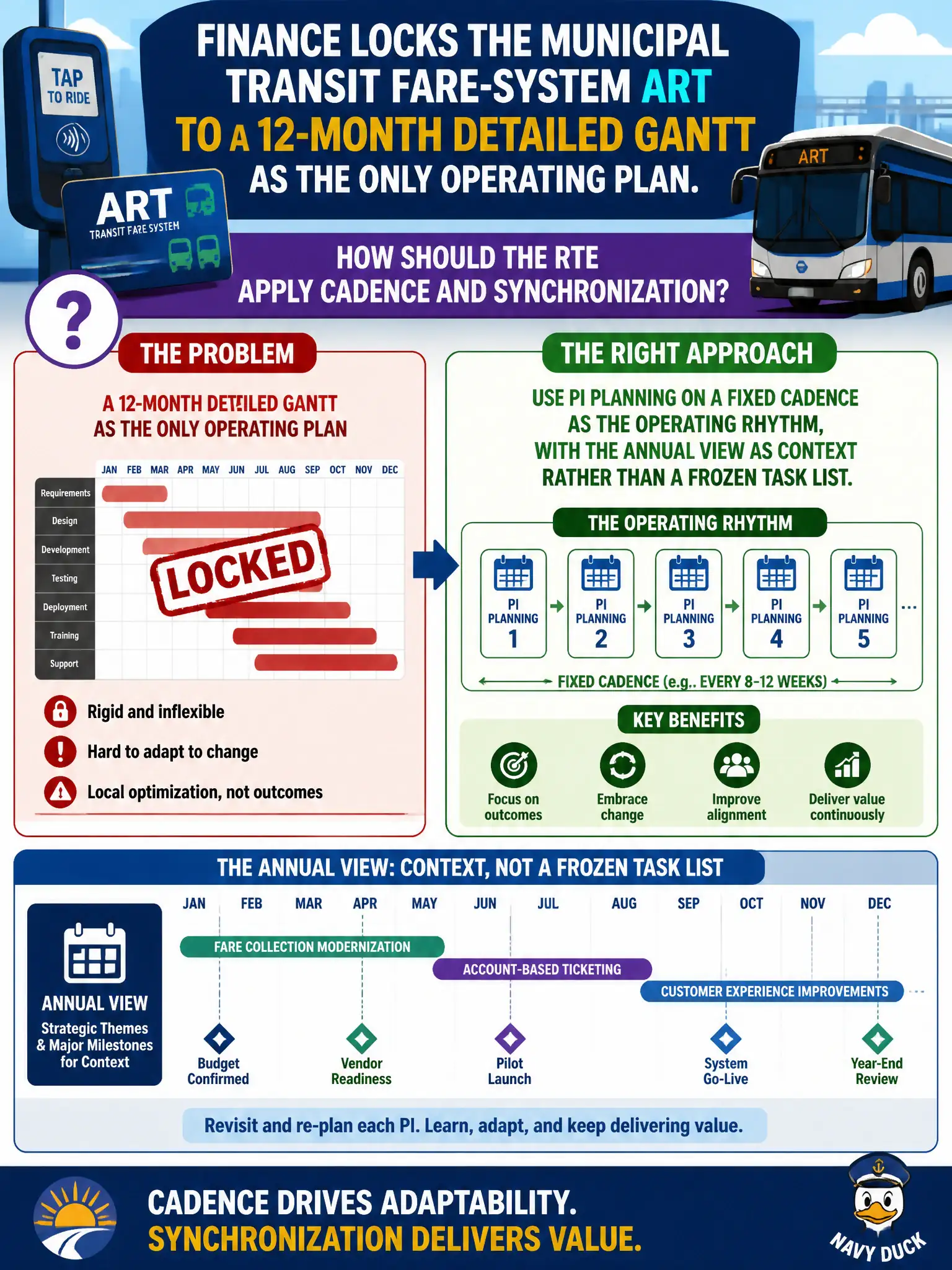
Finance locks the municipal transit fare-system ART to a 12-month detailed Gantt as the only operating plan. How should the RTE apply cadence and synchronization?
Select an answer to reveal the explanation.
Short Explanation
A year-long Gantt for fares is a train timetable printed in ink before the tracks are built. Cadence and PI Planning let the ART replan from reality; the annual chart is a sketch, not the rails.
Full Explanation
Cadence and synchronization use PI Planning on a fixed rhythm as the operating plan, with an annual view as context rather than a frozen task list. When finance locks a municipal transit fare-system ART to a 12-month detailed Gantt as the only operating plan, the RTE should restore PI cadence so fare work can replan based on learning while still informing the annual outlook. Keeping the Gantt as the only plan and treating PI Planning as a status meeting against it empties planning of real commitment and discovery. Canceling ART events because the Gantt already names every task and owner abandons the mechanisms that create integrated fare increments riders and operators can trust. Updating the Gantt daily in place of System Demos of working fare software substitutes schedule maintenance for validated learning. Exam caveat: Annual budgeting artifacts can remain for municipal finance; they should not replace PI Planning and demos as the ART's operating rhythm. Operational check: Keep the annual fare roadmap as context slides, run full PI Planning with team plans and objectives, and demonstrate working software rather than Gantt percent-complete in System Demo. In municipal settings, pressure to look busy, compliant, or politically safe is constant; the RTE earns trust by holding the principle through that pressure and verifying the next cadence event shows improved civic delivery, not just a quieter meeting.