
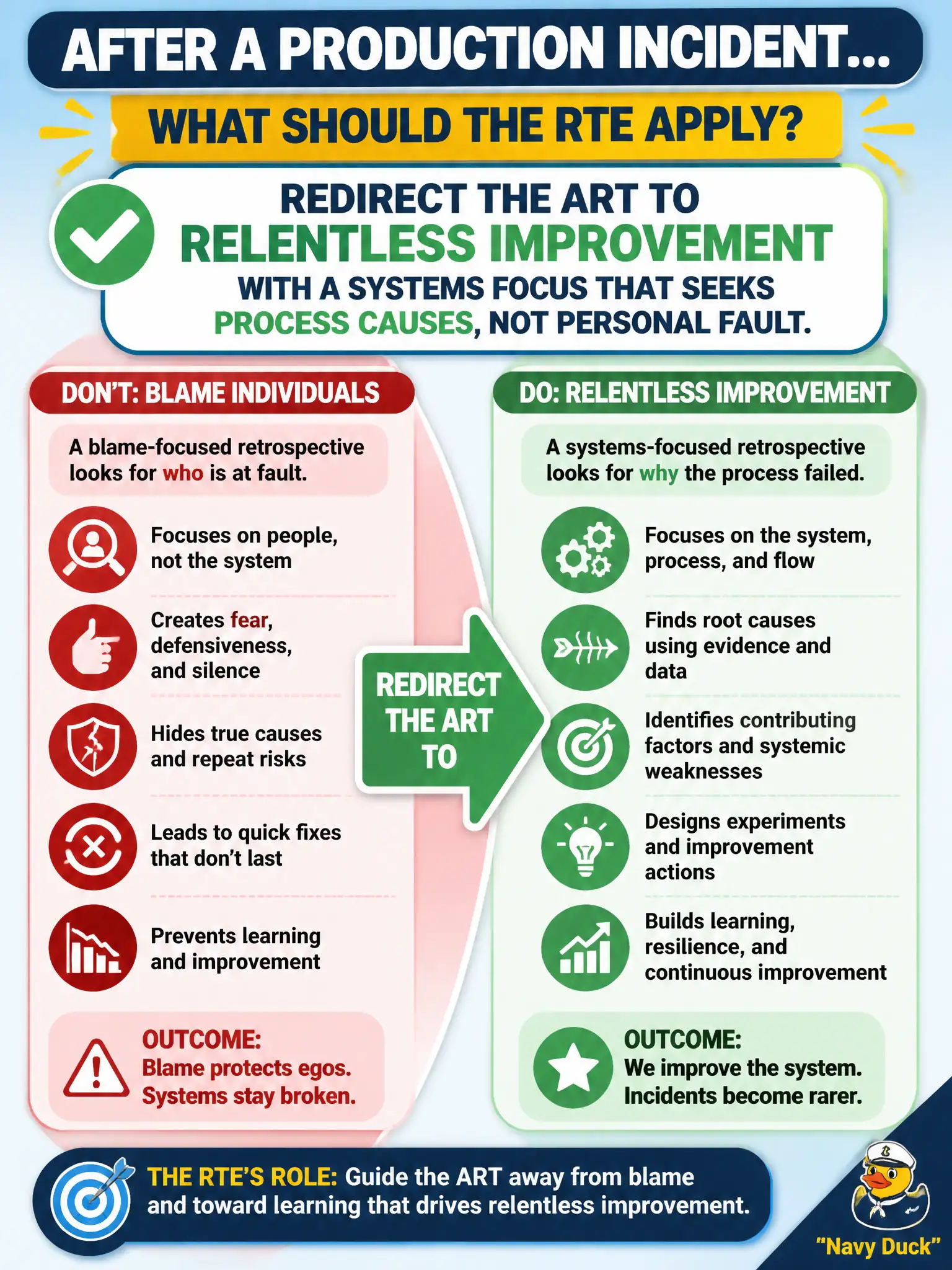
After a production incident, the county tax-assessment ART runs a retrospective that names individuals to blame. What should the RTE apply?
Select an answer to reveal the explanation.
Short Explanation
Blame retrospectives are smoke alarms that prosecute the battery. Tax-assessment incidents almost always live in the process, the environment, or the handoff—not in one person who happened to be on call.
Full Explanation
Relentless Improvement seeks process and system causes, not personal fault. After a production incident, when a county tax-assessment ART retrospective names individuals to blame, the RTE should redirect to systems focus so assessors and taxpayers get a safer process instead of a scapegoat. Publishing a blame list so future incidents have a deterrent creates fear that hides the next defect until it reaches production again. Skipping the retrospective because naming names already created accountability misses the improvement opportunity entirely. Having Human Resources lead the next Inspect and Adapt so the tone stays punitive reinforces person-focused blame rather than Lean problem-solving on assessment systems. Exam caveat: Individuals can still receive private coaching for clear misconduct; public incident learning forums should remain systems-oriented. Operational check: Rewrite the incident agenda around timeline, decision points, and missing safeguards; leave the tax-assessment Inspect and Adapt with experiments that change the process, not a list of people to punish. In municipal settings, pressure to look busy, compliant, or politically safe is constant; the RTE earns trust by holding the principle through that pressure and verifying the next cadence event shows improved civic delivery, not just a quieter meeting.