
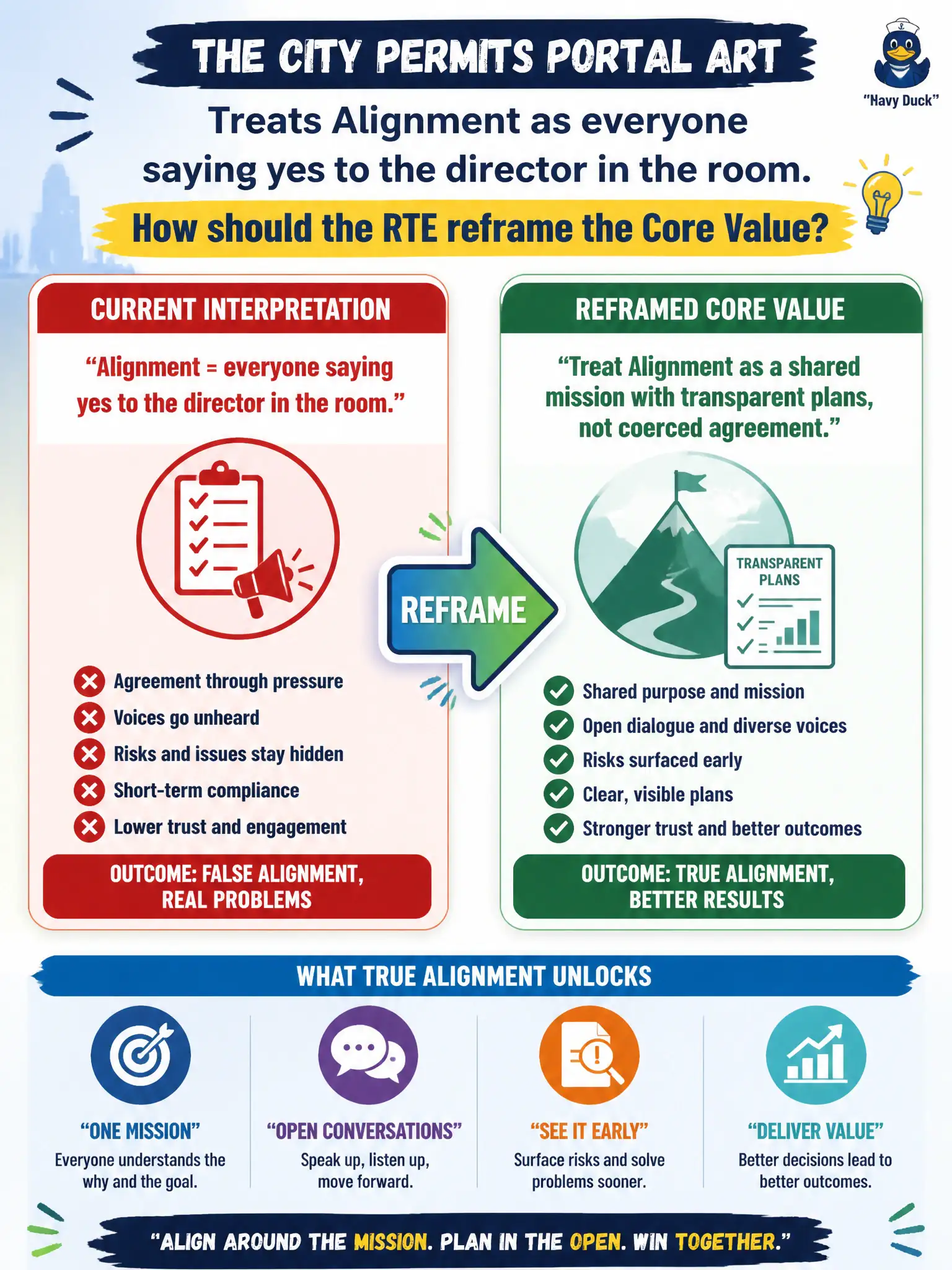
The city permits portal ART treats Alignment as everyone saying yes to the director in the room. How should the RTE reframe the Core Value?
Select an answer to reveal the explanation.
Short Explanation
Alignment is a shared map, not a hostage video. If the permits ART only says yes because the director is watching, that is silence, not a plan.
Full Explanation
Alignment means a shared mission with transparent plans—not coerced agreement. When a city permits portal ART treats Alignment as everyone saying yes to the director in the room, it confuses compliance with SAFe's Core Value and suppresses the dissent that would reveal permitting risks early for applicants and bureaus. The RTE should reframe Alignment as honest commitment to a common purpose and a visible plan that teams can execute. Collecting verbal yes-votes and treating dissent as a performance issue creates fear and fake consensus. Requiring a unanimous chat reaction before any PI Objective is written turns Alignment into ritual unanimity rather than shared understanding. Letting the director rewrite team plans after planning so the slide deck matches one voice destroys team ownership and Transparency about what will actually be built. Exam caveat: Alignment still requires decisions; it does not mean endless debate or that every objection blocks progress after a clear decision rule is applied. Operational check: In the next permits PI Planning, capture dissenting risks on the ROAM board instead of silencing them, and check that team plans remain authored by teams under a shared ART mission.