
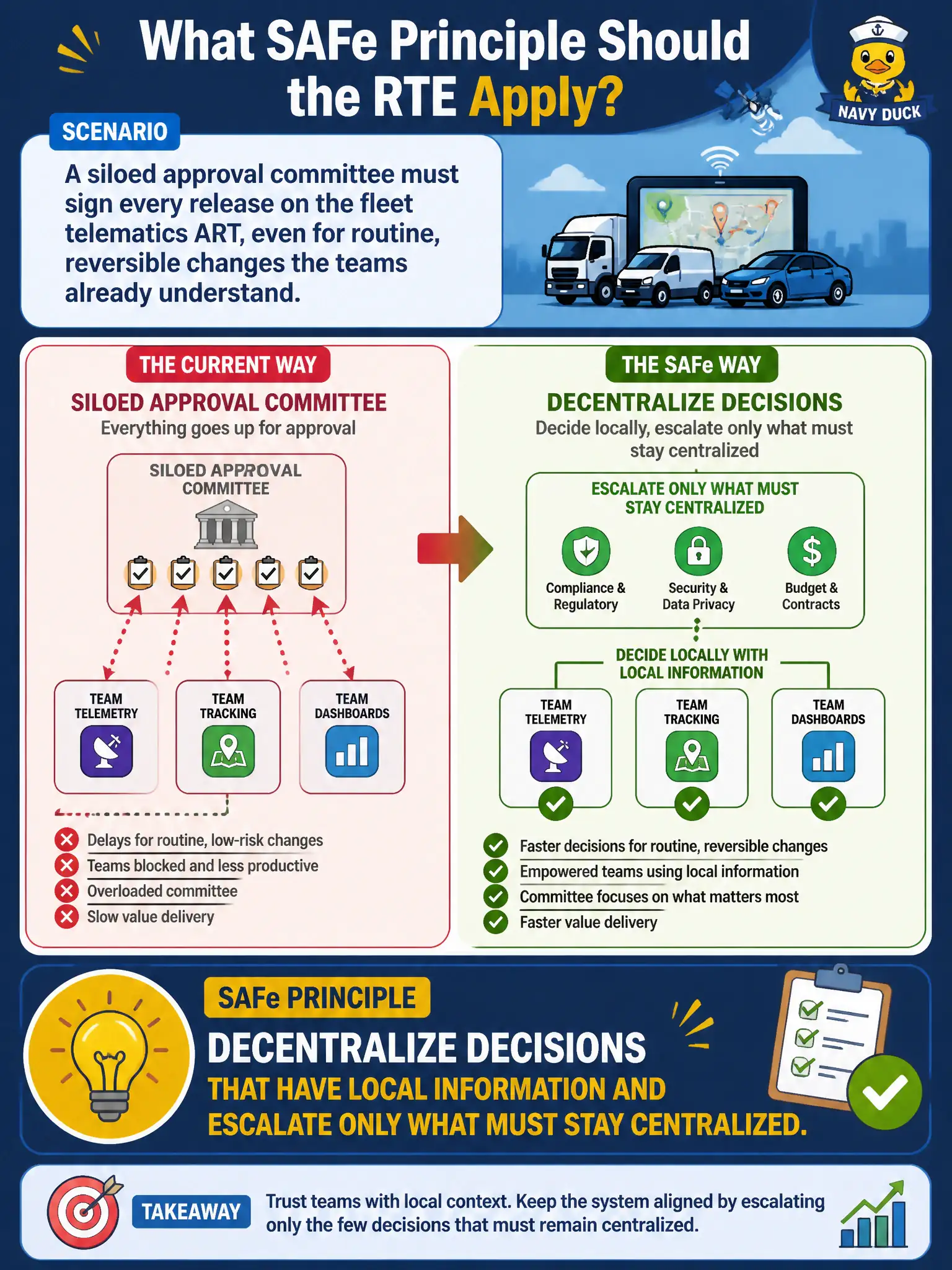
A siloed approval committee must sign every release on the fleet telematics ART, even for routine, reversible changes the teams already understand. Which SAFe principle should the RTE apply?
Select an answer to reveal the explanation.
Short Explanation
If the people with the GPS data still need a downtown stamp for every tiny release, that is not governance—it is a parking lot. Push routine calls to the teams; keep the rare, expensive ones for the committee.
Full Explanation
SAFe principle guidance is to decentralize decisions that have local information and escalate only what must stay centralized. When a siloed approval committee must sign every release on a fleet telematics ART—even routine, reversible changes teams already understand—the delay taxes vehicle and operations value without adding commensurate risk control. The RTE should coach leaders to push routine decisions to the people with the information and reserve the committee for true economic or safety exceptions. Centralizing every decision so the committee remains the single throat to choke maximizes queue time and weakens team ownership. Adding more committee seats so delays are shared across departments spreads the bottleneck rather than removing it. Freezing releases until the committee can meet monthly with a full evidence binder maximizes batch size and feedback delay for telematics changes. Exam caveat: Centralize decisions with high cost of failure or cross-cutting economic impact; do not treat every municipal release as that class of decision. Operational check: Classify recent telematics release approvals into routine versus high-risk, and propose a decentralized path for the routine class with post-hoc audit where needed.