
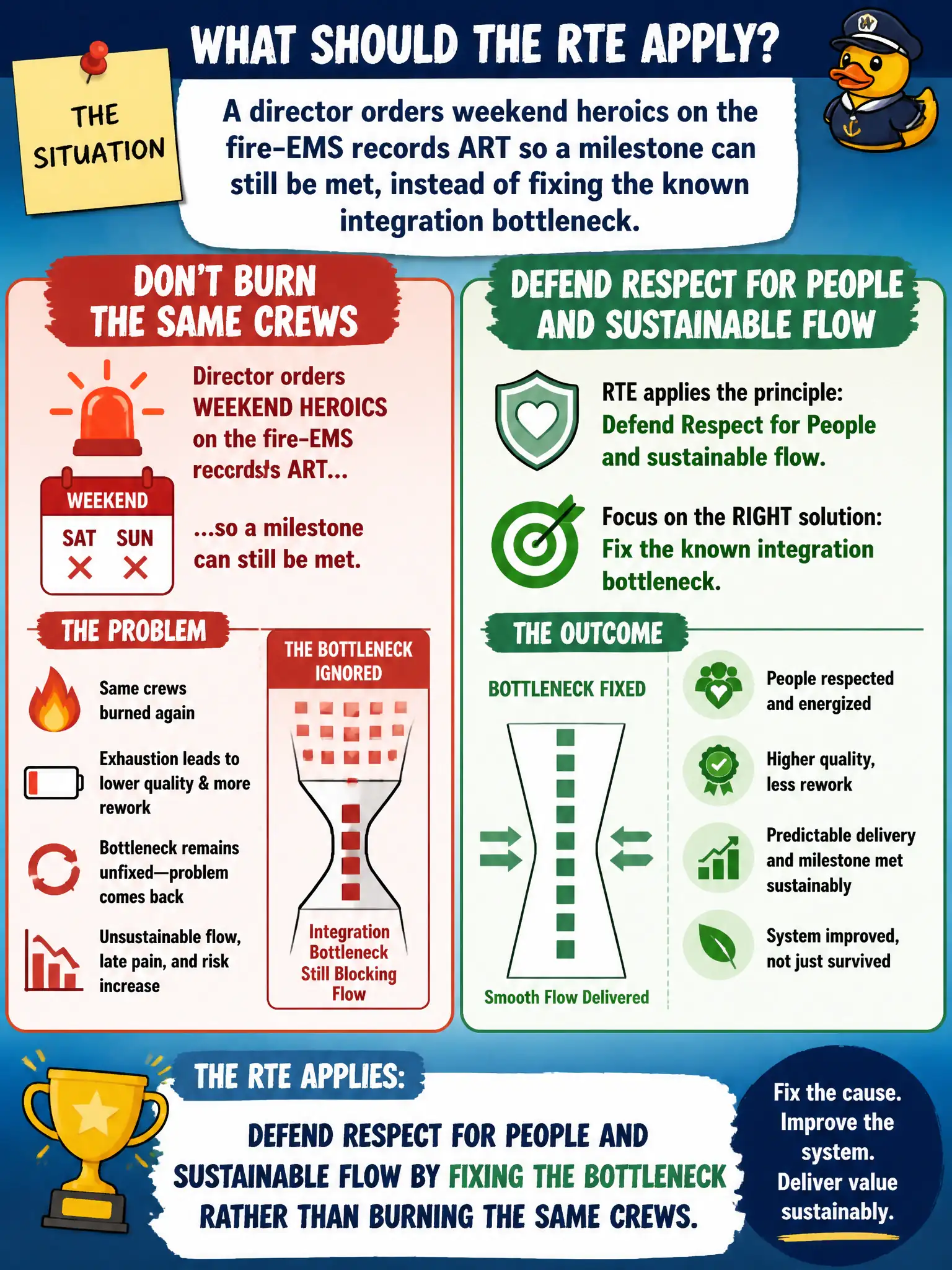
A director orders weekend heroics on the fire-EMS records ART so a milestone can still be met, instead of fixing the known integration bottleneck. What should the RTE apply?
Select an answer to reveal the explanation.
Short Explanation
Weekend heroics are a firehose on a hydrant that is still closed. The records ART does not need more martyrs; it needs the bottleneck opened so weekday flow can work.
Full Explanation
Respect for People and sustainable flow mean fixing the known integration bottleneck rather than burning the same crews with weekend heroics. When a director orders overtime on a fire-EMS records ART to hit a milestone instead of addressing the constraint, the RTE should defend sustainable delivery and relentless improvement of the bottleneck that blocks records for responders. Staffing every weekend until the bottleneck becomes a cultural badge of honor normalizes burnout and still leaves the system fragile for the next incident surge. Rewarding the same three people for every save so others learn who the heroes are concentrates knowledge and deepens the dependency on heroics. Treating heroics as the plan and skipping bottleneck analysis during Inspect and Adapt guarantees the same fire drill next PI. Exam caveat: Rare emergency overtime can happen in public safety; making it the default plan instead of fixing flow is the anti-pattern the exam targets. Operational check: Name the integration bottleneck as an ART impediment with an owner, track wait time through it, and refuse to treat weekend staffing as the primary mitigation in the next planning cycle. In municipal settings, pressure to look busy, compliant, or politically safe is constant; the RTE earns trust by holding the principle through that pressure and verifying the next cadence event shows improved civic delivery, not just a quieter meeting.