
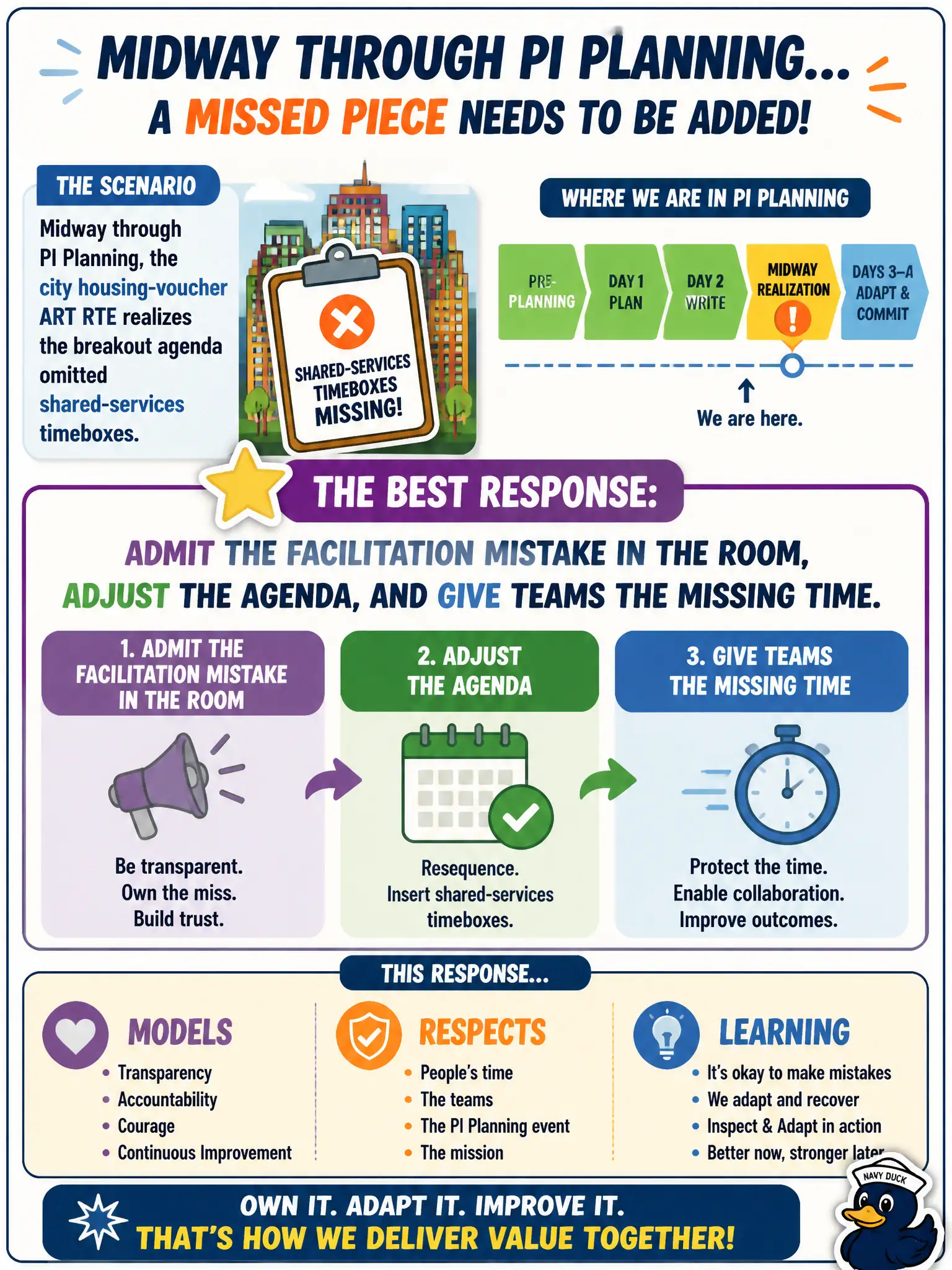
Midway through PI Planning, the city housing-voucher ART RTE realizes the breakout agenda omitted shared-services timeboxes. What models respect and learning?
Select an answer to reveal the explanation.
Short Explanation
Everyone drops a slide sometime. Saying so out loud and fixing the agenda builds trust; pretending the housing-voucher plan never needed shared services just teaches people to hide mistakes.
Full Explanation
Respect for people and a learning culture include admitting facilitation mistakes in the room, adjusting the agenda, and giving teams the missing time. Midway through PI Planning on a city housing-voucher ART, noticing that shared-services timeboxes were omitted should trigger an open correction—not a cover-up—so identity, payments, or other shared services can still be planned into voucher delivery. Hiding the miss, pushing through, and correcting the template privately after the event protects ego while damaging the plan teams must execute for applicants. Blaming the logistics contractor so the RTE's credibility stays intact models blame instead of learning and fails to restore the missing breakout time when it still matters. Canceling remaining breakouts and switching to a lecture so the error is not visible compounds the mistake by removing team planning capacity across the housing ART. Exam caveat: Admission should be brief and action-oriented—what was missed and how the agenda changes now—not a long self-critique that consumes scarce planning minutes. Operational check: Announce the agenda fix, insert shared-services timeboxes, and verify each housing-voucher team leaves with shared-service dependencies and capacity notes captured on the program board.