
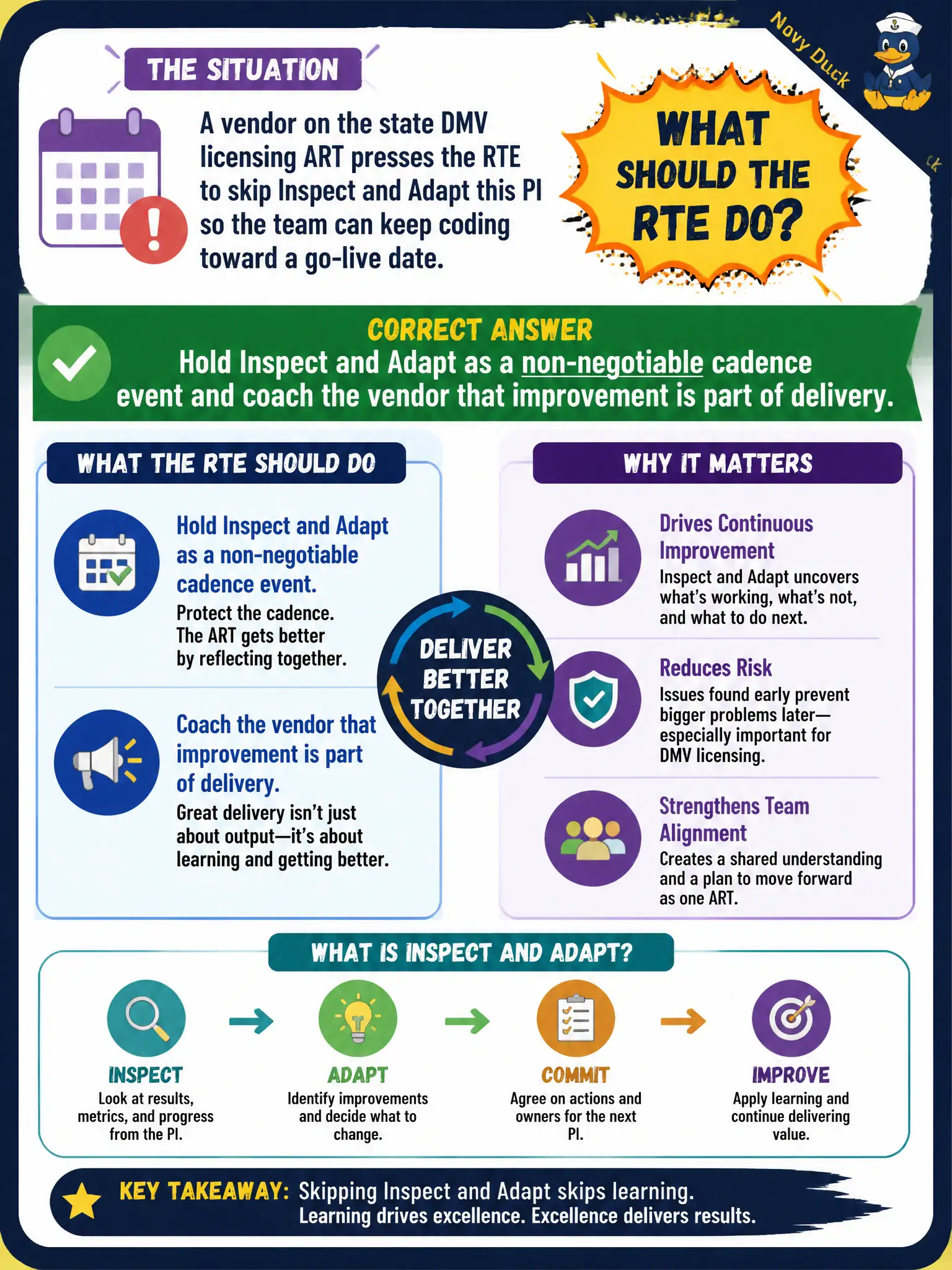
A vendor on the state DMV licensing ART presses the RTE to skip Inspect and Adapt this PI so the team can keep coding toward a go-live date. What should the RTE do?
Select an answer to reveal the explanation.
Short Explanation
Inspect and Adapt is the oil change, not optional chrome. Skipping it to please a vendor is like driving the DMV system with the check-engine light taped over.
Full Explanation
Inspect and Adapt is a non-negotiable cadence event. When a vendor on a state DMV licensing ART presses to skip it so coding can continue toward go-live, the RTE should hold the event and coach that improvement is part of delivery—not optional overhead that can be traded away under schedule pressure. Skipping learning before a licensing go-live often preserves the defects and process failures that will appear in production for drivers and clerks. Skipping Inspect and Adapt this once because vendor pressure is labeled an economic exception teaches every future crunch that improvement is disposable. Replacing Inspect and Adapt with a vendor status webinar so leadership still sees slides substitutes reporting for structured problem-solving and quantitative improvement. Moving Inspect and Adapt into unpaid overtime so coding days stay untouched disrespects people and still signals that improvement is second-class work on the licensing train. Exam caveat: The agenda can be tightly timeboxed during a critical PI, but canceling or replacing the event is the wrong concession to vendor pressure. Operational check: Keep Inspect and Adapt on the DMV ART calendar, require quantitative and qualitative inputs, and capture at least one improvement backlog item with an owner for the next PI.