
The 911 CAD/RMS integration ART returns a low confidence vote at the end of PI Planning. How should the RTE treat that result?
Select an answer to reveal the explanation.
Short Explanation
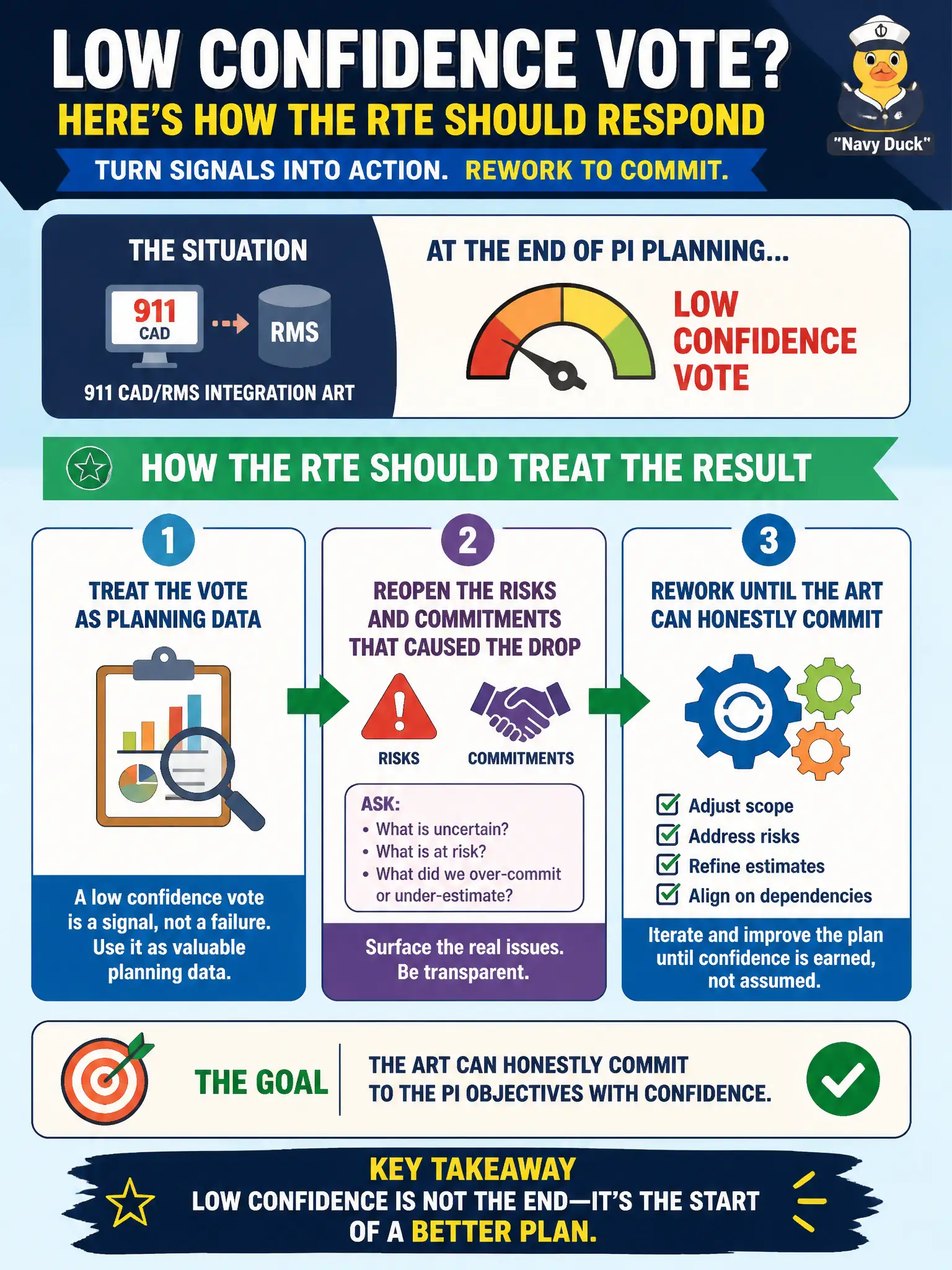
A low confidence vote is a smoke alarm, not a mutiny. The RTE does not punish the ART for telling the truth; they use the signal to fix the plan before dispatch goes live on a fantasy.
Full Explanation
A low confidence vote at the end of PI Planning is planning data, not insubordination. On a 911 CAD/RMS integration ART, the RTE should treat the vote as a signal, reopen the risks and commitments that caused the drop, and rework scope, dependencies, or capacity until the ART can honestly commit to public-safety outcomes. Ignoring or coercing the vote freezes a fragile plan that will fail under dispatch load. Recording the vote as insubordination and requiring each team to recast a five until the board looks green destroys Transparency and guarantees hidden risk in CAD/RMS delivery. Ignoring the score because the agenda is finished and the PI calendar cannot move elevates schedule theater over commitment quality for emergency systems. Blaming the Scrum Masters for failing to cheerlead a higher number in the last ten minutes attacks the messengers instead of fixing the real planning gaps. Exam caveat: Rework has to be substantive—cutting scope, addressing risks, adjusting capacity—not a pep talk designed to inflate numbers for leadership optics. Operational check: After a low vote, list the top reasons teams cited, facilitate visible changes on the program board, and re-vote only after those changes are understood by the 911 ART.