
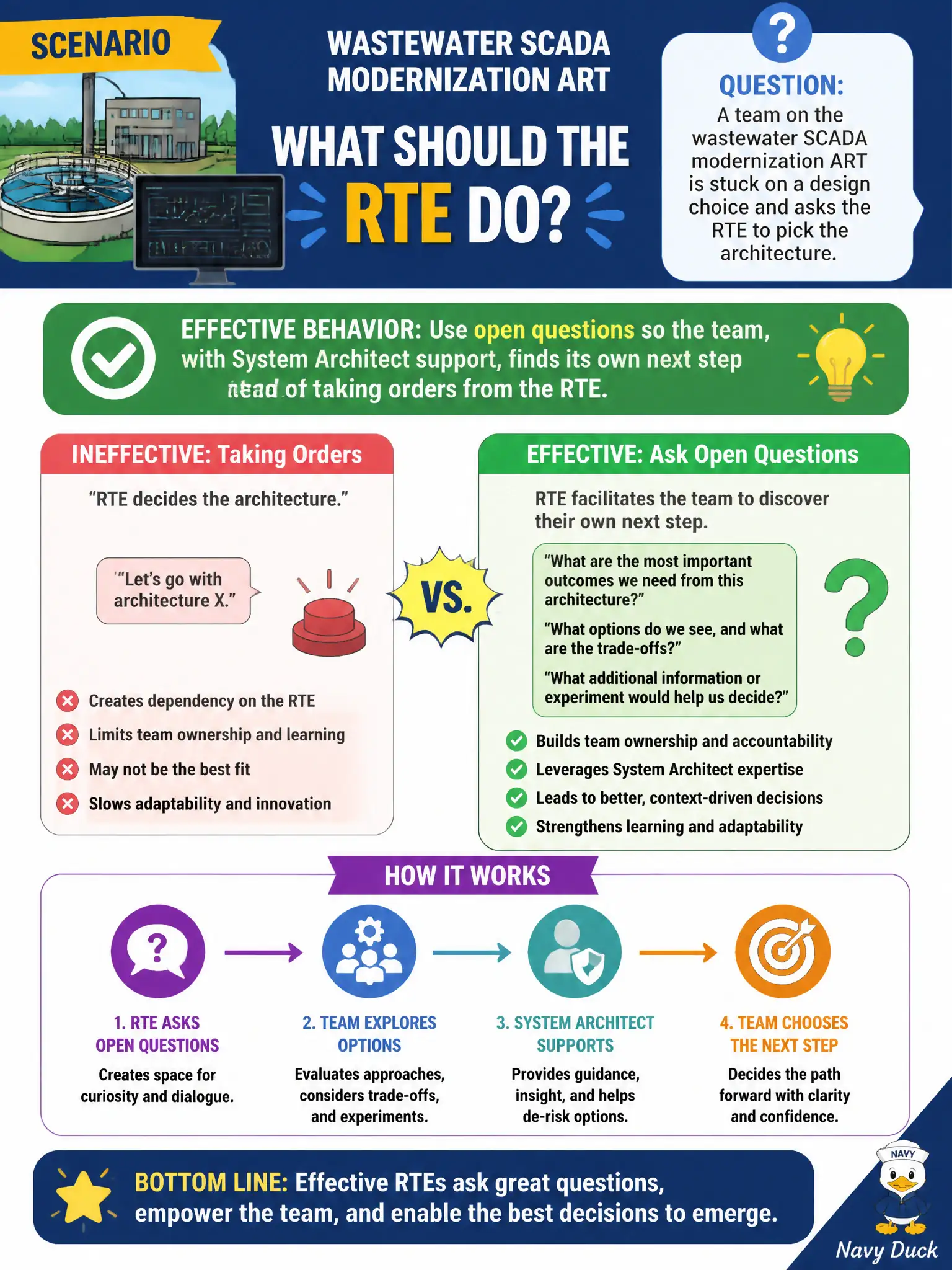
A team on the wastewater SCADA modernization ART is stuck on a design choice and asks the RTE to pick the architecture. What effective behavior should the RTE apply?
Select an answer to reveal the explanation.
Short Explanation
Coaching is a flashlight, not a remote control. Powerful questions help the SCADA team see the next step; grabbing the design makes the RTE the bottleneck and the team a pair of hands.
Full Explanation
When a team is stuck on a design choice, effective RTE behavior uses open questions so the team, with System Architect support, finds its next step instead of taking orders from the RTE. On a wastewater SCADA modernization ART, prescribing architecture from the RTE seat creates dependency, weakens engineering ownership, and confuses facilitation with System Architect authority. Ask questions, bring the architect, and facilitate a decision rule. Prescribing the design in writing so the team can stop thinking and start coding produces compliance without understanding and often rework when plant constraints appear. Escalating the choice to the city manager as a political decision the ART cannot own elevates a technical design question into unnecessary politics. Freezing the feature until the RTE can personally prototype both designs over the weekend pulls the RTE into engineering heroics and delays learning. Exam caveat: The RTE can timebox the decision and escalate if the team and architect cannot conclude; facilitation still comes before personal design ownership. Operational check: For the stuck SCADA design, schedule a working session with the team and System Architect, use open questions to surface options and constraints, and leave with a named decision owner and date—not an RTE design memo.