
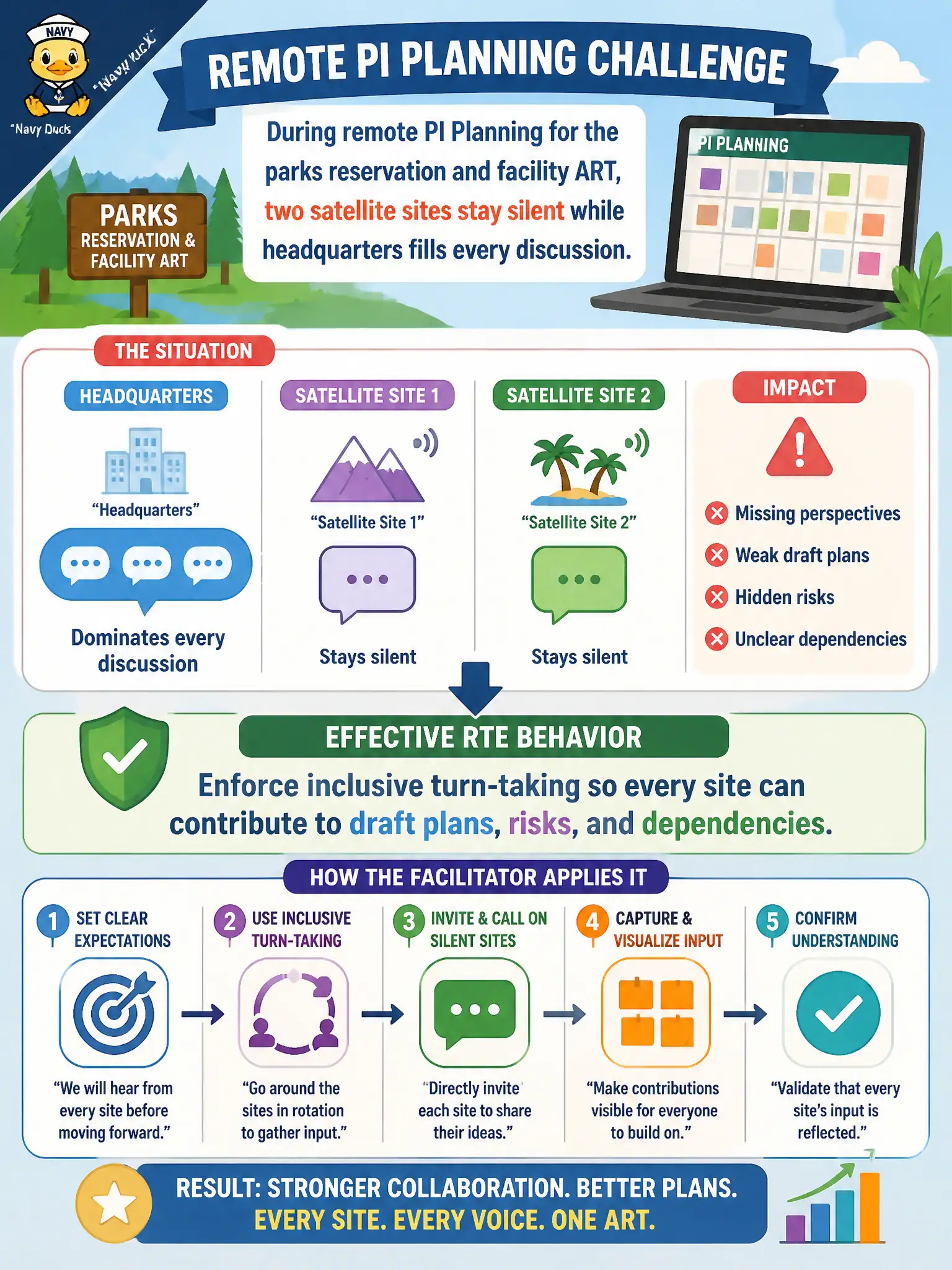
During remote PI Planning for the parks reservation and facility ART, two satellite sites stay silent while headquarters fills every discussion. What effective RTE behavior should the facilitator apply?
Select an answer to reveal the explanation.
Short Explanation
Remote PI Planning is a park picnic with tables in three towns, not a megaphone at headquarters. If only the main campus talks, the ART did not plan—one building did.
Full Explanation
Inclusive facilitation enforces turn-taking so every site can contribute to draft plans, risks, and dependencies. During remote PI Planning for a parks reservation and facility ART, silence from satellite sites while headquarters fills every discussion produces a headquarters-only plan that fails in the field. The RTE must actively draw remote voices into breakouts, reports, and ROAM. Muting satellite sites so headquarters can finish the program board faster encodes exclusion into the plan and usually resurfaces as missed dependencies for remote parks facilities. Converting remote planners into observers and letting only on-site staff vote on PI Objectives destroys commitment quality from the people who will do the work. Skipping breakout reports from satellite teams because they can catch up from the recording later treats remote staff as second-class participants and weakens confidence votes. Exam caveat: Time zones and bandwidth constraints require deliberate design—shorter cycles, written inputs, named remote facilitators—not passive hope that quiet sites are fine. Operational check: Assign a remote turn-taking rule in the parks planning agenda, require each site to report plans and risks, and halt progress if a satellite team has not spoken before major board decisions.