
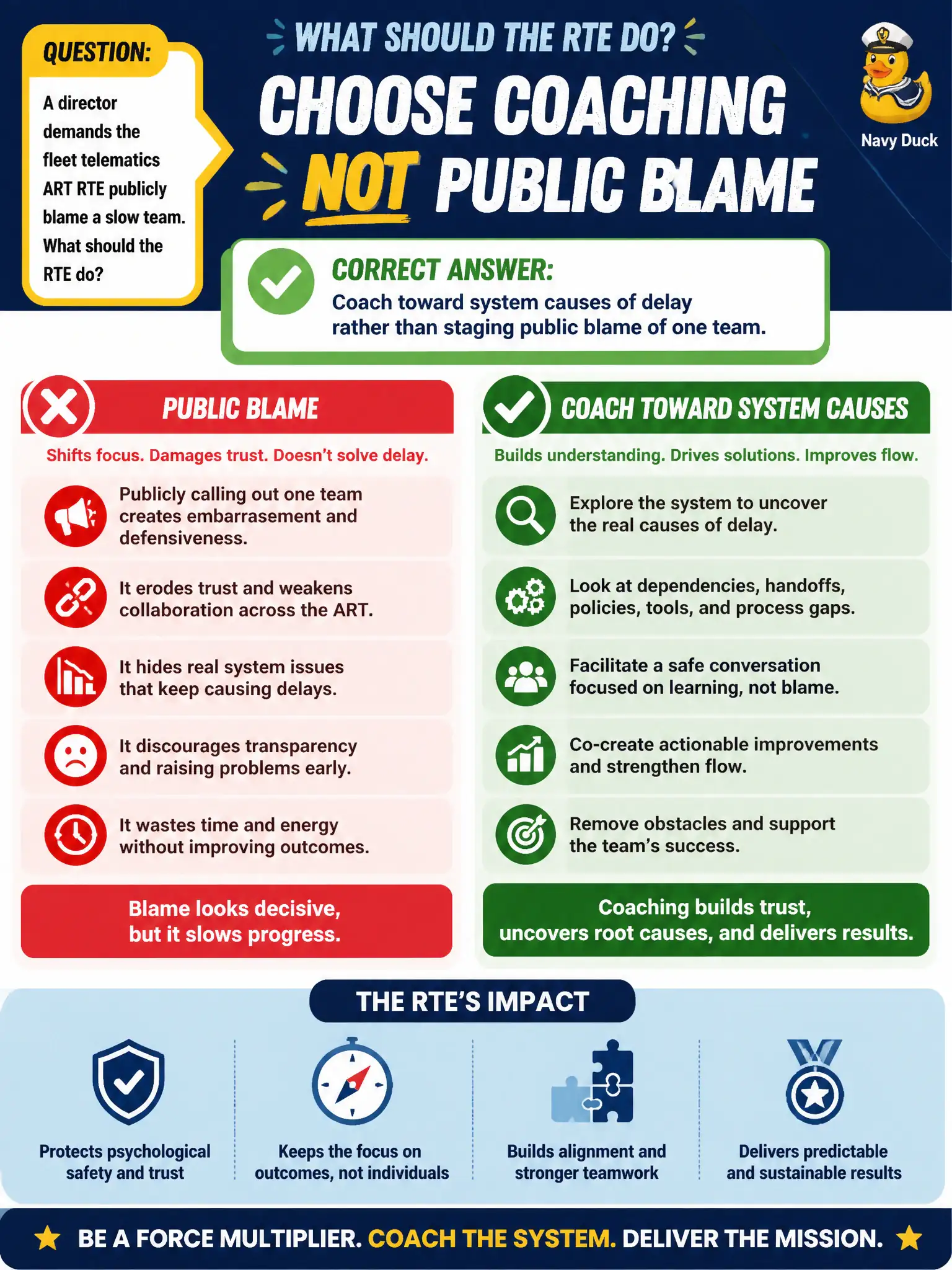
A director demands the fleet telematics ART RTE publicly blame a slow team. What should the RTE do?
Select an answer to reveal the explanation.
Short Explanation
Pointing at the "slow" GPS team is cheap theater. Delays usually live in handoffs, WIP, or missing environments. An effective RTE looks at the system with the director and the teams—not a public dunking.
Full Explanation
When delay appears, coach toward system causes rather than staging public blame of one team. A director demanding that a fleet telematics ART RTE publicly blame a slow team is asking for fear-based management that hides dependency, environment, capacity, and prioritization problems affecting vehicle and operations outcomes. Effective RTE behavior protects Respect for People and keeps analysis on the delivery system. Naming the team in the next all-hands so others feel pressure to speed up may create short-term motion while destroying trust and suppressing risk transparency across the telematics ART. Ranking every telematics team on a public shame board until utilization rises optimizes appearances and local heroics over end-to-end flow. Quietly docking that team's PI Objectives without discussing the constraint falsifies planning data and skips the impediment facilitation the RTE should provide. Exam caveat: Teams can still own commitments and be coached firmly on follow-through; the distinction is systems-focused accountability versus public scapegoating as a management tactic. Operational check: Map the delayed telematics feature across teams, shared environments, and pending decisions; present the constraint system in ART Sync; and agree on fixes without a blame ritual.