
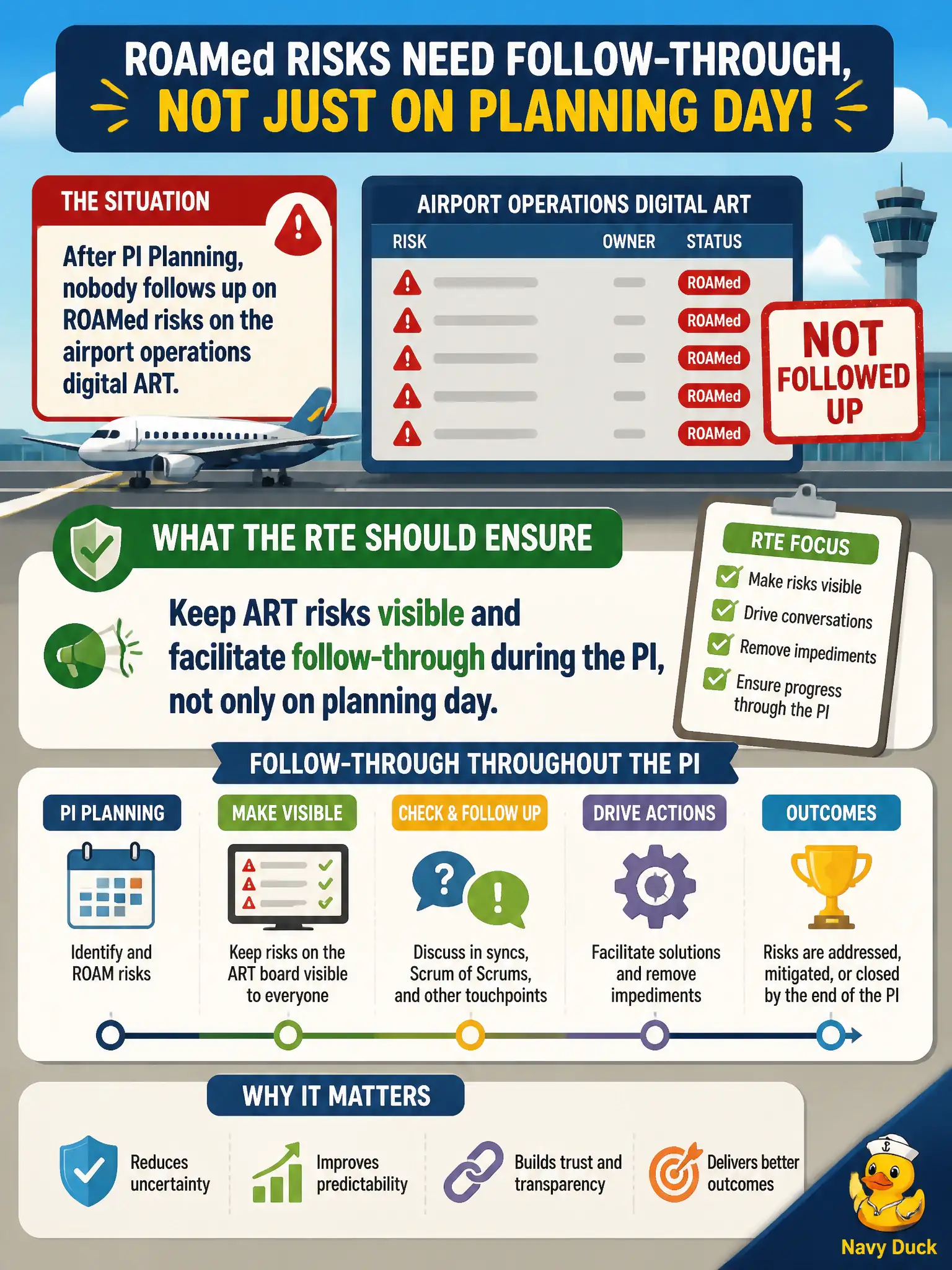
After PI Planning, nobody follows up on ROAMed risks on the airport operations digital ART. What should the RTE ensure?
Select an answer to reveal the explanation.
Short Explanation
ROAM is not a planning-day sticker exercise. Those airport-ops risks have to stay on a board people actually look at, with owners and follow-up in ART Sync. File them in a drawer and they come back as surprises on the tarmac.
Full Explanation
ROAMed risks from PI Planning must stay visible and receive follow-through during the PI. Facilitating that follow-through is RTE work. On an airport operations digital ART, archiving risks when planning ends treats ROAM as theater and leaves operations, security, and passenger-facing digital work exposed. The RTE should keep ART risks visible—on a board, in ART Sync, and in stakeholder briefings—and facilitate owners to act. Archiving the ROAM board because planning is finished and risks now belong only to audit removes Transparency from the people who can mitigate operational risk. Converting every risk into a committed PI Objective that the RTE personally owns confuses risk management with delivery commitments and incorrectly places ownership on the RTE. Hiding unresolved risks from operations stakeholders until the next Inspect and Adapt delays escalation and undermines trust when an airport incident later reveals what was known. Exam caveat: Not every risk becomes a PI Objective; some are accepted, mitigated, or owned outside the ART—but they still need visible management, not disappearance. Operational check: Bring the ROAM set into the next two ART Syncs, confirm each active risk has an owner and next action date, and report status without waiting for Inspect and Adapt alone.