
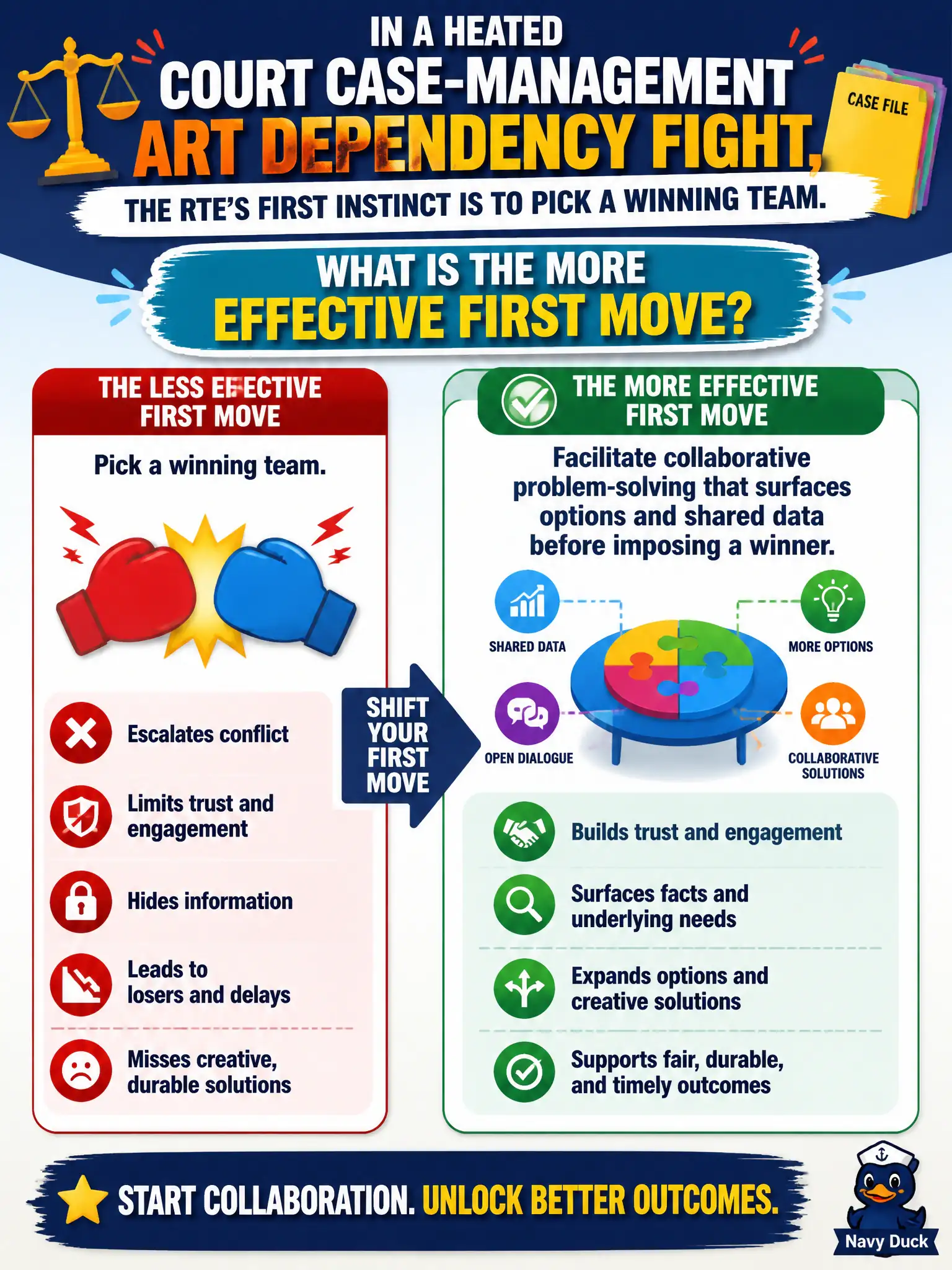
In a heated court case-management ART dependency fight, the RTE's first instinct is to pick a winning team. What is the more effective first move?
Select an answer to reveal the explanation.
Short Explanation
Jumping in as referee feels decisive and usually makes one team a loser for the rest of the PI. Better: get the case-management folks looking at the same facts, options, and dates. If someone still has to decide, at least the room did the thinking first.
Full Explanation
In a heated dependency fight, effective RTE behavior starts with facilitated collaborative problem-solving—shared facts, options, and decision rules—before imposing a winner. On a court case-management ART, picking a winning team first hardens positions and often encodes a poor technical or process compromise into the docket workflow. Facilitation that surfaces data and joint options usually produces a better, more durable path. Declaring a winner immediately so debate cannot slow the docket work trades short-term quiet for long-term thrash and damaged trust between case-management teams. Escalating both teams to the city attorney and refusing to facilitate further abandons the RTE's problem-solving duty and turns a delivery dependency into a legal dispute prematurely. Pausing the ART and freezing all case-management stories until leadership names a favorite team stops value delivery instead of resolving the coordination problem. Exam caveat: Facilitation does not forbid eventual escalation; if collaboration fails after a timeboxed working session, escalate with options—not with an empty conflict. Operational check: Convene a structured session with both teams, Product Management, and System Architect; timebox options and a decision rule; document the outcome on the program board for the court ART.