
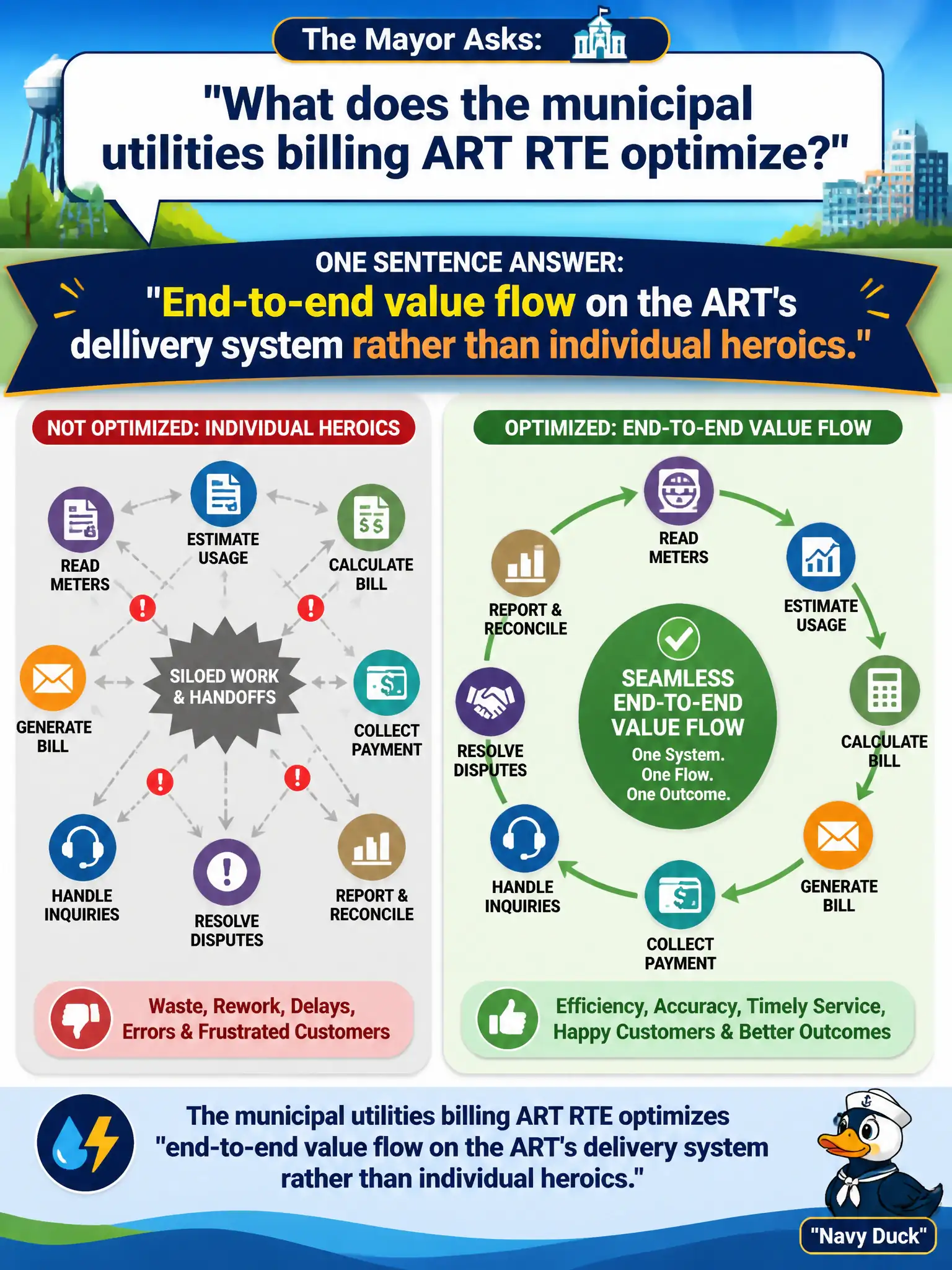
A mayor asks for one sentence: what does the municipal utilities billing ART RTE optimize?
Select an answer to reveal the explanation.
Short Explanation
If the mayor wants a one-liner, it is this: the RTE tunes the whole billing train so value moves, not so one hero closes more tickets. Individual output can look great while bills still stall in handoffs. Optimize the system.
Full Explanation
What an RTE optimizes is end-to-end value flow on the ART's delivery system—how intent becomes an integrated, usable outcome—rather than individual heroics. For a municipal utilities billing ART, that means cadence, dependencies, WIP discipline, quality, and coaching so rate and billing increments actually reach operations and customers. The one-sentence answer focuses on the train as a system, not on star performers. Optimizing individual engineer output and personal utilization on billing tickets localizes metrics and usually harms the integrated release when shared testers, environments, or interfaces are starved. Optimizing the capital-improvement program's bond schedule independent of the ART may matter to finance, but it is not the RTE's primary optimization target or success definition. Treating each Product Owner's story-writing speed as the primary success measure confuses upstream documentation throughput with delivered billing value for the utility. Exam caveat: RTEs should understand economics and can discuss CIP timing impacts with stakeholders, yet the defining optimization remains ART flow and value delivery. Operational check: Pick one billing PI Objective and trace blockers from backlog through integration to System Demo; coach the system delays you find instead of praising the busiest individual contributor.