
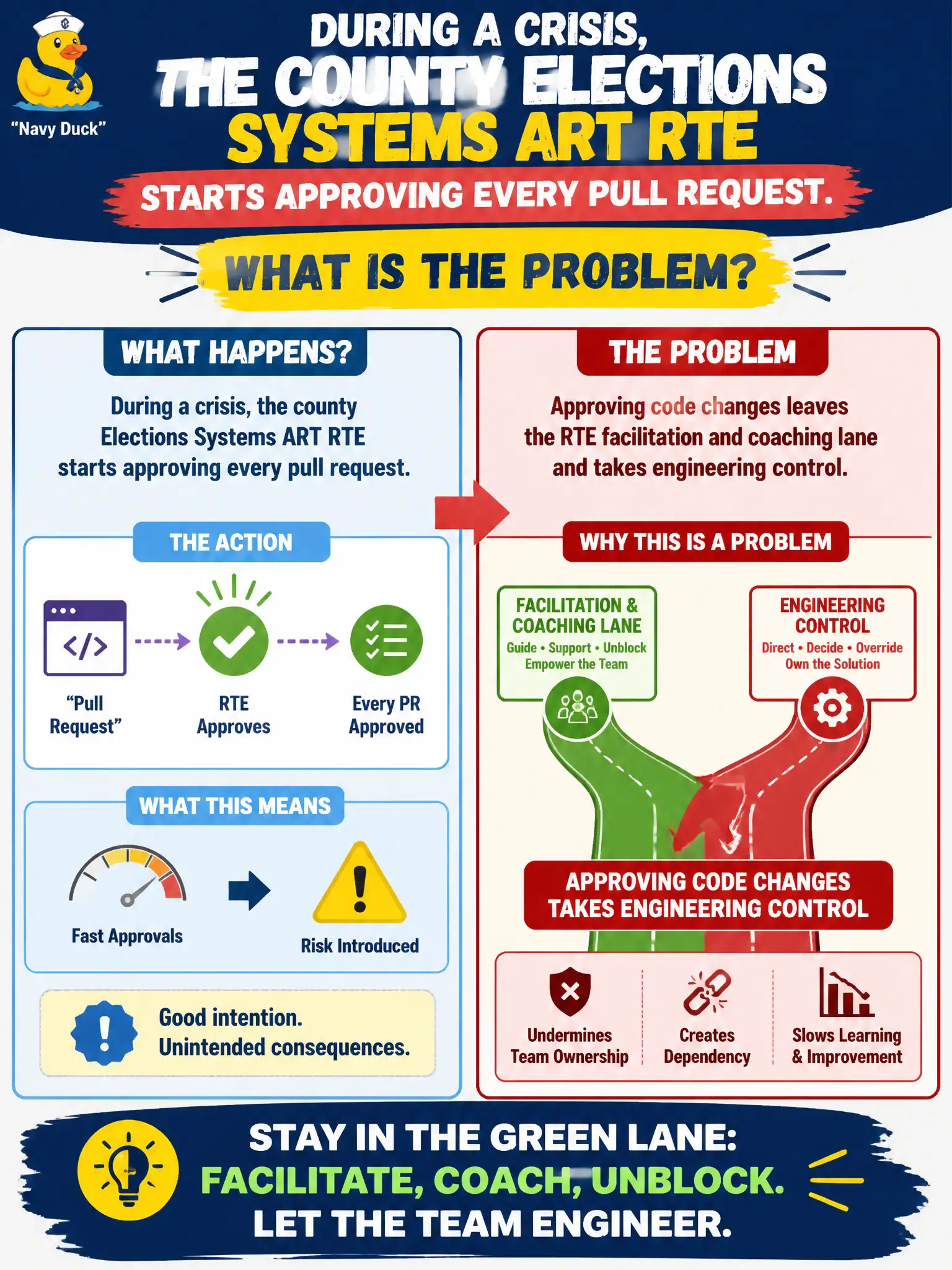
During a crisis, the county elections systems ART RTE starts approving every pull request. What is the problem?
Select an answer to reveal the explanation.
Short Explanation
An elections crisis tempts the RTE to grab the merge button, but that is becoming the change-approver, not a facilitator. Stay on coaching, cadence, and impediments, and let engineering and architecture own the code path—hero merges do not scale and they break the role.
Full Explanation
Approving pull requests is engineering control work, not RTE facilitation or coaching. During a crisis on a county elections systems ART, the urge to merge everything can feel helpful, yet it pulls the RTE into code ownership, creates a review bottleneck, and weakens built-in quality practices that teams and architects should hold. The problem is that approving code changes leaves the RTE facilitation and coaching lane and takes engineering control. Pull-request approval is not reserved by SAFe uniquely for the Scrum Master of each elections team; teams define quality practices, and Scrum Masters coach rather than act as permanent merge gates. Saying the RTE should approve only database scripts and leave UI changes to developers still keeps the RTE in an engineering control seat and invents an arbitrary split. Claiming crisis PIs require the RTE to become the System Architect and merge all work collapses architecture and facilitation into heroics that do not scale past the emergency and leave elections delivery brittle. Exam caveat: An RTE with deep technical background might occasionally help unblock a critical path, but making PR approval a standing crisis habit is the wrong operating model for the role. Operational check: Restore named code owners and review SLAs on the elections repositories, remove the RTE from mandatory approver lists, and verify facilitation time returns to ART Sync, ROAM follow-through, and impediment removal.