
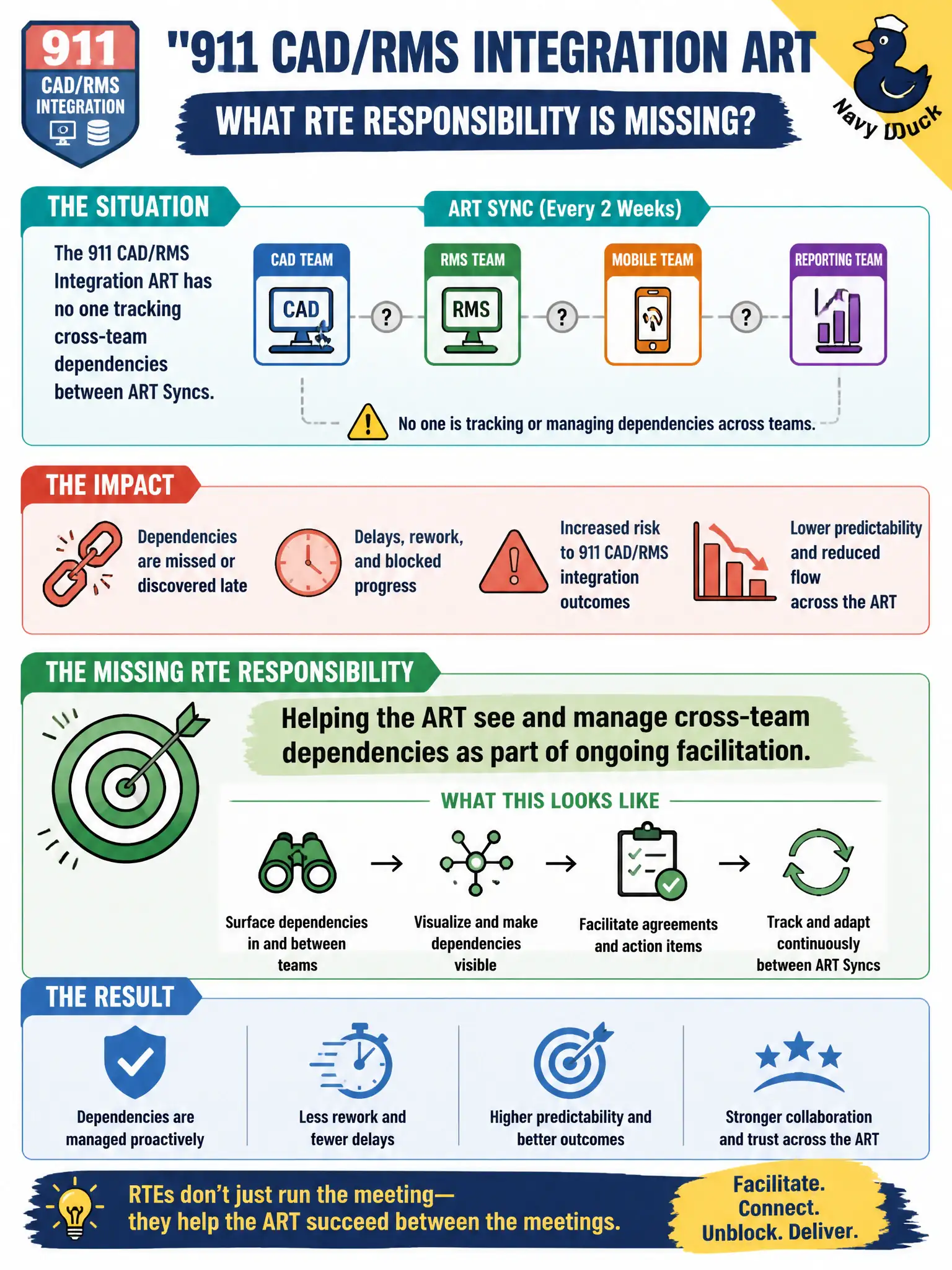
The 911 CAD/RMS integration ART has no one tracking cross-team dependencies between ART Syncs. Which RTE responsibility is missing?
Select an answer to reveal the explanation.
Short Explanation
911 CAD and RMS teams will always hand work across the fence. Somebody has to keep those handoffs visible between syncs—and that somebody is the RTE as facilitator, not as the person writing the interfaces. Hide the board or delete the coupled stories and dispatch still breaks.
Full Explanation
Helping the ART see and manage cross-team dependencies is ongoing RTE facilitation work, not a once-per-PI Planning artifact. On a 911 CAD/RMS integration ART, dependencies between computer-aided dispatch and records teams are constant; if nobody tracks them between ART Syncs, handoffs surprise the train and public-safety timelines slip. The RTE keeps dependencies visible on the program board or equivalent and facilitates resolution. Personally implementing the CAD interfaces so other teams no longer depend on each other may remove a technical seam temporarily but exits the facilitation role and does not scale. Replacing the program board with a confidential RAID log only executives may read destroys Transparency for the people doing the work. Directing Product Management to delete any story that touches more than one team avoids coordination instead of managing it and can gut necessary integration for CAD/RMS. Exam caveat: Dependency management is shared with Product Management, architects, and teams; the RTE ensures the system for seeing and resolving them exists and runs. Operational check: Between ART Syncs, verify a living dependency list with owners and due dates for CAD/RMS interfaces, and confirm stale red strings get working sessions rather than silent drift.