
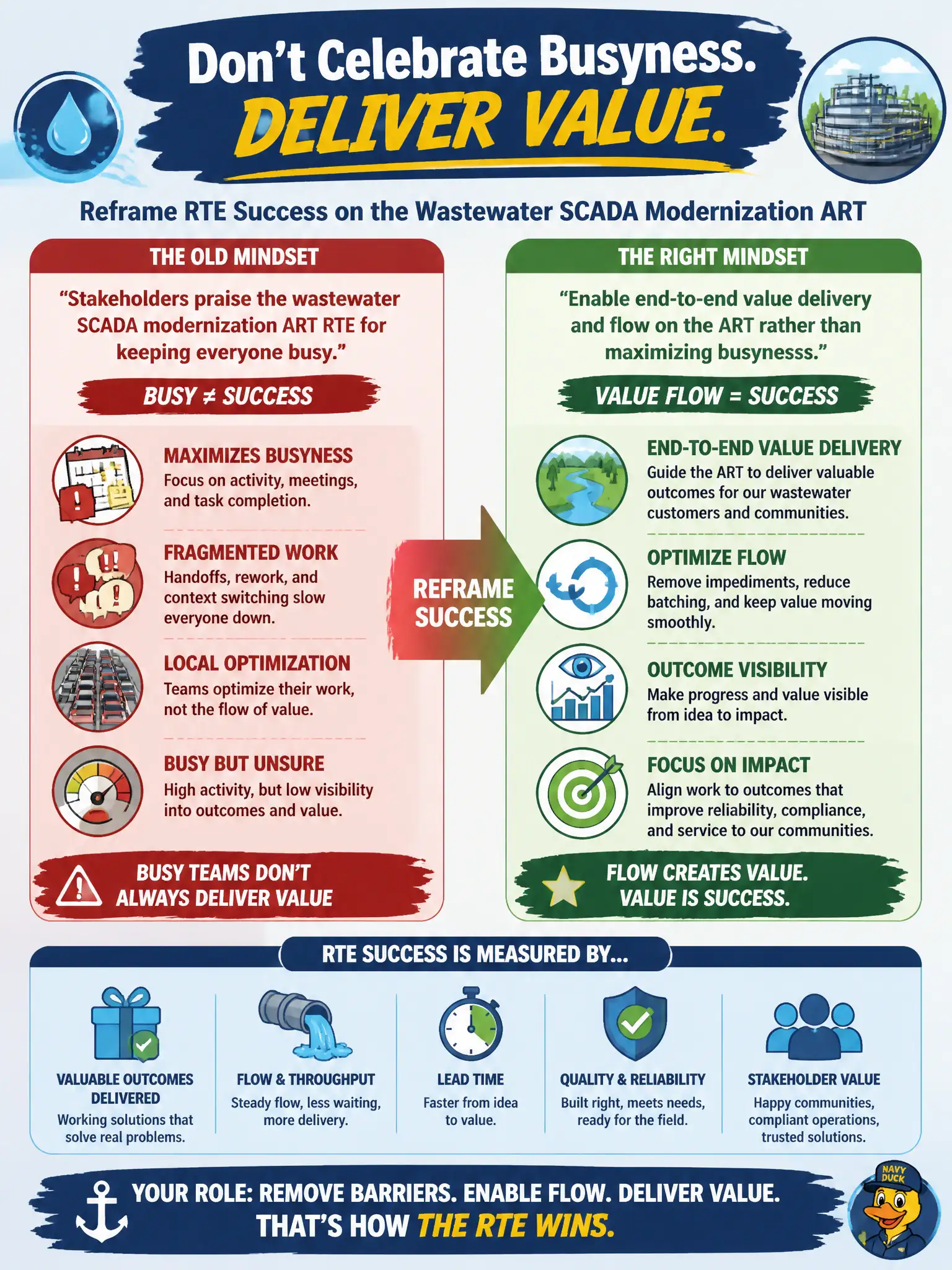
Stakeholders praise the wastewater SCADA modernization ART RTE for keeping everyone busy. How should the RTE reframe success?
Select an answer to reveal the explanation.
Short Explanation
Busy water-plant engineers are not the same thing as treated-water data moving through the system. Utilization theater fills calendars; flow and working SCADA value are what the RTE is hired to enable. If everyone is slammed and nothing integrates, the praise is a warning.
Full Explanation
ART success is end-to-end value delivery and flow, not maximized busyness. Stakeholders may praise a wastewater SCADA modernization RTE for keeping everyone occupied, yet utilization without flow means plant historians, interfaces, and controls work piles up without integrated outcomes for operators and residents. The RTE should reframe success around working increments, reduced delays, and value throughput across the train. Treating 100 percent utilization as the primary ART health metric and adding more parallel SCADA tasks increases thrashing and usually worsens cycle time. Counting overtime hours on plant historians as proof of commitment celebrates unsustainable heroics instead of system health. Assigning personal daily task lists so no engineer sits idle between standups recreates micro-management and undermines team ownership of pull-based flow. Exam caveat: Capacity awareness matters for PI Planning; the trap is elevating individual busyness above flow efficiency and outcome measures. Operational check: Pair a utilization anecdote with flow metrics—WIP, throughput, and time-to-integrated SCADA demo—and ask whether busy calendars produced a safer, working plant increment this PI.