
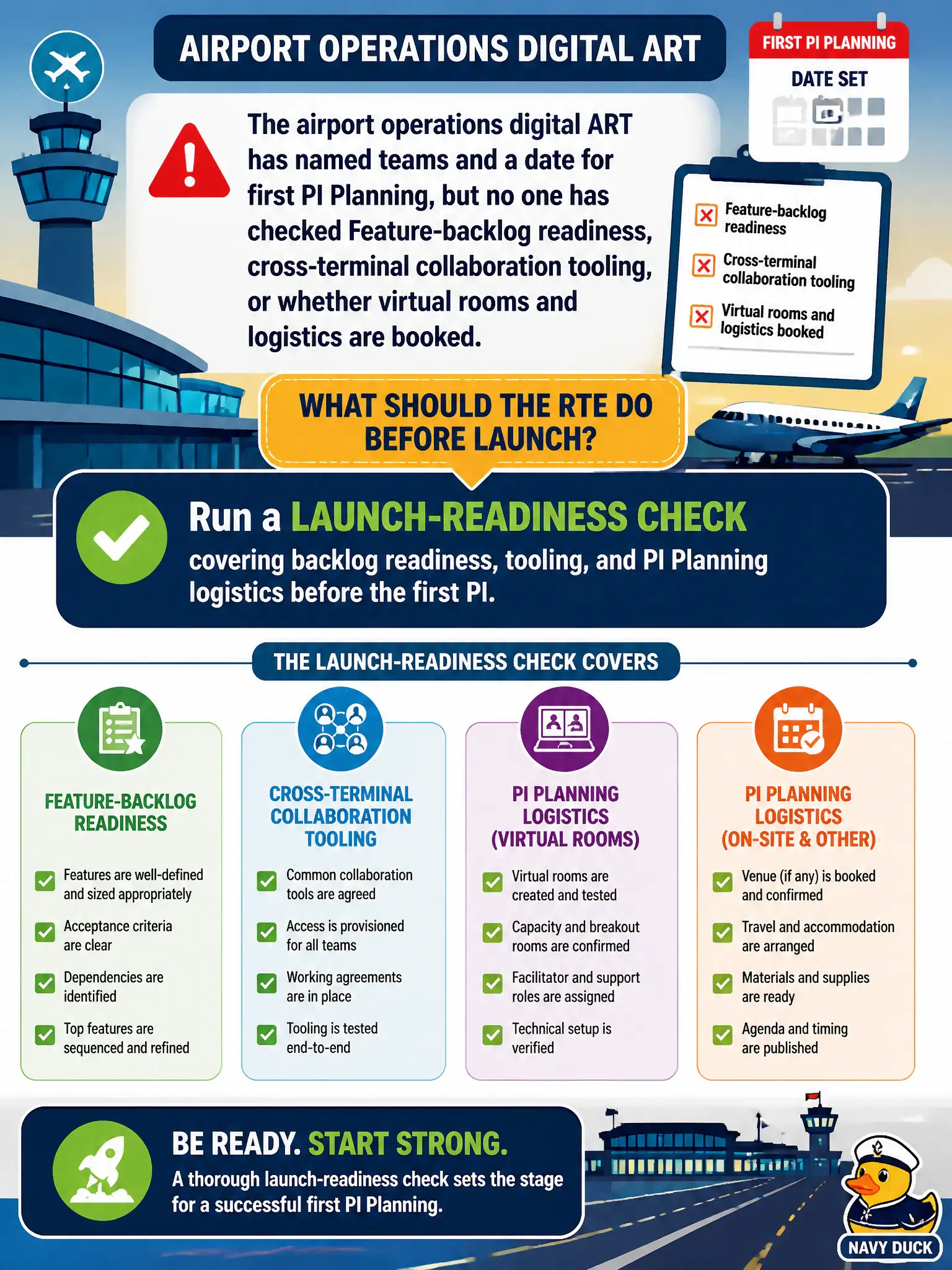
The airport operations digital ART has named teams and a date for first PI Planning, but no one has checked Feature-backlog readiness, cross-terminal collaboration tooling, or whether virtual rooms and logistics are booked. What should the RTE do before launch?
Select an answer to reveal the explanation.
Short Explanation
A departure time on the board is not the same as a cleared runway. Named teams and a PI Planning date still fail if Features are thin, the boards are down, or the rooms are not booked. A readiness checklist is the last look before wheels-up.
Full Explanation
Creating an ART includes an explicit launch-readiness step: confirm the program backlog has enough well-formed Features, collaboration and planning tooling works for every team, and facilities or virtual logistics are in place. On the airport operations digital ART, when teams and a PI Planning date exist but backlog readiness, cross-terminal tooling, and rooms are unchecked, the RTE should run a launch-readiness check covering those items before the first PI. A departure time on the board is not a cleared runway. Skipping readiness and treating the first PI as a live experiment to discover missing tools after teams commit produces ceremonial commitments that cannot be executed. Replacing the calendar date with a traditional airport project kickoff and freezing Features until operations signs a charter reverts to predictive launch habits. Having Product Management write every team’s iteration stories so tooling gaps will not matter on day one hides readiness gaps and undermines team planning ownership. Exam caveat: readiness is a checklist, not perfection theater—enough Features, working tools, and bookable logistics beat endless polish. Operational check: walk a readiness checklist with Product Management and Scrum Masters, fix blocking gaps, and only then keep or adjust the airport ART’s first PI Planning date.