
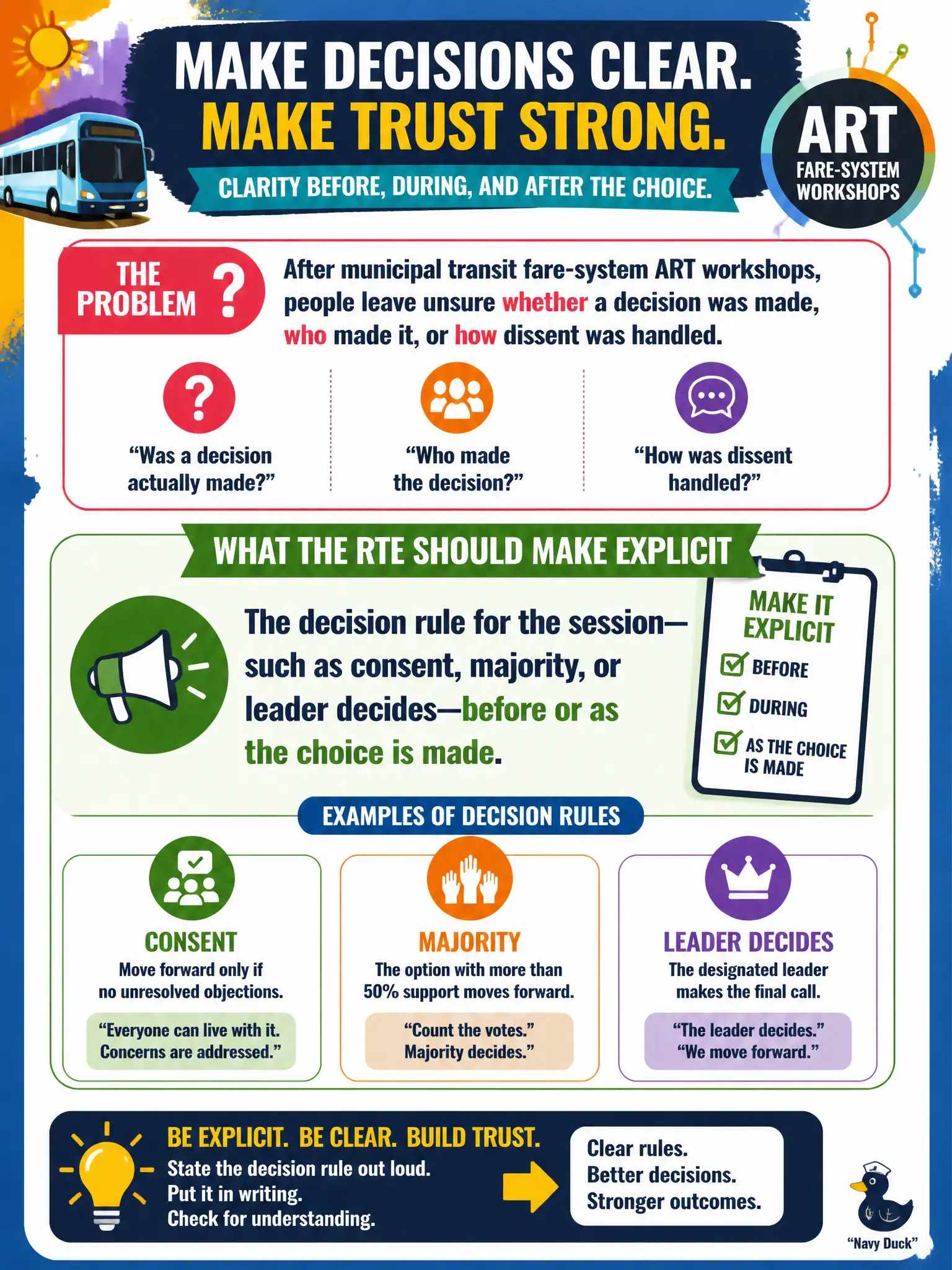
After municipal transit fare-system ART workshops, people leave unsure whether a decision was made, who made it, or how dissent was handled. What should the RTE make explicit?
Select an answer to reveal the explanation.
Short Explanation
If the fare-system room cannot say how a decision happened, it did not really happen. Name the rule: consent, majority, leader decides—whatever fits the topic. People can live with a call they understand; they cannot live with a maybe.
Full Explanation
Facilitated sessions need explicit decision rules so outcomes are inspectable by the whole ART. After municipal transit fare-system ART workshops, when people leave unsure whether a decision was made, who made it, or how dissent was handled, the RTE should make the decision rule explicit—such as consent, majority, or leader decides—before or as the choice is made. Clarity reduces later re-litigation of whether a fare-rule or integration decision actually happened. Declaring every topic discussion-only with no ART decision ever recorded prevents the closure the train needs to move Features. Having the RTE privately decide after the meeting without stating a rule produces hidden authority and distrust among operators and Product Owners. Treating silence as unanimous consent when the rule was never named invents agreement and silences quieter voices who may not feel safe objecting. Exam caveat: different topics may use different rules; the requirement is that the rule is named and applied, not that one rule fits every fare-system decision. Operational check: before the next decision point, state the rule aloud, capture the decision and dissent handling on the shared board, and confirm participants can restate what was decided before they leave the transit workshop.