
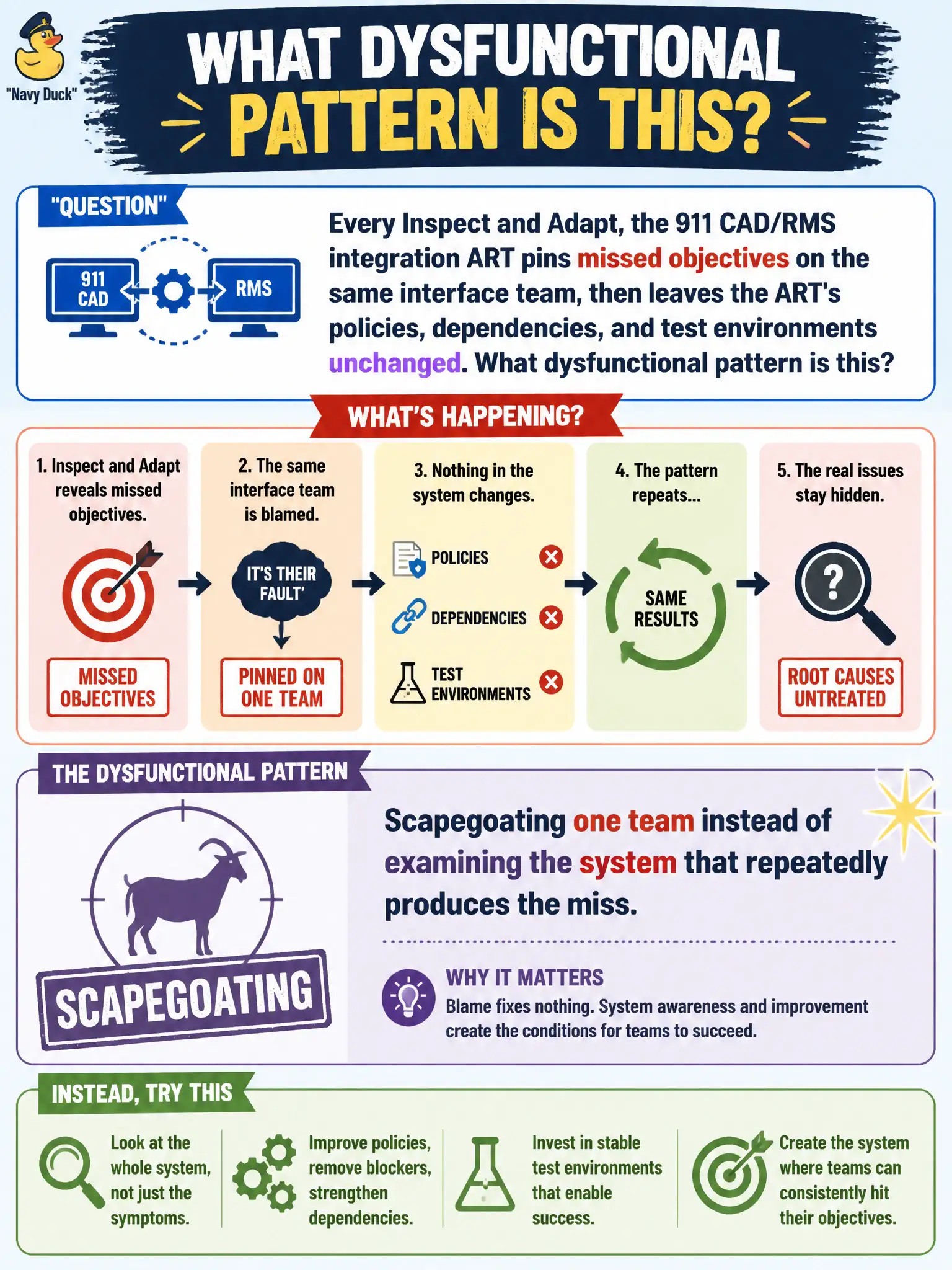
Every Inspect and Adapt, the 911 CAD/RMS integration ART pins missed objectives on the same interface team, then leaves the ART's policies, dependencies, and test environments unchanged. What dysfunctional pattern is this?
Select an answer to reveal the explanation.
Short Explanation
Pinning every outage on the same crew while the wiring stays untouched is scapegoating. Inspect and Adapt is supposed to fix the system that keeps producing the miss. A villain is cheaper than a change—and useless.
Full Explanation
Name scapegoating when the 911 CAD/RMS integration ART pins missed objectives on the same interface team every Inspect and Adapt while leaving policies, dependencies, and test environments unchanged. Scapegoating locates blame in one team so the ART avoids system examination. Public rankings strengthen harm, not healthy accountability. Naming a team is not the same as solving flow. Twisting ROAM so one team must be the "owned" risk each PI invents a required villain. Exam caveat: a team can own an improvement action without being blamed as the cause of every miss. Operational check: require a system-cause statement covering policy and environment before actions, rotate deep-dives across the value stream, and stop the habitual pin so public-safety integration reliability can improve. In municipal and civic service contexts, record the rationale in the ART working agreements or improvement backlog so future PIs preserve the control, and re-validate after the next Inspect and Adapt against resident-facing outcomes rather than activity theater. Confirm owners, success measures, and a re-check date so the practice remains inspectable. In municipal and civic service contexts, record the rationale in the ART working agreements or improvement backlog so future PIs preserve the control, and re-validate after the next Inspect and Adapt against resident-facing outcomes rather than activity theater. Confirm owners, success measures, and a re-check date so the practice remains inspectable.