
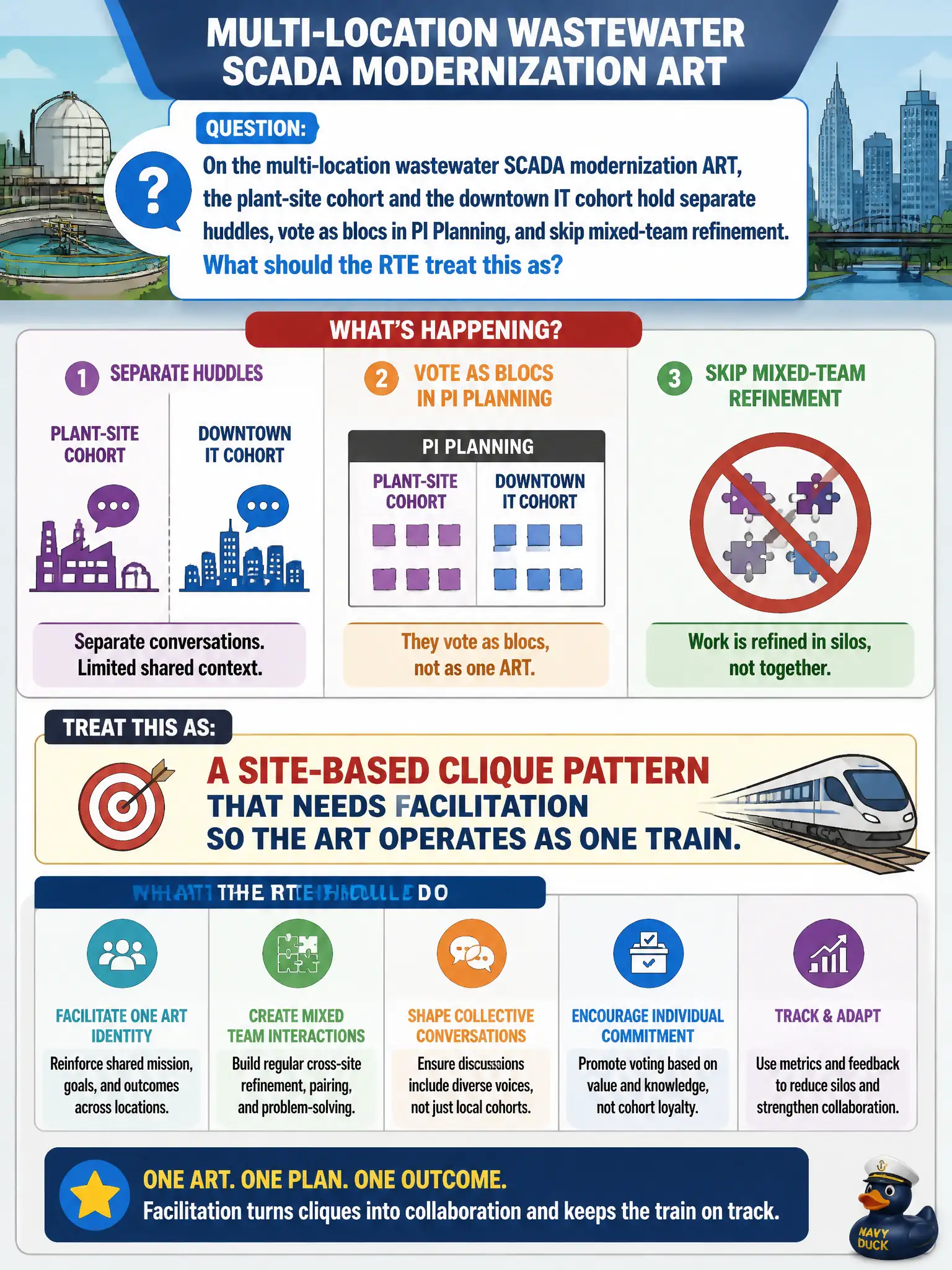
On the multi-location wastewater SCADA modernization ART, the plant-site cohort and the downtown IT cohort hold separate huddles, vote as blocs in PI Planning, and skip mixed-team refinement. What should the RTE treat this as?
Select an answer to reveal the explanation.
Short Explanation
Two lunch tables that vote as blocs is a clique, not a clever Kanban. A SCADA ART split by plant versus downtown will plan as two gangs. Mix the rooms and coach one train, do not bless the split.
Full Explanation
Treat plant-site versus downtown IT cohorts that hold separate huddles, bloc-vote in PI Planning, and skip mixed-team refinement on the wastewater SCADA modernization ART as a site-based clique pattern needing facilitation so the ART operates as one train. Reinforcing separate ART events hardens the split. Declaring multi-site cadence impossible abandons the ART model. Closing a site is a facilities decision, not the coaching response. Exam caveat: some local operational huddles may remain; the failure is caucusing and bloc voting that replace shared ART events. Operational check: require mixed refinement, rotate facilitators across sites, use shared PI Planning breakouts, and measure whether SCADA objectives are planned as one civic plant modernization train. In municipal and civic service contexts, record the rationale in the ART working agreements or improvement backlog so future PIs preserve the control, and re-validate after the next Inspect and Adapt against resident-facing outcomes rather than activity theater. Confirm owners, success measures, and a re-check date so the practice remains inspectable. In municipal and civic service contexts, record the rationale in the ART working agreements or improvement backlog so future PIs preserve the control, and re-validate after the next Inspect and Adapt against resident-facing outcomes rather than activity theater. Confirm owners, success measures, and a re-check date so the practice remains inspectable.