
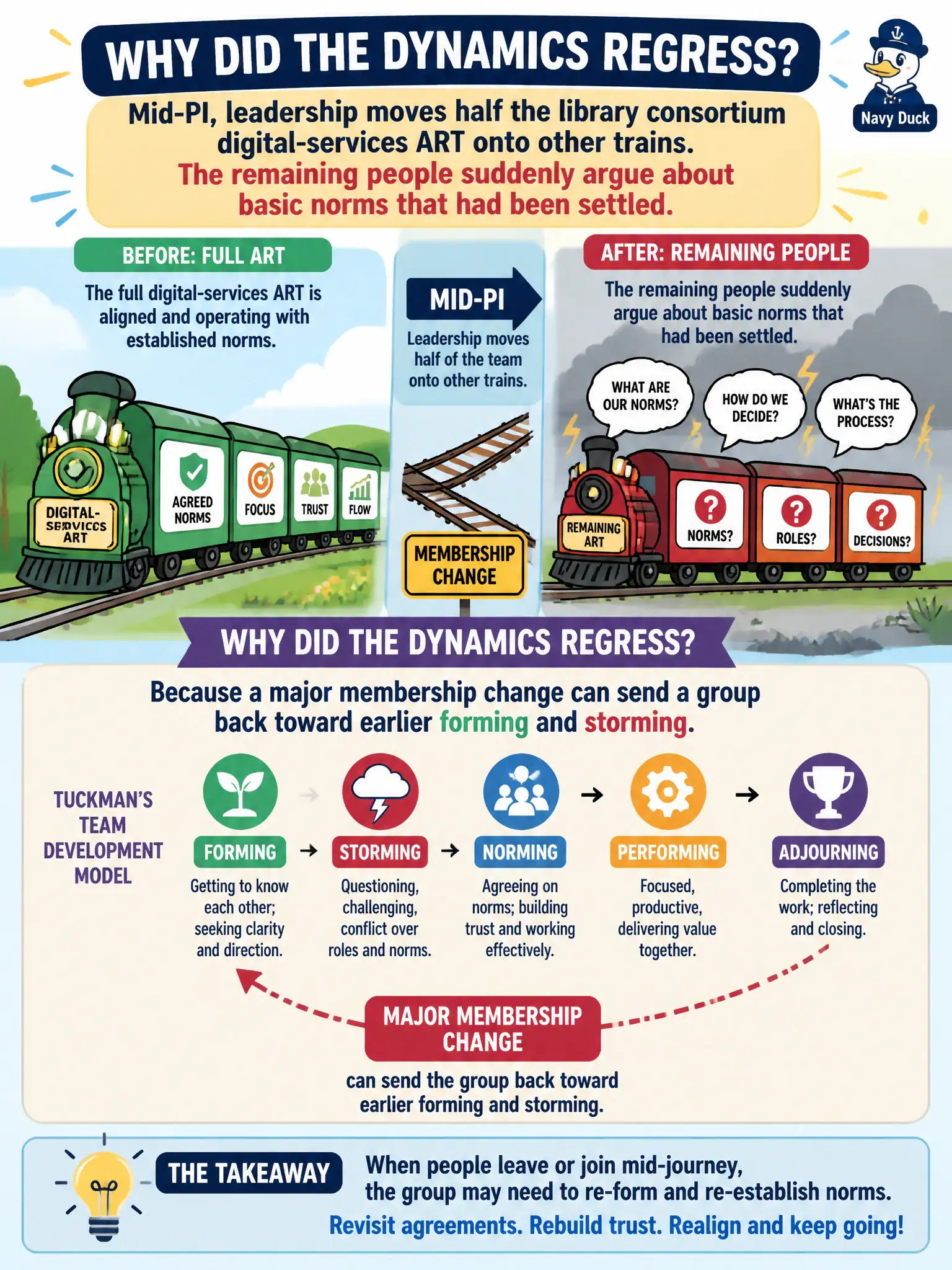
Mid-PI, leadership moves half the library consortium digital-services ART onto other trains. The remaining people suddenly argue about basic norms that had been settled. Why did the dynamics regress?
Select an answer to reveal the explanation.
Short Explanation
Swap half the library crew mid-shift and yesterday's house rules stop being obvious. Groups are people, not org-chart furniture. Big membership changes rewind forming and storming; that is the mechanism, not a secret clause in the PI calendar.
Full Explanation
Explain that a major mid-PI membership change can send the library consortium digital-services ART back toward earlier forming and storming. Group-dynamics stages are membership-sensitive; replacing half the people reconstitutes the social system so settled norms are renegotiated. Mid-PI scope change does not automatically invalidate PI Objectives regardless of people—that is a different rule. Working agreements do not legally expire at the PI midpoint. Catalog vendor SKU changes are not the mechanism that rewinds norms. Exam caveat: small membership churn may not fully regress the stage; large proportional change often does. Operational check: reconvene working-agreement sessions with the new mix, re-clarify roles in ART Sync, and coach through re-forming rather than treating the dip as mysterious failure of library digital services. In municipal and civic service contexts, record the rationale in the ART working agreements or improvement backlog so future PIs preserve the control, and re-validate after the next Inspect and Adapt against resident-facing outcomes rather than activity theater. Confirm owners, success measures, and a re-check date so the practice remains inspectable.