
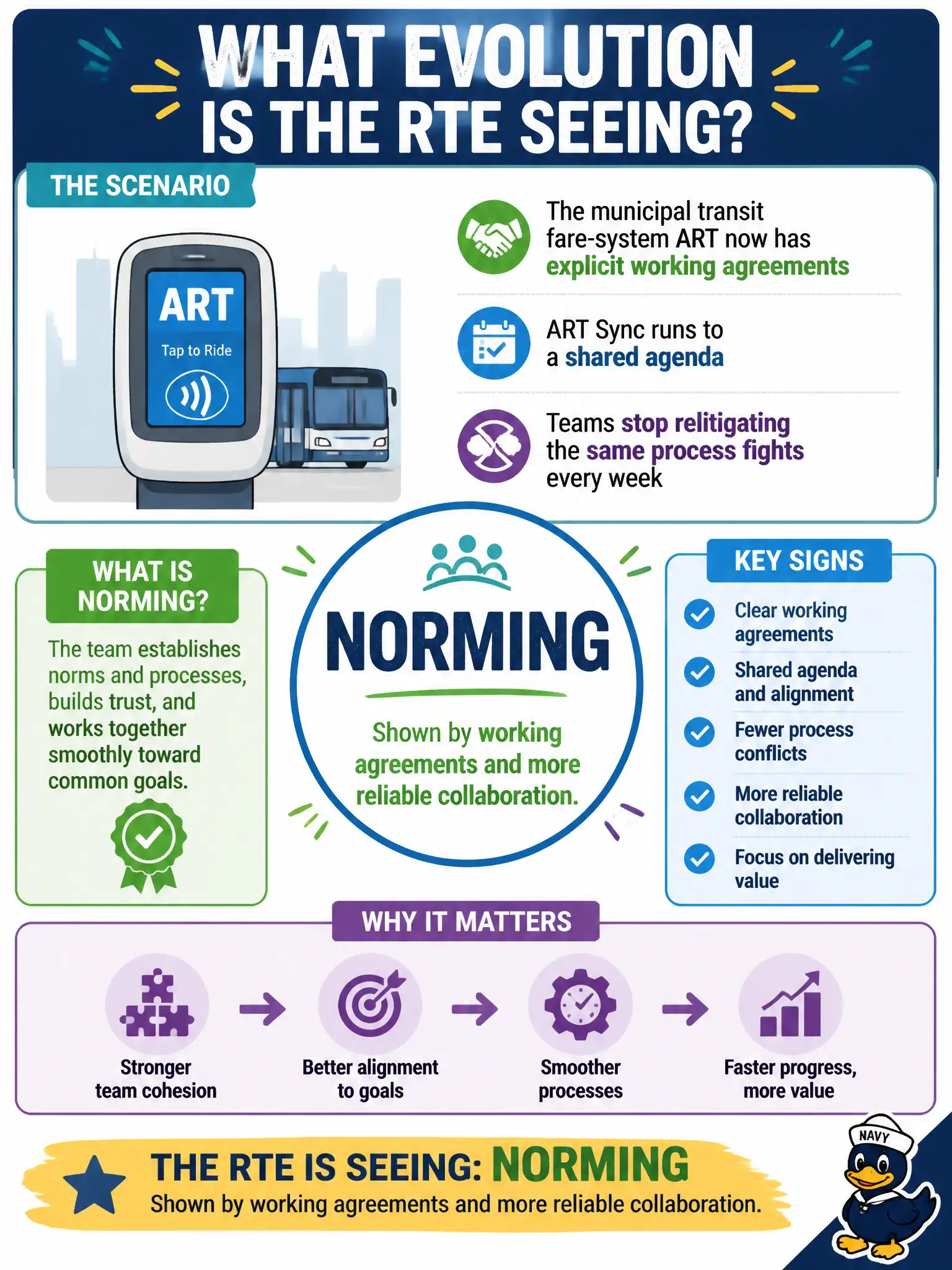
The municipal transit fare-system ART now has explicit working agreements, ART Sync runs to a shared agenda, and teams stop relitigating the same process fights every week. Which evolution is the RTE seeing?
Select an answer to reveal the explanation.
Short Explanation
When the fare-system crew finally agrees how to pass the tools and stops rerunning last week's argument, that is norming. Working agreements and a usable ART Sync are the tells. Smooth is not the same as done, and it is not a secret storm either.
Full Explanation
Name norming when the municipal transit fare-system ART has explicit working agreements, ART Sync runs to a shared agenda, and teams stop relitigating the same process fights weekly. Norming shows shared methods and more reliable collaboration. A written agenda alone does not mean the ART is still merely forming. Smoother meetings are not automatic proof of a coming storm. Agreeing on process is not adjourning because the train is "finished." Exam caveat: norming can hide artificial harmony if disagreement only moved to hallways—verify issues still surface in the room. Operational check: keep working agreements visible, periodically test whether real impediments appear in ART Sync, and continue coaching so fare-system norms stay explicit rather than assumed for riders' benefit. In municipal and civic service contexts, record the rationale in the ART working agreements or improvement backlog so future PIs preserve the control, and re-validate after the next Inspect and Adapt against resident-facing outcomes rather than activity theater. Confirm owners, success measures, and a re-check date so the practice remains inspectable. In municipal and civic service contexts, record the rationale in the ART working agreements or improvement backlog so future PIs preserve the control, and re-validate after the next Inspect and Adapt against resident-facing outcomes rather than activity theater. Confirm owners, success measures, and a re-check date so the practice remains inspectable.