
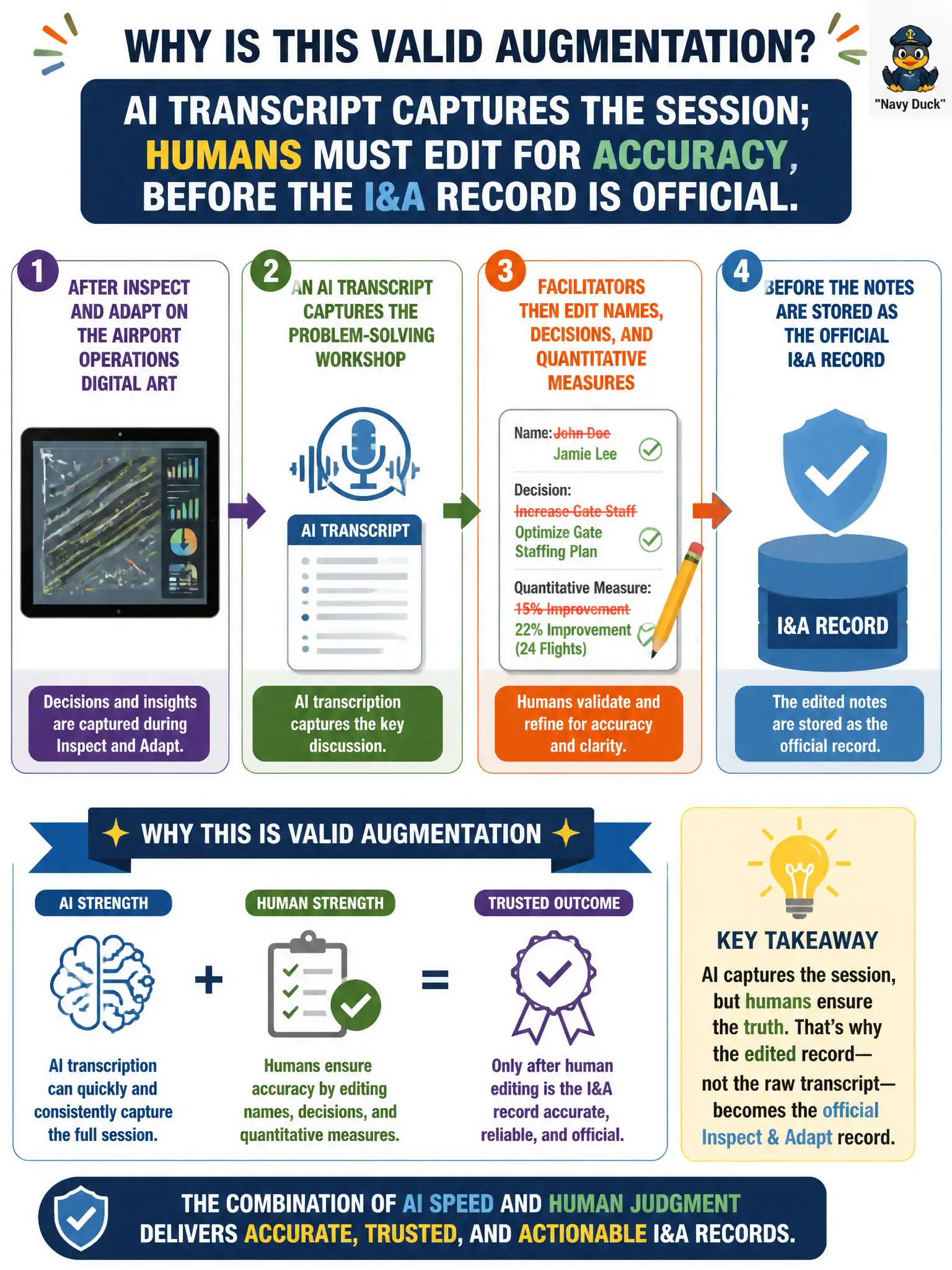
After Inspect and Adapt on the airport operations digital ART, an AI transcript captures the Problem-Solving Workshop. Facilitators then edit names, decisions, and quantitative measures before the notes are stored. Why is this valid augmentation?
Select an answer to reveal the explanation.
Short Explanation
A recorder on the gate podium still needs a human to fix the flight number. Airport Inspect and Adapt notes that name the wrong decision become folklore. Capture fast, then edit before the file is official.
Full Explanation
Transcription can capture an Inspect-and-Adapt session; humans must edit for accuracy before the I&A record is official. After Inspect and Adapt on the airport operations digital ART, when an AI transcript captures the Problem-Solving Workshop and facilitators then edit names, decisions, and quantitative measures before storage, that is valid augmentation. Raw transcripts should not replace the quantitative-measurement review. Editing notes is not waste because the model is not the System Demo record. I&A notes may use assistive tools for capture; a blanket ban is unnecessary if review remains human. Exam caveat: transcripts may contain sensitive operational detail—store and redact per municipal policy. Operational check: review the airport I&A transcript against flipcharts and metrics, correct names and numbers, then publish the edited record as the official improvement baseline. Keep the civic mission visible when applying the technique so resident-facing outcomes stay the measure of success. In municipal ART practice, capture the rationale in facilitation notes so future coaches inherit the same standard. Re-validate after the next PI cadence event that the same control still fits current civic constraints.