
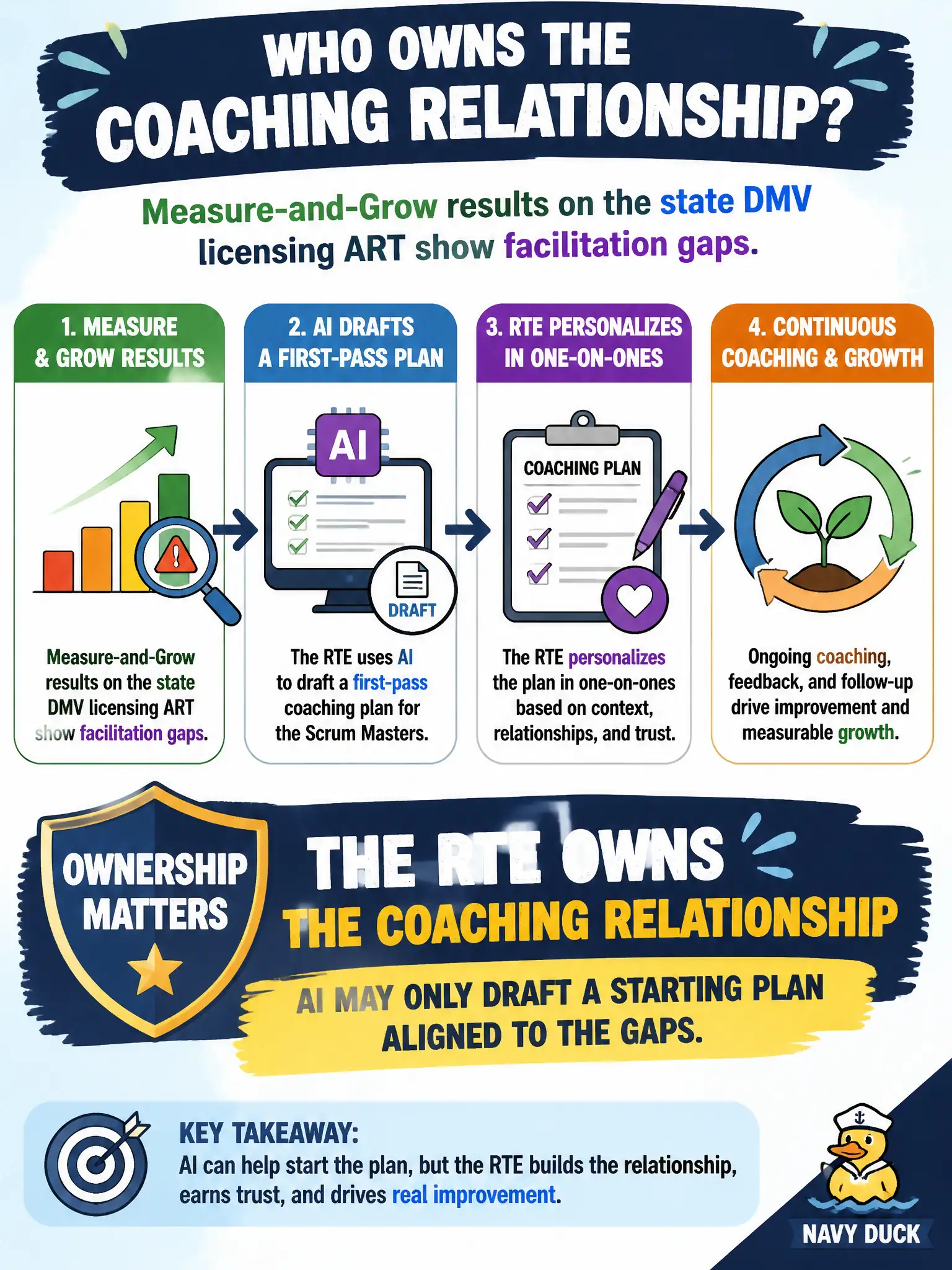
Measure-and-Grow results on the state DMV licensing ART show facilitation gaps. The RTE uses AI to draft a first-pass coaching plan for the Scrum Masters, then personalizes it in one-on-ones. Who owns the coaching relationship?
Select an answer to reveal the explanation.
Short Explanation
A draft lesson plan is not the teacher. The assistant can line up Measure-and-Grow gaps so the RTE does not start from a blank page. The relationship—and the one-on-one—still belongs to the human coach of the train.
Full Explanation
The RTE owns the coaching relationship; AI may only draft a starting plan aligned to observed gaps. When Measure-and-Grow results on the state DMV licensing ART show facilitation gaps and the RTE uses AI to draft a first-pass coaching plan then personalizes it in one-on-ones, ownership stays human. Making the model the Scrum Masters’ coach of record for the PI abandons the RTE role. Emailing Measure-and-Grow scores by bot with no human follow-up is metrics without coaching. Assigning Product Owners to own Scrum Master coaching because licensing is a “product problem” confuses product accountability with facilitator development. Exam caveat: drafted plans must still respect psychological safety and strengths-based practice—not deficit dump printouts. Operational check: edit the AI draft against Measure-and-Grow evidence, hold personalized DMV Scrum Master 1:1s, and inspect whether facilitation behaviors improve across subsequent ART Syncs. Keep the civic mission visible when applying the technique so resident-facing outcomes stay the measure of success. In municipal ART practice, capture the rationale in facilitation notes so future coaches inherit the same standard. Re-validate after the next PI cadence event that the same control still fits current civic constraints.