
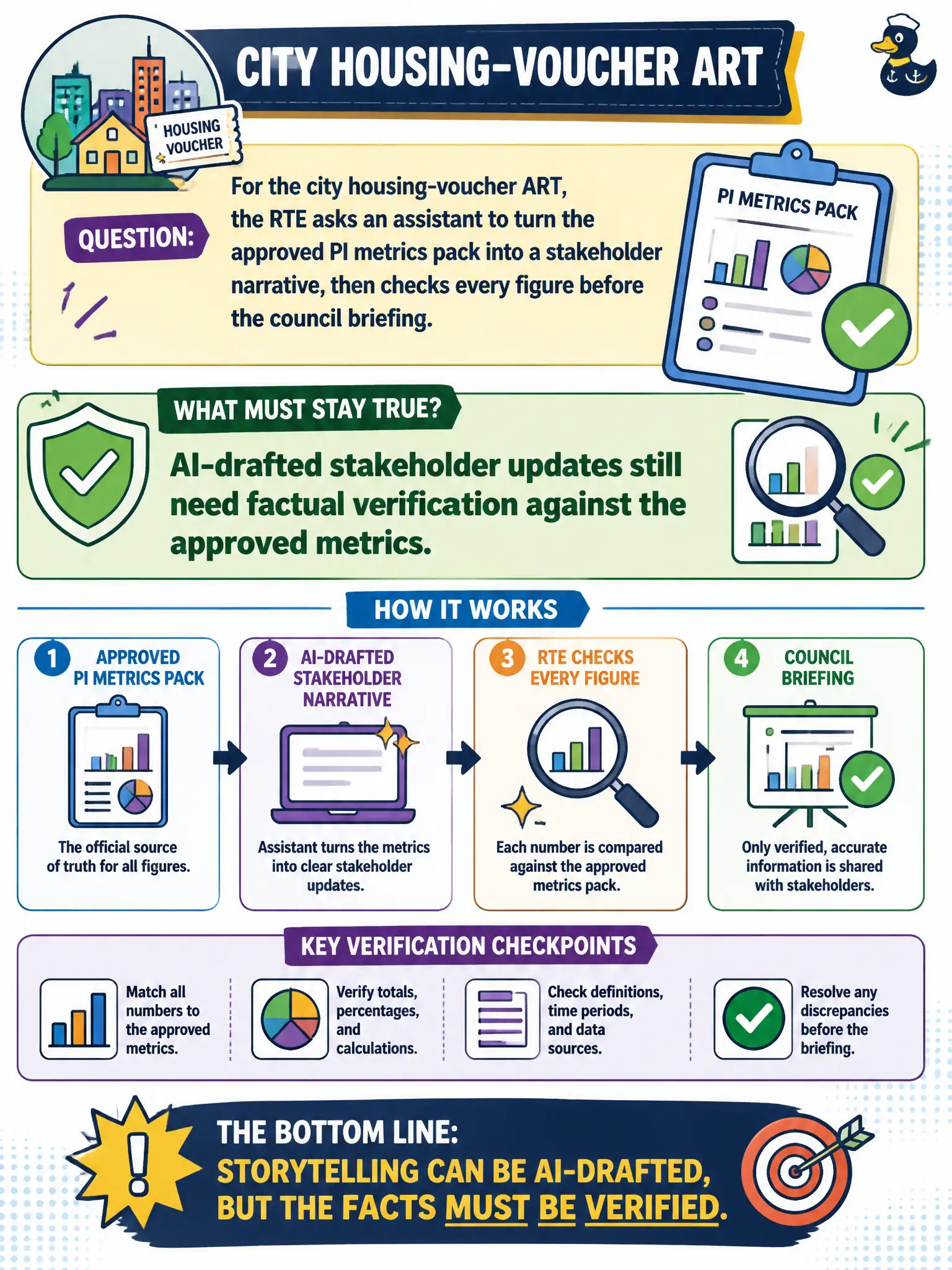
For the city housing-voucher ART, the RTE asks an assistant to turn the approved PI metrics pack into a stakeholder narrative, then checks every figure before the council briefing. What must stay true?
Select an answer to reveal the explanation.
Short Explanation
The assistant is a speechwriter, not the budget office. Housing-voucher numbers that go to council have to match the pack the ART already approved. Draft the story, then tick every figure.
Full Explanation
AI-drafted stakeholder updates still need factual verification against approved metrics. For the city housing-voucher ART, asking an assistant to turn the approved PI metrics pack into a stakeholder narrative, then checking every figure before the council briefing, keeps that rule. Once metrics are approved, the narrative may not invent extra success numbers for emphasis. Stakeholder updates need not be handwritten to be transparent—the issue is accuracy and honesty, not penmanship. Business Owners should not be barred from narratives that an assistant helped draft if humans verified the content. Exam caveat: verification includes units, time windows, and whether metrics match the approved pack—not just spellcheck. Operational check: produce the draft narrative, tick every number against the housing-voucher metrics pack, correct mismatches, then brief council with the verified story. Keep the civic mission visible when applying the technique so resident-facing outcomes stay the measure of success. In municipal ART practice, capture the rationale in facilitation notes so future coaches inherit the same standard. Re-validate after the next PI cadence event that the same control still fits current civic constraints.