
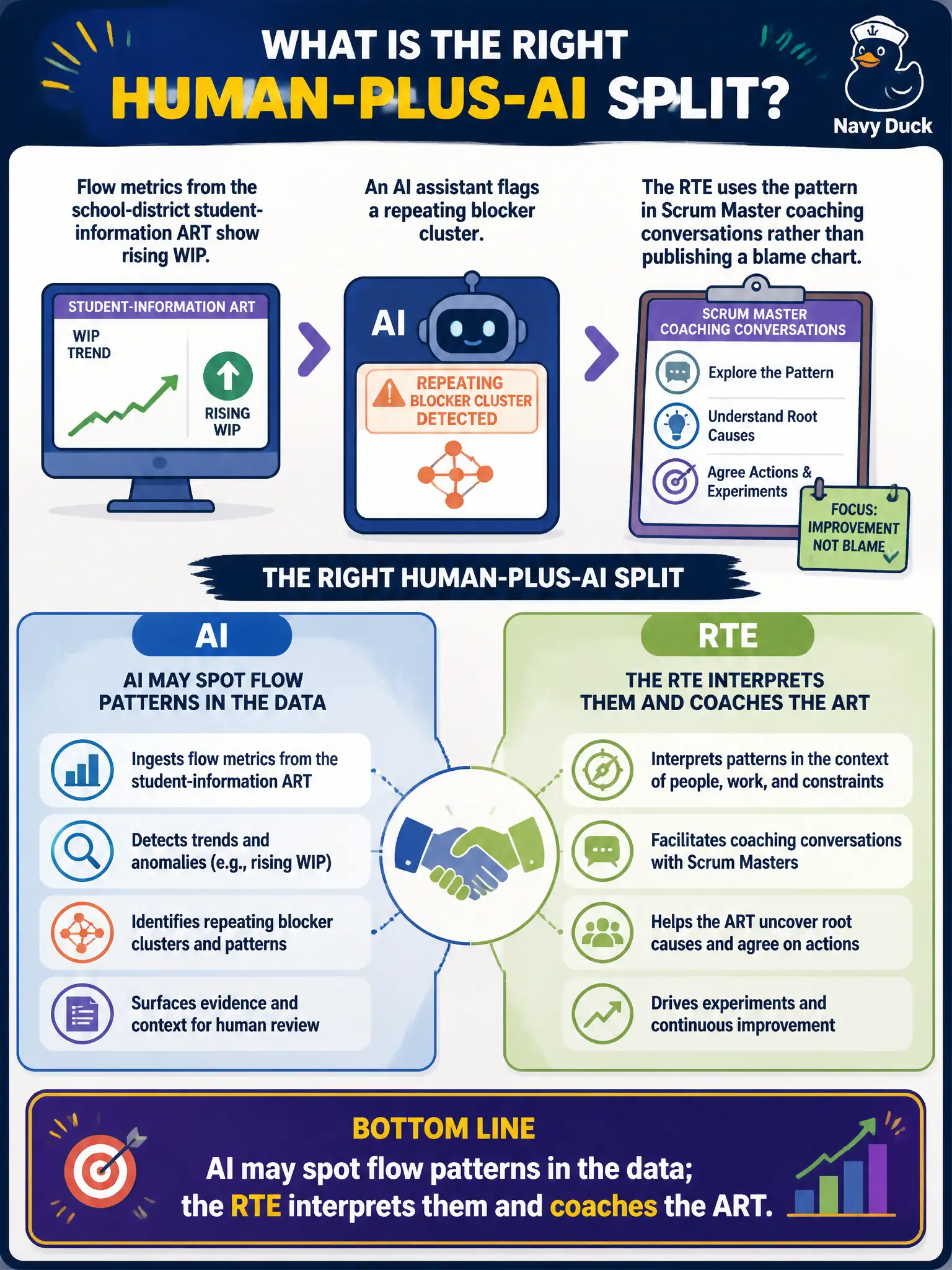
Flow metrics from the school-district student-information ART show rising WIP. An AI assistant flags a repeating blocker cluster; the RTE uses the pattern in Scrum Master coaching conversations rather than publishing a blame chart. What is the right human-plus-AI split?
Select an answer to reveal the explanation.
Short Explanation
The model is a highlighter on the WIP chart, not the principal calling kids to the office. Someone still has to ask why enrollment stories stall and coach the train. Pattern first, human interpretation second.
Full Explanation
AI may spot flow patterns in the data; the RTE interprets them and coaches the ART. When flow metrics from the school-district student-information ART show rising WIP and an assistant flags a repeating blocker cluster, using that pattern in Scrum Master coaching rather than publishing a blame chart is the right split. Letting the model auto-reassign student-information stories without coaching removes team ownership and empiricism. Ignoring flow metrics once the assistant has applied a cluster label abandons measurement after a label appears. Handing the raw model output to the school board as the official PI review skips interpretation and risks misrepresenting classroom-impacting systems. Exam caveat: pattern detection is an input to coaching conversations, not an automated workforce scheduler. Operational check: review the blocker cluster with Scrum Masters, design experiments to reduce WIP, and track whether student-information flow metrics improve over the next iterations. Keep the civic mission visible when applying the technique so resident-facing outcomes stay the measure of success. In municipal ART practice, capture the rationale in facilitation notes so future coaches inherit the same standard.