
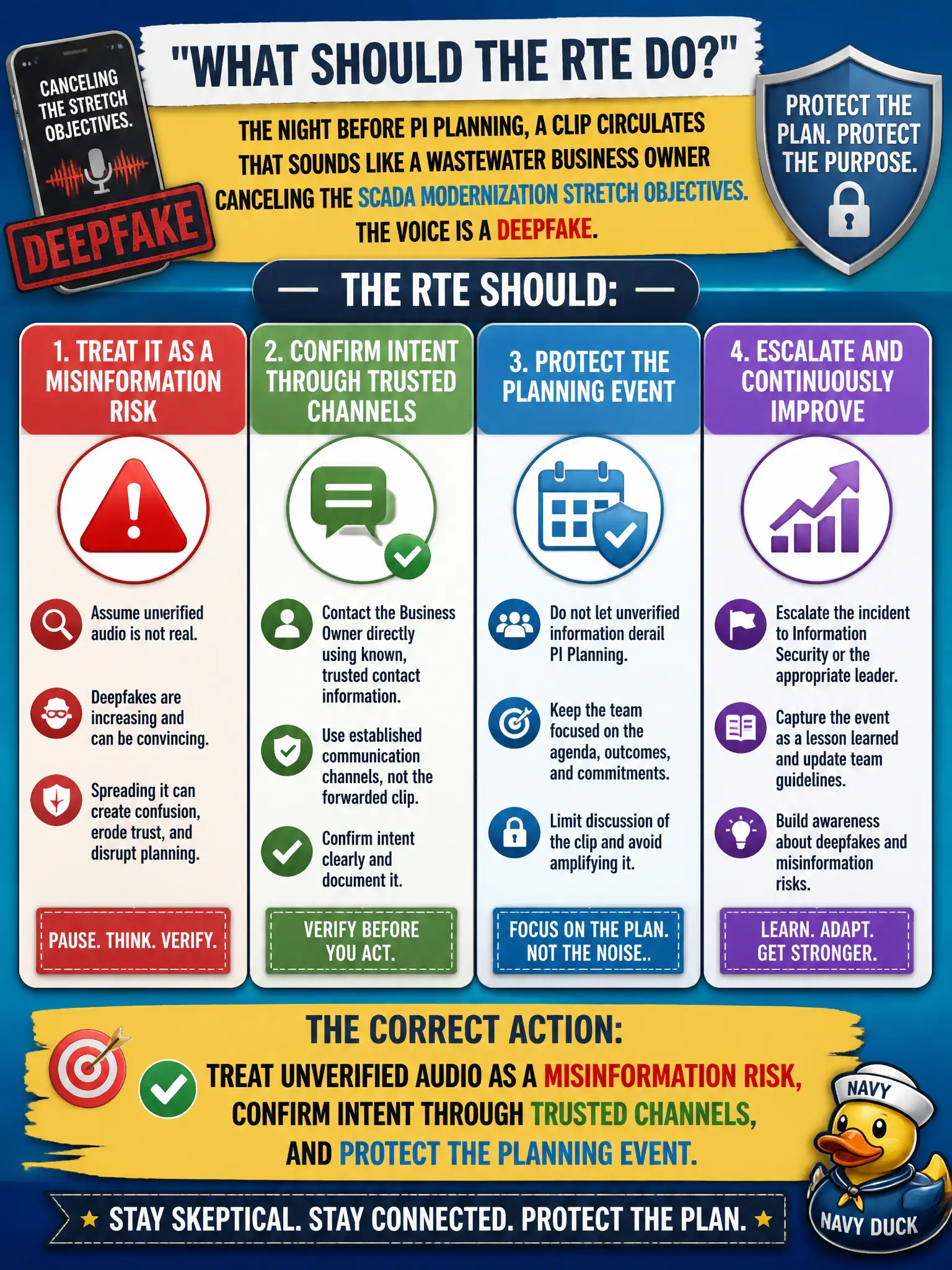
The night before PI Planning, a clip circulates that sounds like a wastewater Business Owner canceling the SCADA modernization stretch objectives. The voice is a deepfake. What should the RTE do?
Select an answer to reveal the explanation.
Short Explanation
A convincing voice memo is not a signed memo. Deepfakes show up right when a high-stakes event like PI Planning would be easiest to scramble. Call the real Business Owner on a known channel and keep the room on verified intent.
Full Explanation
Unverified audio that appears to change Business Owner intent—especially a deepfake—should be treated as a misinformation risk. The night before PI Planning on the wastewater SCADA modernization ART, when a clip circulates that sounds like a Business Owner canceling stretch objectives, the RTE should confirm intent through trusted channels and protect the planning event. Rewriting the program board immediately from the clip lets an attack or hoax drive planning. Ignoring all Business Owner input for the PI because audio can be faked overcorrects and removes needed guidance. Playing the clip as the official Business Owner brief to save opening-session time launders misinformation into the event. Exam caveat: confirmation can be a phone call or verified message from the named Business Owner; do not wait for forensic perfection to pause board changes. Operational check: contact the Business Owner through known channels, notify ART leadership of the deepfake risk, leave stretch objectives unchanged until confirmed, and brief PI Planning on the verified intent only. Keep the civic mission visible when applying the technique so resident-facing outcomes stay the measure of success. In municipal ART practice, capture the rationale in facilitation notes so future coaches inherit the same standard.