
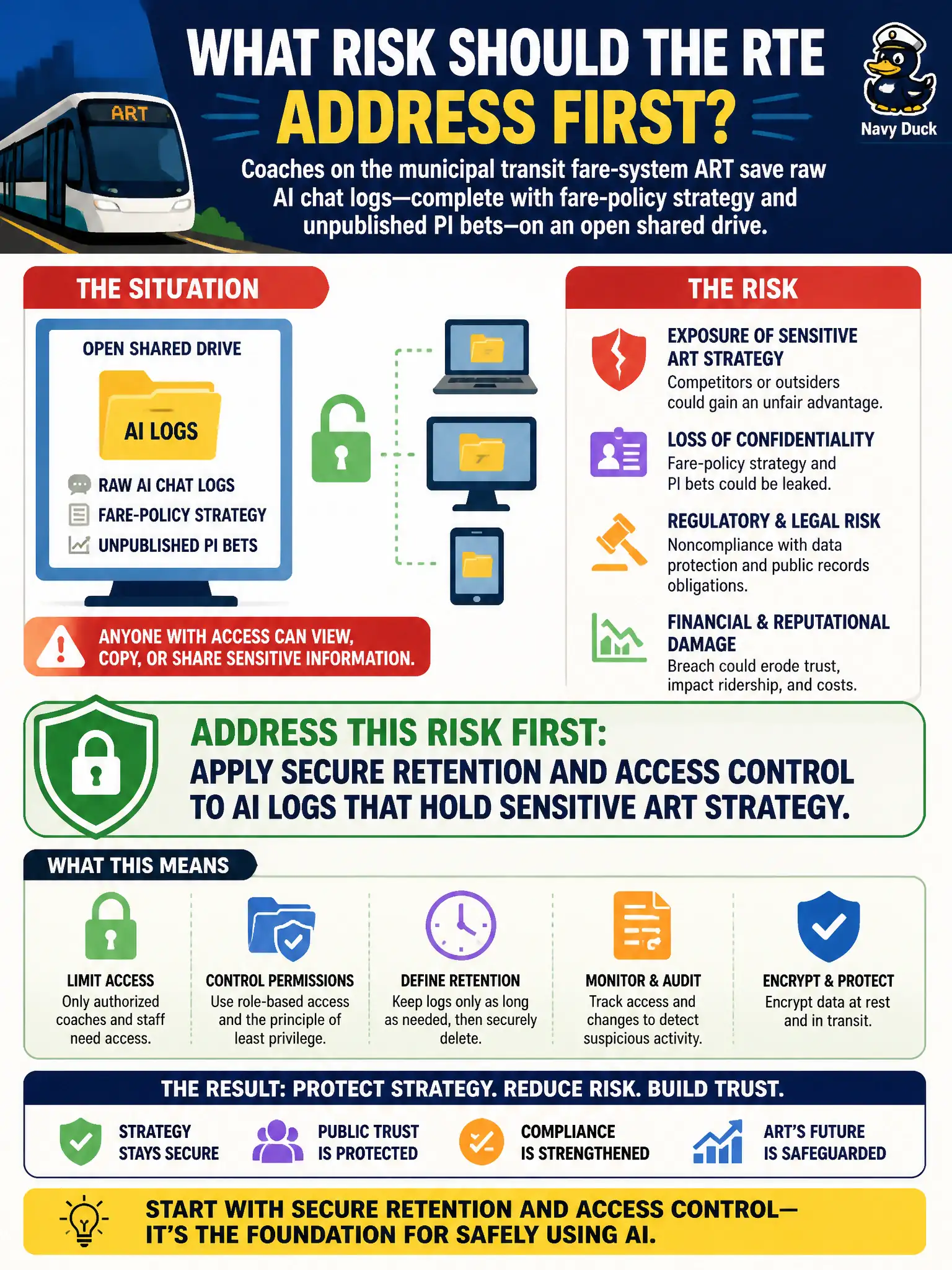
Coaches on the municipal transit fare-system ART save raw AI chat logs—complete with fare-policy strategy and unpublished PI bets—on an open shared drive. What risk should the RTE address first?
Select an answer to reveal the explanation.
Short Explanation
Those chat logs are the fare-strategy notebook left on a park bench. Anyone with the drive link can read next PI's bets. Lock the notebook, set a retention clock, and stop treating prompts as throwaway scratch.
Full Explanation
AI logs that hold sensitive ART strategy need secure retention and access control. When coaches on the municipal transit fare-system ART save raw AI chat logs—complete with fare-policy strategy and unpublished PI bets—on an open shared drive, the RTE should address that exposure first. Leaving the logs public so riders can inspect every facilitation prompt confuses transparency with leaking strategy. Deleting all fare metrics from the ART so chats never contain strategy destroys empiricism instead of securing logs. Moving the logs into informal huddles on the assumption those chats never persist ignores how digital tools retain data. Exam caveat: retention schedules should match municipal records policy, not indefinite open-drive sprawl. Operational check: move logs to a restricted store, set access lists and retention, scrub the open drive, and coach coaches on what may be pasted into AI tools for the fare-system ART. Keep the civic mission visible when applying the technique so resident-facing outcomes stay the measure of success. In municipal ART practice, capture the rationale in facilitation notes so future coaches inherit the same standard. Re-validate after the next PI cadence event that the same control still fits current civic constraints.