
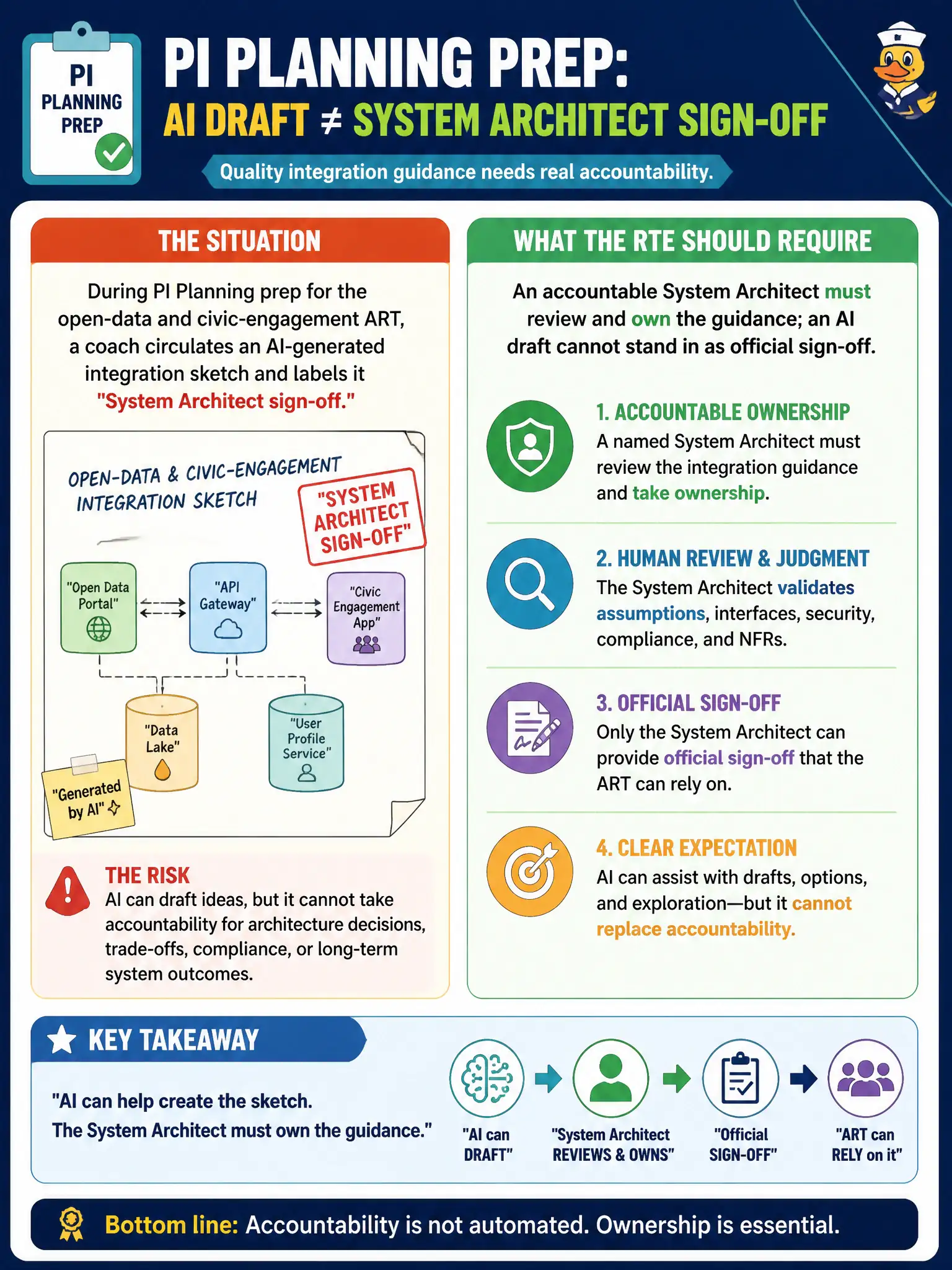
During PI Planning prep for the open-data and civic-engagement ART, a coach circulates an AI-generated integration sketch and labels it System Architect sign-off. What should the RTE require?
Select an answer to reveal the explanation.
Short Explanation
An AI sketch is a napkin drawing, not a stamped building permit. Civic open-data APIs still need a human architect who owns the call. The tool can draft; the named role still signs.
Full Explanation
An accountable System Architect must review and own architectural guidance; an AI draft cannot stand in as official sign-off. During PI Planning prep for the open-data and civic-engagement ART, when a coach circulates an AI-generated integration sketch labeled as System Architect sign-off, the RTE should require human architectural ownership. Accepting the sketch as binding once the model cites a SAFe principle in the caption confuses citation with accountability. Replacing the System Architect role with a standing AI architecture bot for the rest of the PI removes a key ART role. Treating any AI diagram as equivalent to a Business Owner confidence vote mixes unrelated accountabilities. Exam caveat: AI may draft diagrams for review, but sign-off is a human role decision recorded for the ART. Operational check: remove the false sign-off label, route the sketch to the named System Architect, and only then present validated guidance in open-data PI Planning. Keep the civic mission visible when applying the technique so resident-facing outcomes stay the measure of success. In municipal ART practice, capture the rationale in facilitation notes so future coaches inherit the same standard. Re-validate after the next PI cadence event that the same control still fits current civic constraints.