
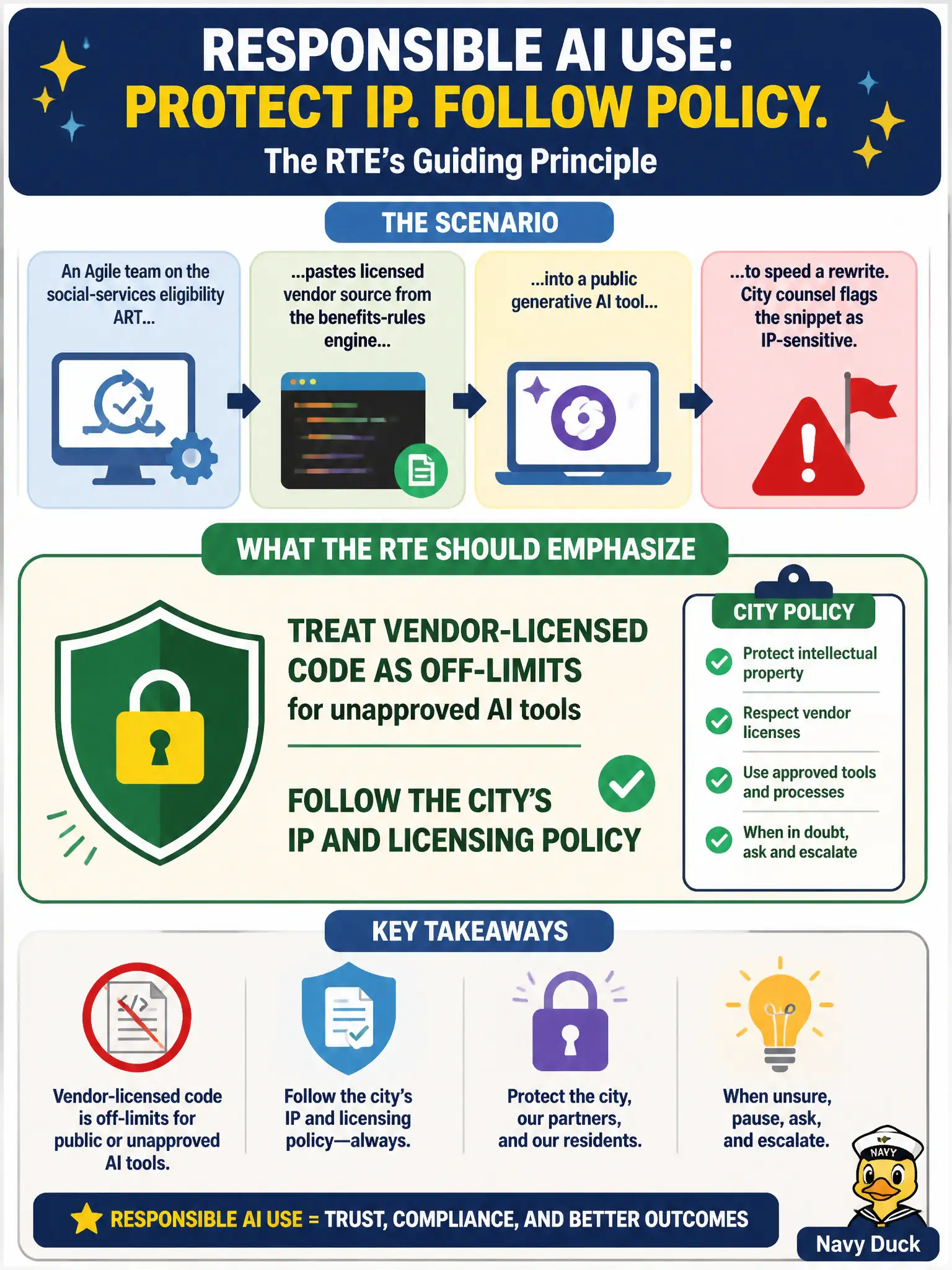
An Agile team on the social-services eligibility ART pastes licensed vendor source from the benefits-rules engine into a public generative AI tool to speed a rewrite. City counsel flags the snippet as IP-sensitive. What should the RTE emphasize about responsible AI use?
Select an answer to reveal the explanation.
Short Explanation
Licensed vendor code is like a borrowed library book with a do-not-photocopy stamp. Dropping it into a public AI box hands copies to a stranger. Responsible use starts with do not paste what the city does not own or may not share.
Full Explanation
Vendor-licensed code is off-limits for unapproved AI tools; the ART must follow the city’s IP and licensing policy. When an Agile team on the social-services eligibility ART pastes licensed vendor source from the benefits-rules engine into a public generative tool to speed a rewrite, and counsel flags the snippet as IP-sensitive, the RTE should emphasize that responsible AI use includes IP boundaries. Public AI tools do not grant a safe-harbor license once a paste is labeled facilitation-only. Vendor code does not become public-domain after check-in to the ART repository. Waiving IP review whenever a paste might improve PI predictability subordinates law to schedule. Exam caveat: approved private coding assistants may still be restricted by vendor contracts—policy review is required before any code paste. Operational check: stop further pastes, work with counsel on exposure, remove sensitive snippets from the tool if possible, and coach teams on approved rewrite paths for the eligibility rules engine. Keep the civic mission visible when applying the technique so resident-facing outcomes stay the measure of success. In municipal ART practice, capture the rationale in facilitation notes so future coaches inherit the same standard.