
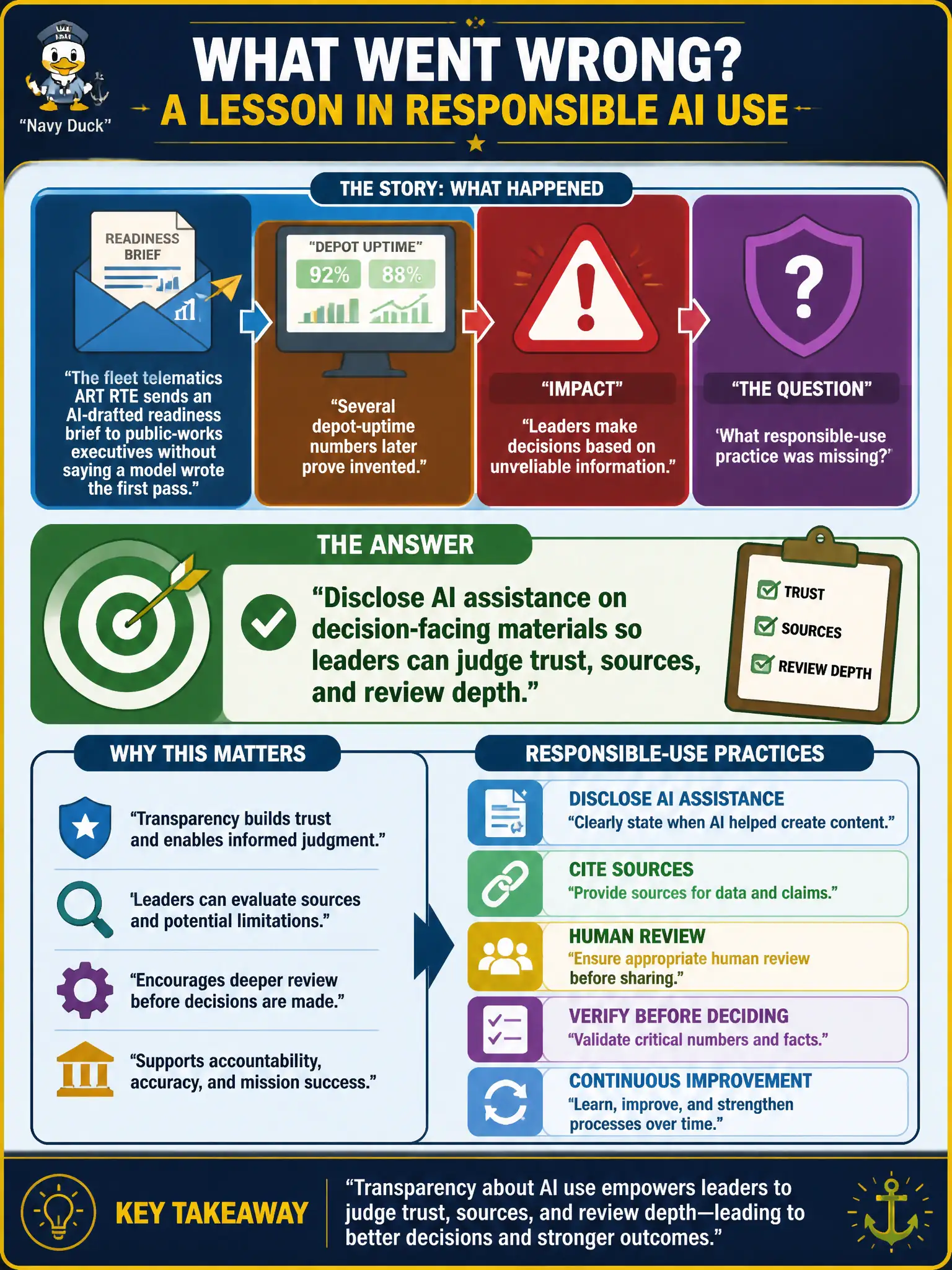
The fleet telematics ART RTE sends an AI-drafted readiness brief to public-works executives without saying a model wrote the first pass. Several depot-uptime numbers later prove invented. What responsible-use practice was missing?
Select an answer to reveal the explanation.
Short Explanation
If a staffer pulled the depot numbers, leaders would still ask who checked them. Same idea with a model. Executives deciding telematics spend deserve to know when a machine drafted the brief.
Full Explanation
Decision-facing materials that used AI drafting should disclose that assistance so leaders can judge trust, sources, and review depth. When the fleet telematics ART RTE sends an AI-drafted readiness brief to public-works executives without saying a model wrote the first pass, and depot-uptime numbers later prove invented, disclosure and verification were missing. Hiding AI use so executives treat every brief as fully human-authored increases overtrust. Banning all AI drafting for fleet work, including internal agenda templates, overcorrects by abandoning low-risk uses. Attributing the brief to Product Management so disclosure becomes unnecessary shifts blame rather than fixing transparency. Exam caveat: disclosure is not a substitute for fact checking—both are required on civic executive briefs. Operational check: correct the invented numbers with executives, add an AI-assistance note on future decision-facing drafts, and require source citations for every metric before send. Keep the civic mission visible when applying the technique so resident-facing outcomes stay the measure of success. In municipal ART practice, capture the rationale in facilitation notes so future coaches inherit the same standard.