
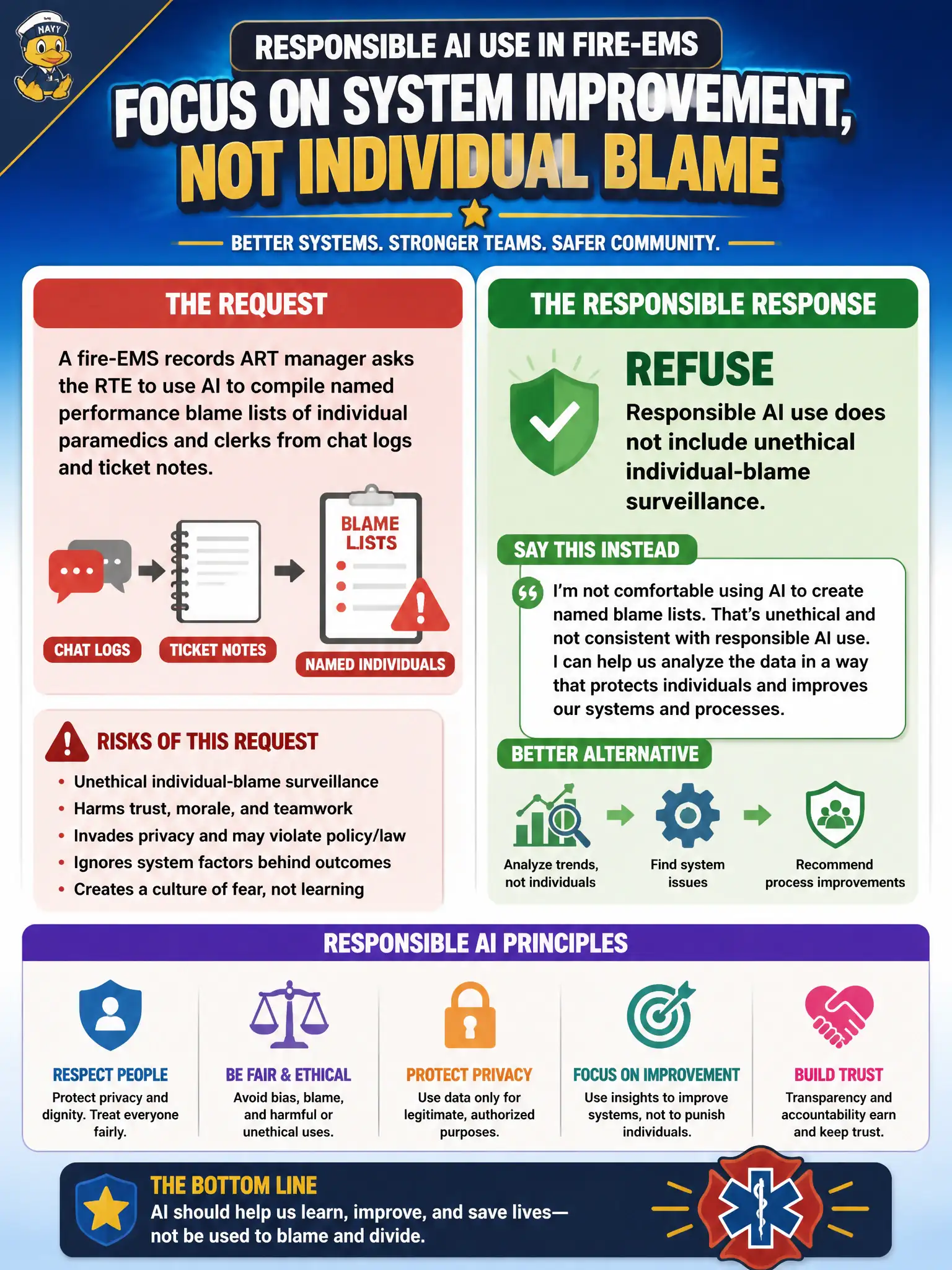
A fire-EMS records ART manager asks the RTE to use AI to compile named performance blame lists of individual paramedics and clerks from chat logs and ticket notes. What is the responsible response?
Select an answer to reveal the explanation.
Short Explanation
SAFe is built on respect for people, not a snitch engine with a chatbot. Named blame lists from tickets and chats are surveillance, not flow coaching. The RTE should refuse and point the conversation back to systems and WIP, not scapegoats.
Full Explanation
Responsible AI use does not include unethical individual-blame surveillance. When a fire-EMS records ART manager asks the RTE to use AI to compile named performance blame lists of individual paramedics and clerks from chat logs and ticket notes, the RTE should refuse. Running the lists because named blame increases utilization transparency weaponizes AI against psychological safety and public-safety culture. Publishing the lists at the System Demo to motivate through fear destroys trust. Expanding the prompt to include off-duty social media as additional evidence deepens the ethics violation. Exam caveat: aggregate flow or quality metrics used for system improvement differ from named blame dossiers built from private chat. Operational check: decline the request in writing against municipal AI and HR policy, offer system-level coaching and process metrics instead, and escalate if leadership insists on individual surveillance via the ART’s AI tools. Keep the civic mission visible when applying the technique so resident-facing outcomes stay the measure of success. In municipal ART practice, capture the rationale in facilitation notes so future coaches inherit the same standard. Re-validate after the next PI cadence event that the same control still fits current civic constraints.