
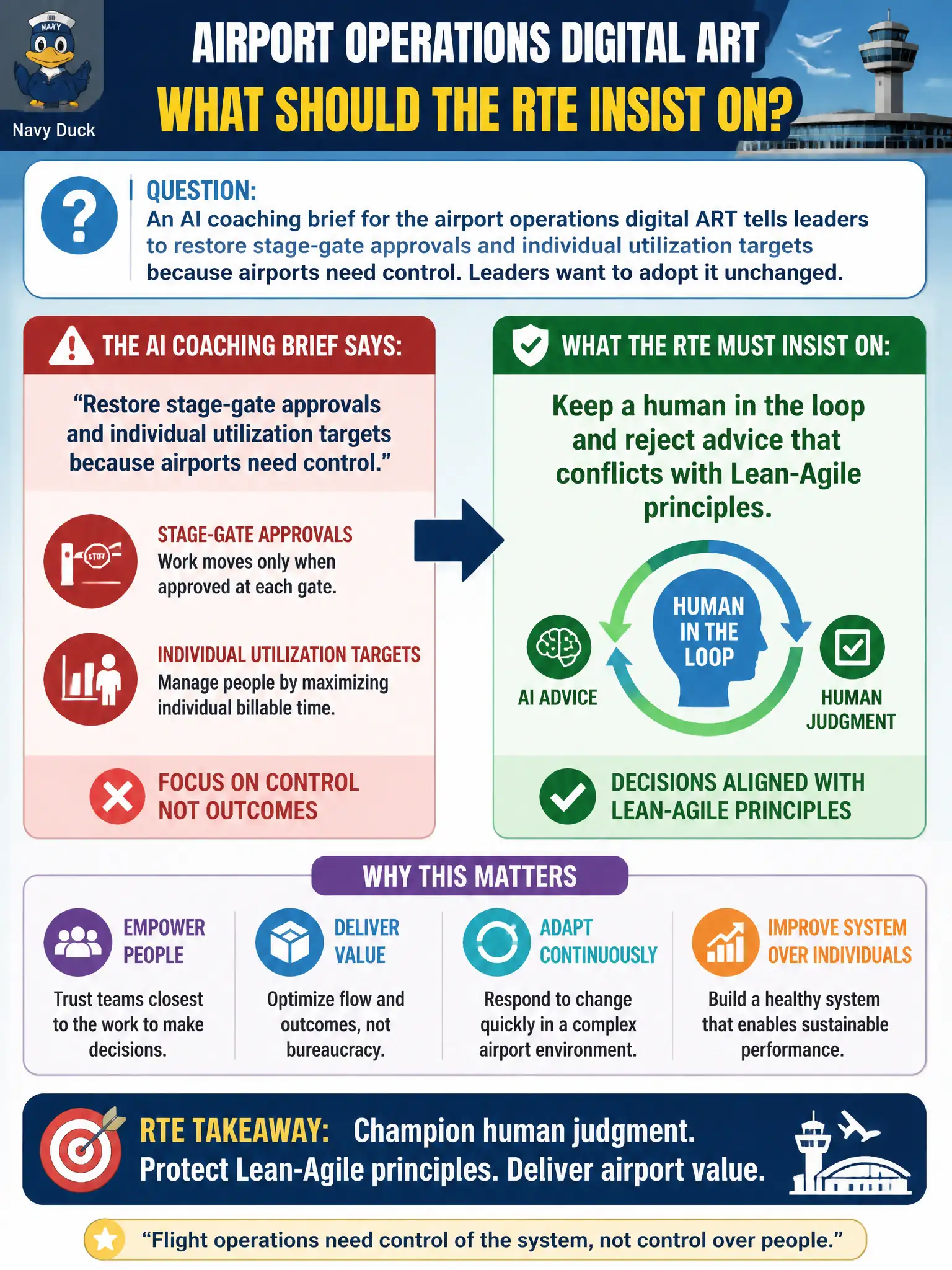
An AI coaching brief for the airport operations digital ART tells leaders to restore stage-gate approvals and individual utilization targets because airports need control. Leaders want to adopt it unchanged. What should the RTE insist on?
Select an answer to reveal the explanation.
Short Explanation
If the assistant tells you to bring back stage gates and utilization theater, that is not coaching—that is the old airport project playbook in a new font. People still have to check the advice against Lean-Agile principles. Auto-accept is how you undo the train.
Full Explanation
Human-in-the-loop review must reject AI advice that conflicts with Lean-Agile principles even when leaders like the decisiveness of the text. An AI coaching brief for the airport operations digital ART that tells leaders to restore stage-gate approvals and individual utilization targets because “airports need control” should not be adopted unchanged. Adopting the brief immediately so AI appears decisive to the airport authority trades principle for optics. Implementing utilization targets first and revisiting SAFe Core Values after the next capital bond postpones the conflict instead of resolving it. Replacing PI cadence with the model’s recommended sequential gates as a hybrid airport method reintroduces waterfall under an AI label. Exam caveat: some regulated airport controls may be real constraints; the RTE still separates true external constraints from AI-suggested anti-patterns like utilization theater. Operational check: annotate the brief line by line against SAFe principles, keep only advice that fits, and facilitate a leadership conversation that protects PI cadence and flow on the airport ART. Keep the civic mission visible when applying the technique so resident-facing outcomes stay the measure of success.